The post Biggest July Ever for Container TEUs at Port Houston appeared first on Port Houston.
]]>The post Biggest July Ever for Container TEUs at Port Houston appeared first on Port Houston.
]]>The post Capital Enhancements to Support Rapid Growth: Accelerating Infrastructure Investments to Meet Demand appeared first on Port Houston.
]]>
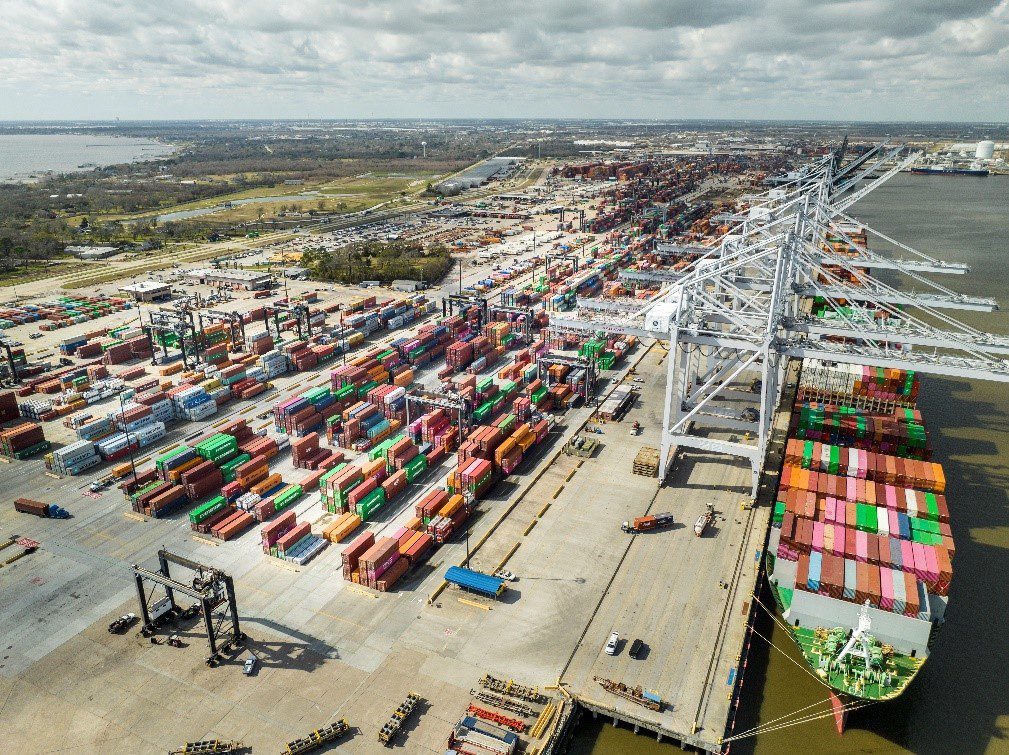
“Port Houston continues to build capacity and adjust to the changing market by providing more yard space, more equipment, and more hours of service to our customers. Port Houston is meeting with customers, communicating updates and working with our partners in the ILA to maintain cargo fluidity,” said Roger Guenther, Executive Director at Port Houston.
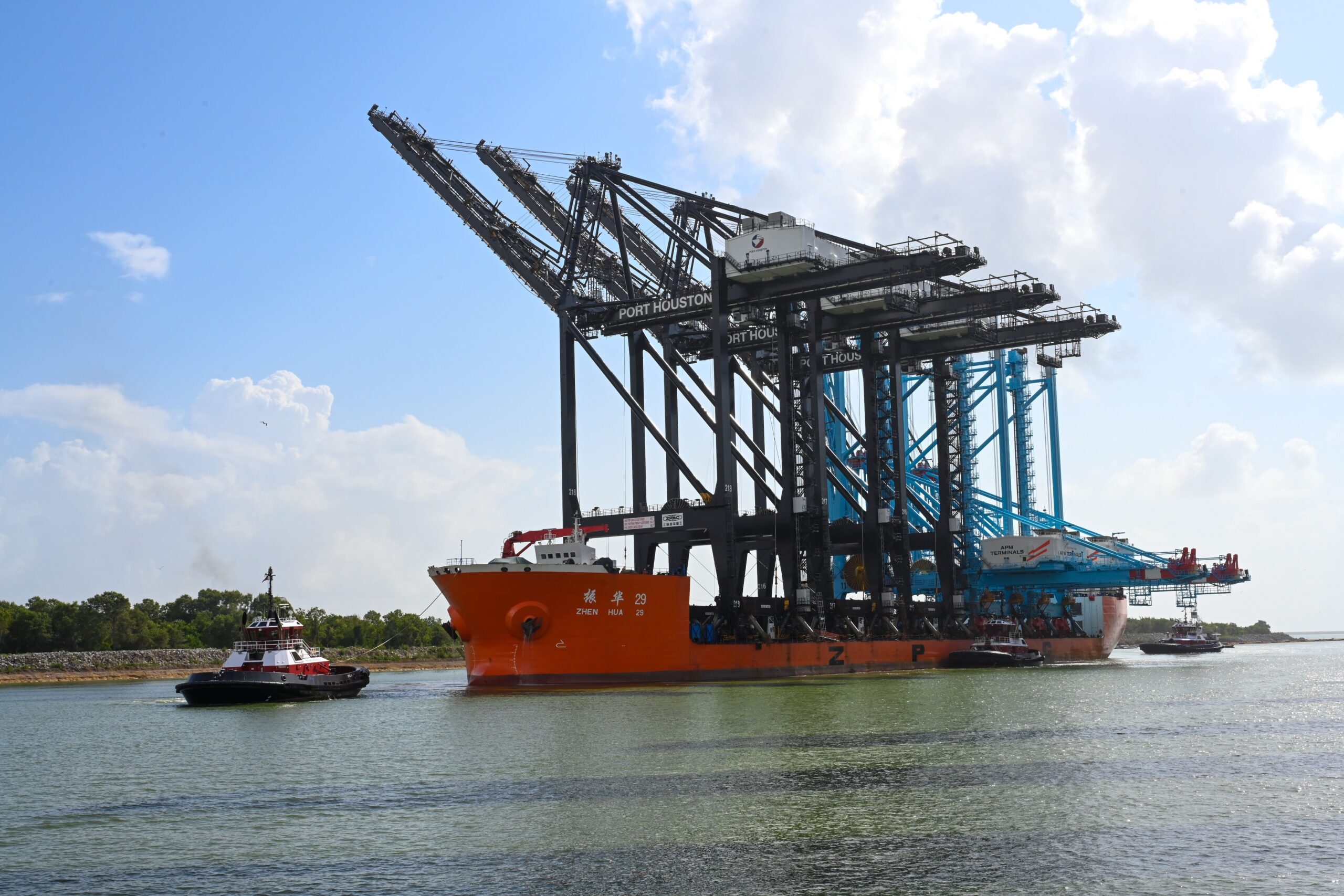
Most recently, the Port received three new ship to shore (STS) cranes and finished construction of the new Wharf 6 at Bayport Container Terminal. This added wharf and new STS cranes will help service vessels up to 15,000 TEUs in size upon completion of the Bayport Channel Segment in 2024 of the Houston Ship Channel Expansion – Project 11. Additionally at Bayport, we’ve invested a more than $425 million in infrastructure improvements to help with traffic flow on Freight Station Road and empty and loaded container storage capacity.

Port Houston has also purchased three additional STS cranes and 26 rubber-tired gantry (RTG) cranes to strengthen our vessel and yard operations. Those are expected to arrive in early 2024.
Additionally, at Barbours Cut Container Terminal , Port Houston has invested $43 million to enhance the overall terminal traffic flow, and is investing more than $650 million over the next 5 years to help redevelop and rehab existing areas around the terminal. In 2022 we nearly doubled our in-gate capacity, adding 14 new gates to bring our total to 29 entry gates. We also enhanced technology and support areas to help expedite entry into the terminal. This year, we’ve redeveloped 14.5 acres at the west end of the terminal for additional container storage space and we’ve begun rehabilitating wharves as well as container yards to make terminal operations more efficient.
Ryan Mariacher, Port Houston’s Director of Container Terminals, said, “We continue to expedite wharf and container yard expansion projects to regain capacity for anticipated demand. With the dramatic improvement of cargo fluidity, we are focused on process optimization to improve terminal service levels through technology implementation and collaboration with customers and terminal users.”

The Houston Ship Channel Expansion – Project 11 has also been moving along rapidly. In 2023, Port Houston has completed Segment 1A Bolivar Roads to Redfish which has eliminated daylight restrictions for larger vessels within this segment and is positively helping cargo move smoothly. We’ve also cleared existing shoreline vegetation near Bayport, begun building San Leon and Dollar Reef Oyster mitigation sites, and begun dredging the Bayport Ship Channel. The completion of Project 11 in late 2026 will facilitate handling of larger vessels, which is a critical step to increasing the efficacy of the nation's logistics infrastructure.
Port Houston knows how important reliability and efficiency is to customers. You can count on Port Houston to continue to meet our customers’ needs now and in the future.
Click the button below to learn more about the investments Port Houston is making to advance cargo movement.
The post Capital Enhancements to Support Rapid Growth: Accelerating Infrastructure Investments to Meet Demand appeared first on Port Houston.
]]>The post New Intermodal Services at Barbours Cut Container Terminal appeared first on Port Houston.
]]>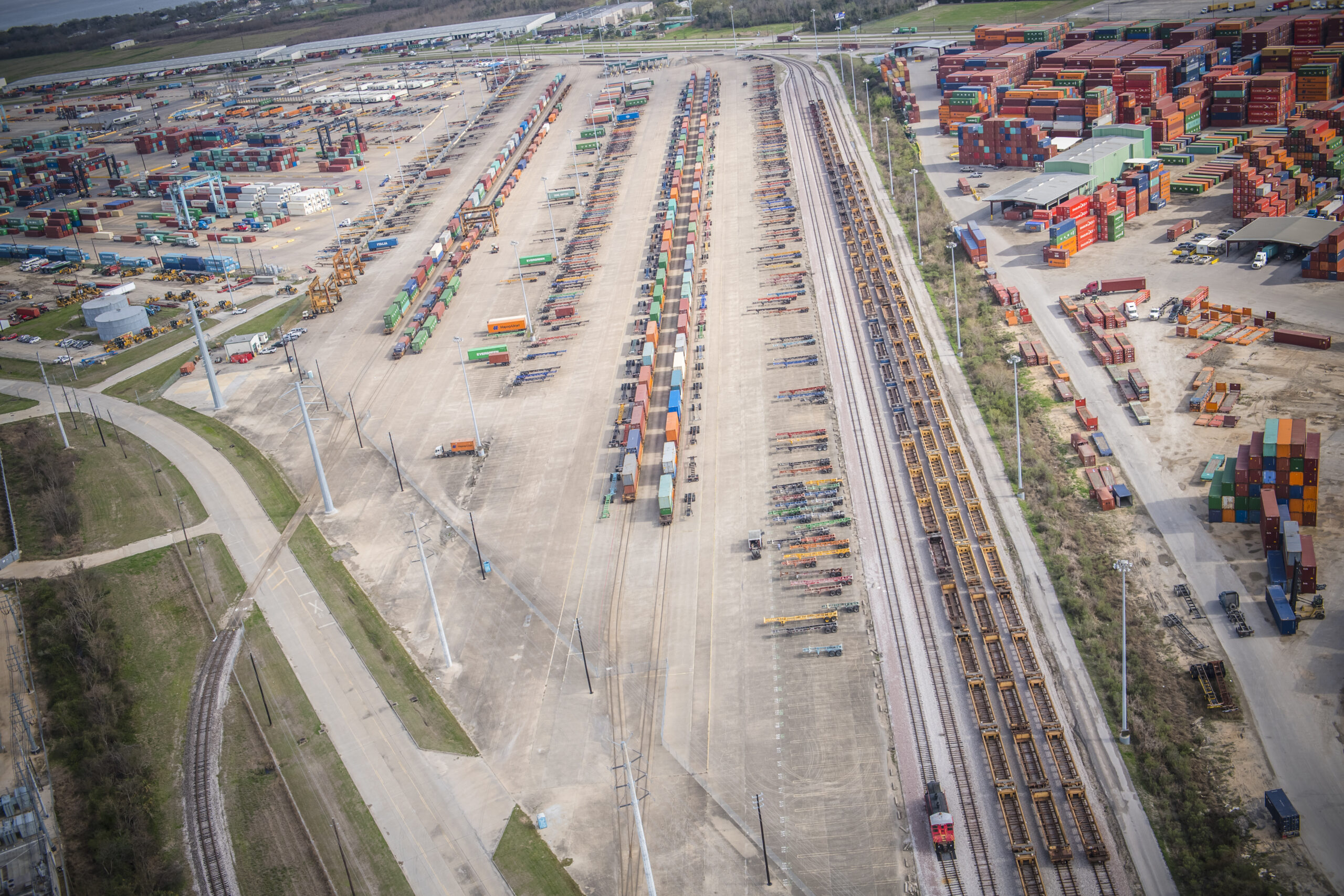
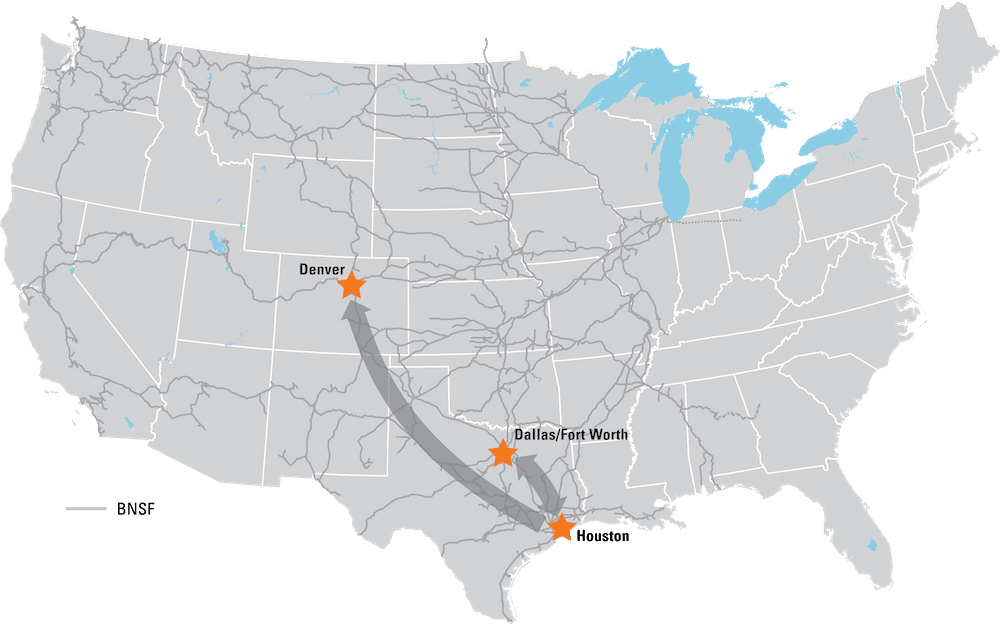
BNSF Railway’s new service at Barbours Cut Container Terminal expands capacity to meet growing demand. Port Houston averages around 12,000 trucks per day at our container terminals. With this added on-dock terminal rail service, Port Houston can help customers get their containers more efficiently. BNSF’s service will operate Tuesdays, Thursdays, and Fridays heading to the greater Dallas/Fort Worth and Denver markets.
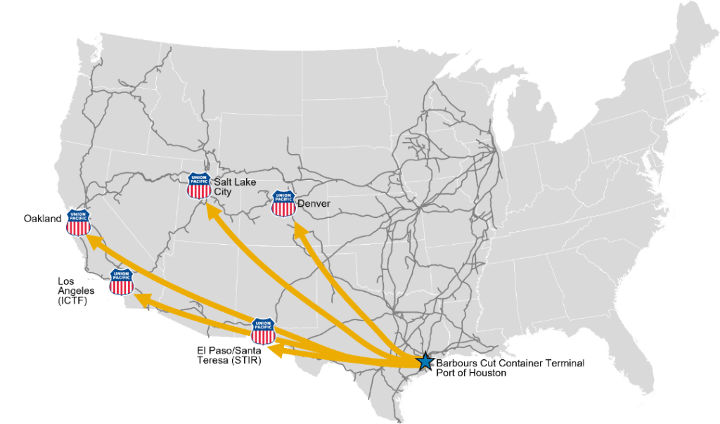
Union Pacific has also expanded their services to deliver containers to five growing inland markets. This service will allow containers to be loaded onto railcars from cargo ships docked at Barbours Cut Container Terminal and transported directly to Denver, Salt Lake City, Oakland, Los Angeles, El Paso, and Dallas/Fort Worth. This addition will help containers head to their destination more efficiently and help reduce greenhouse gas emissions.
Port Houston is the largest Gulf Coast container port, handling 73% of U.S. Gulf Coast container traffic and is an essential economic engine for the Houston region, the state of Texas and the U.S.
“These added rail services are an exciting step forward in the movement of cargo at Port Houston. Port Houston is a top five container port and growing fast, and intermodal solutions like this help ensure continued efficient movement of goods to locations throughout the U.S.,” said Roger Guenther, Executive Director at Port Houston .
The post New Intermodal Services at Barbours Cut Container Terminal appeared first on Port Houston.
]]>The post Port Houston Posts Record Volume in 2022 appeared first on Port Houston.
]]>The post Port Houston Posts Record Volume in 2022 appeared first on Port Houston.
]]>The post The After Life of a Container appeared first on Port Houston.
]]>
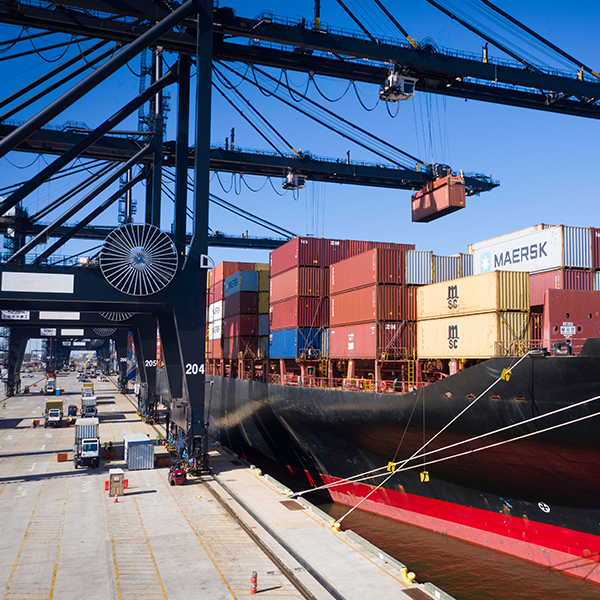
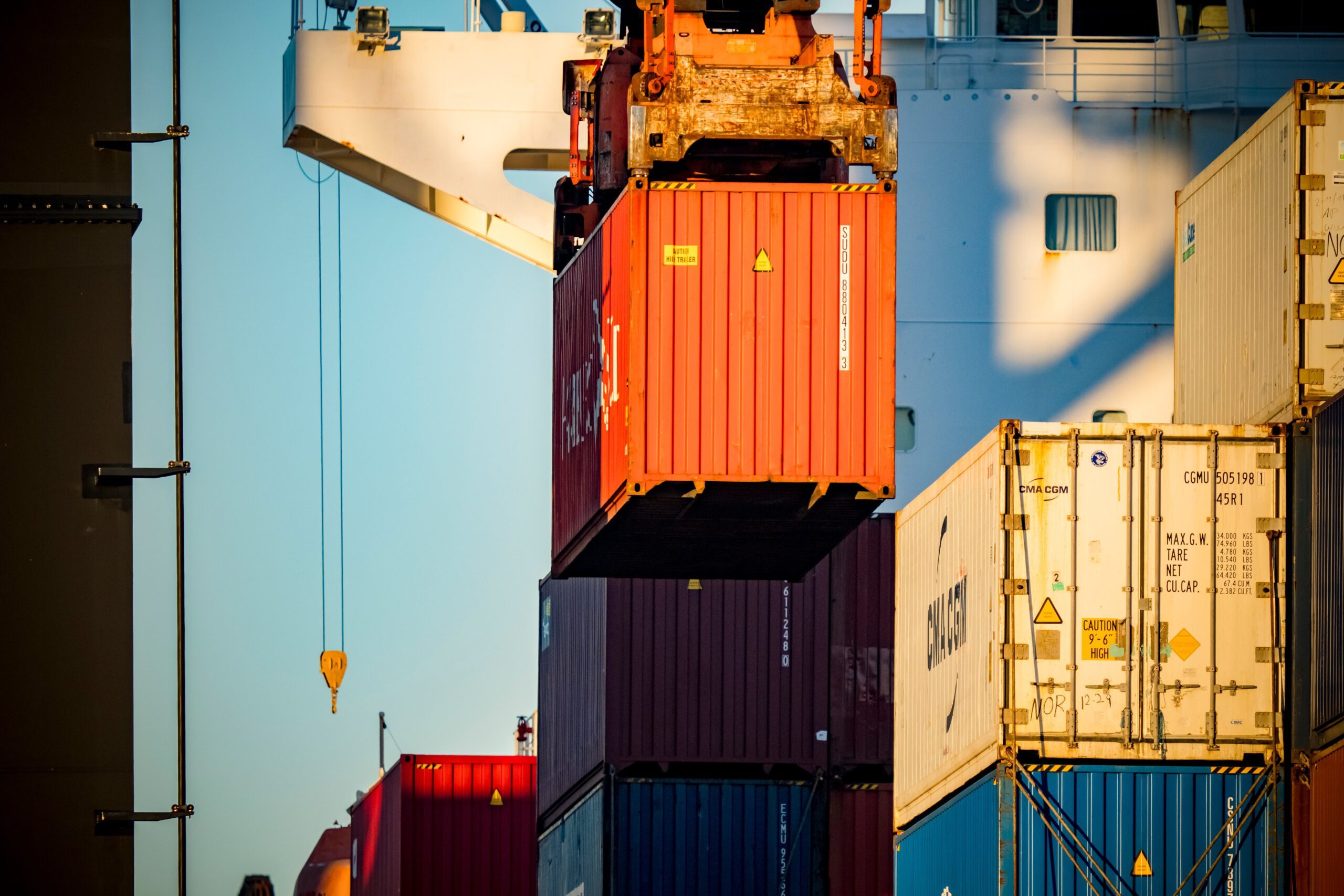
Caption: Containers being unloaded from vessel to the Bayport and Barbours Cut Container Terminals.
What Can You Do With a Container?
We have grown accustomed to seeing these TEUs on the road, behind a truck as they are whisked away to their next destination, but they can actually be transformed and utilized in many different ways. This begs the question, What can you do with a container?
In Houston, you may see them around the city, integrated in the design of businesses, thus giving the container a second life. Local bars like Truck Yard in East Downtown area or 8th Wonder Brewery use them. Closer to the East End, a historic community near Houston’s port you can find them at various places, ranging from use as murals, to screen movies, or retail.
On average, a container’s lifespan for transportation of goods can range from 10 to 12 years before it is taken out of service. However, a container can very well last up to 50 years depending on its use and ongoing maintenance to avoid rust, a typical culprit in its deterioration.
Places to visit in Houston
Ironworks Building
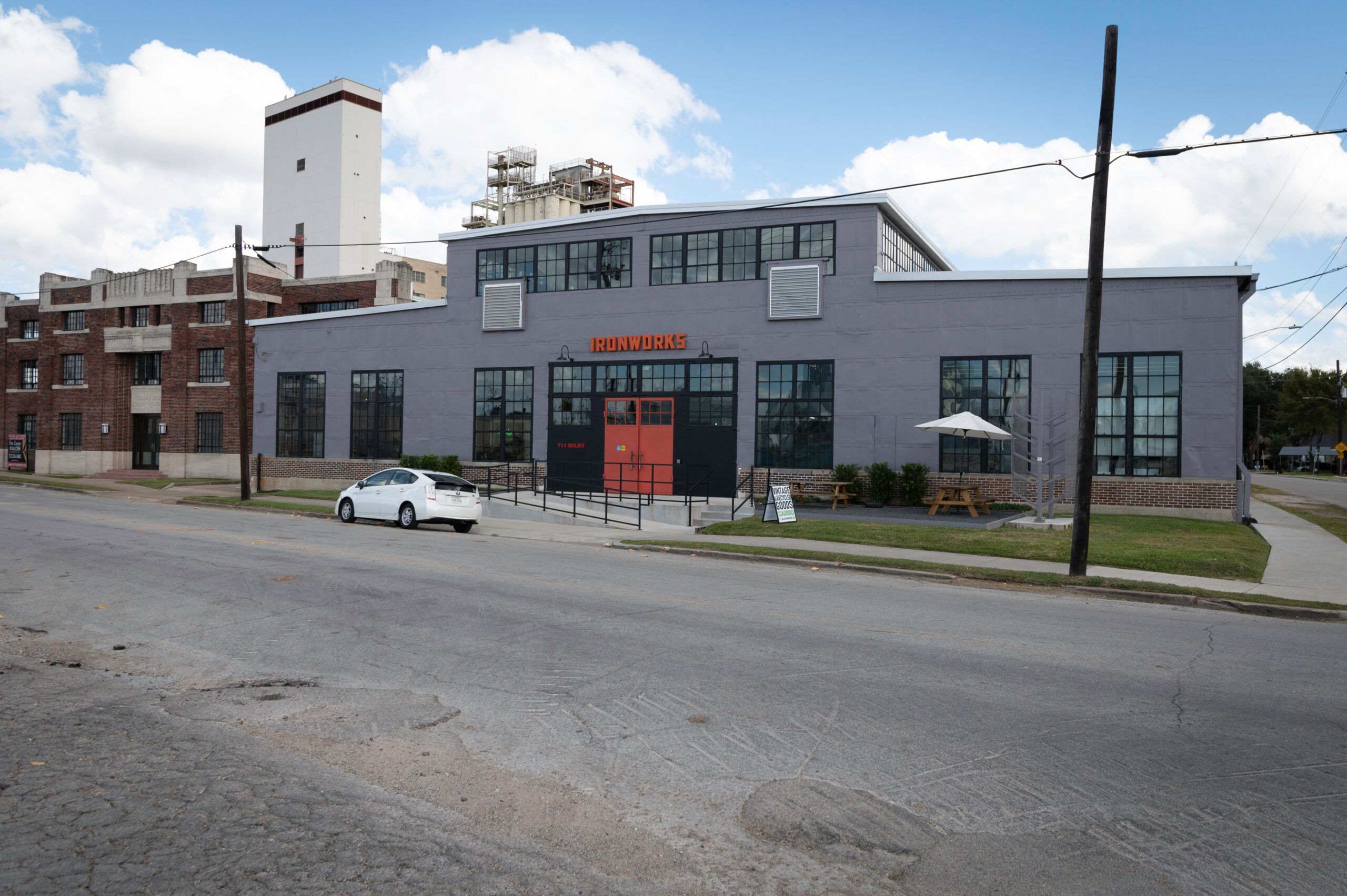
Caption: Front of Ironworks Building in historic East End Houston
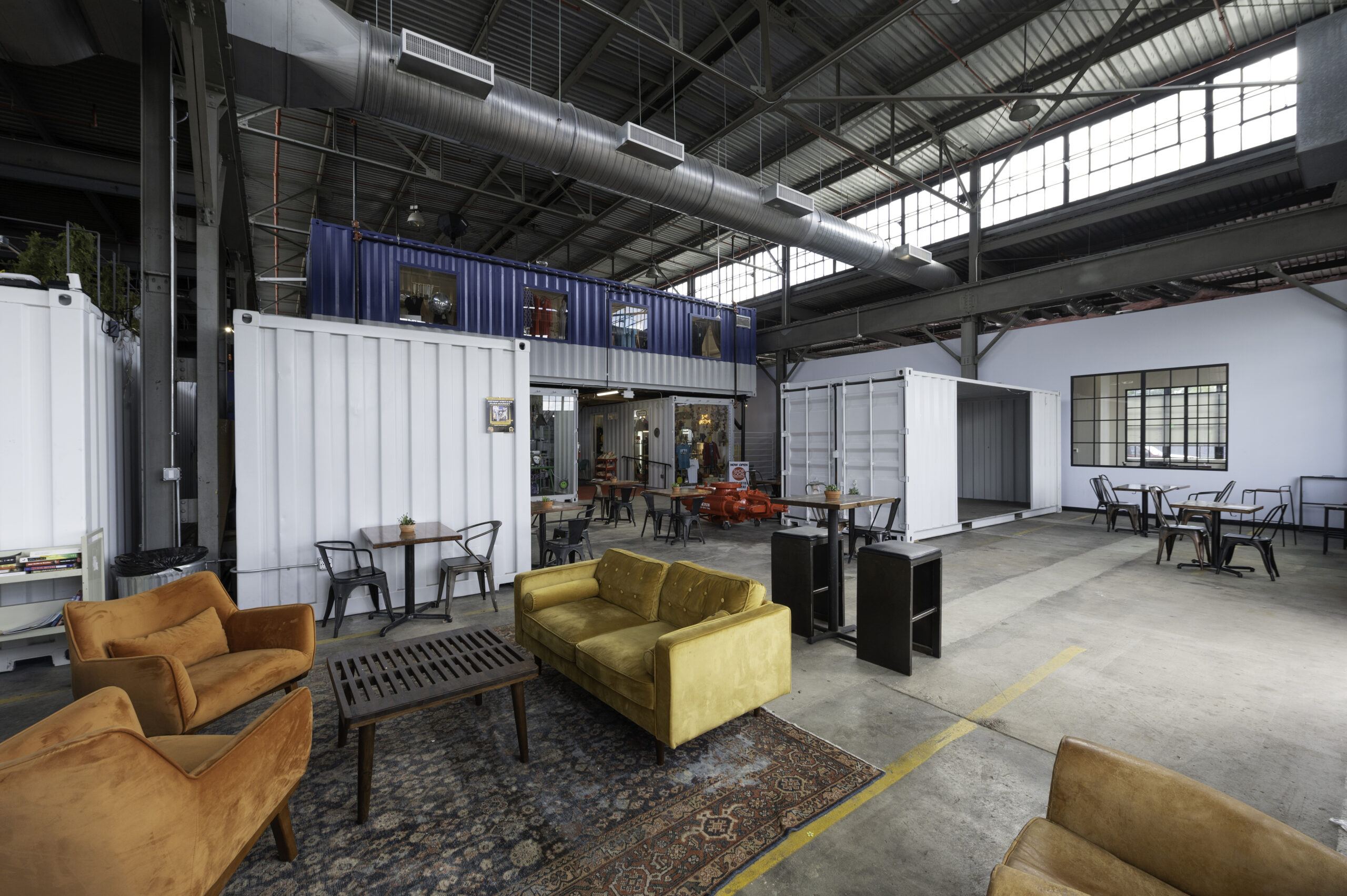
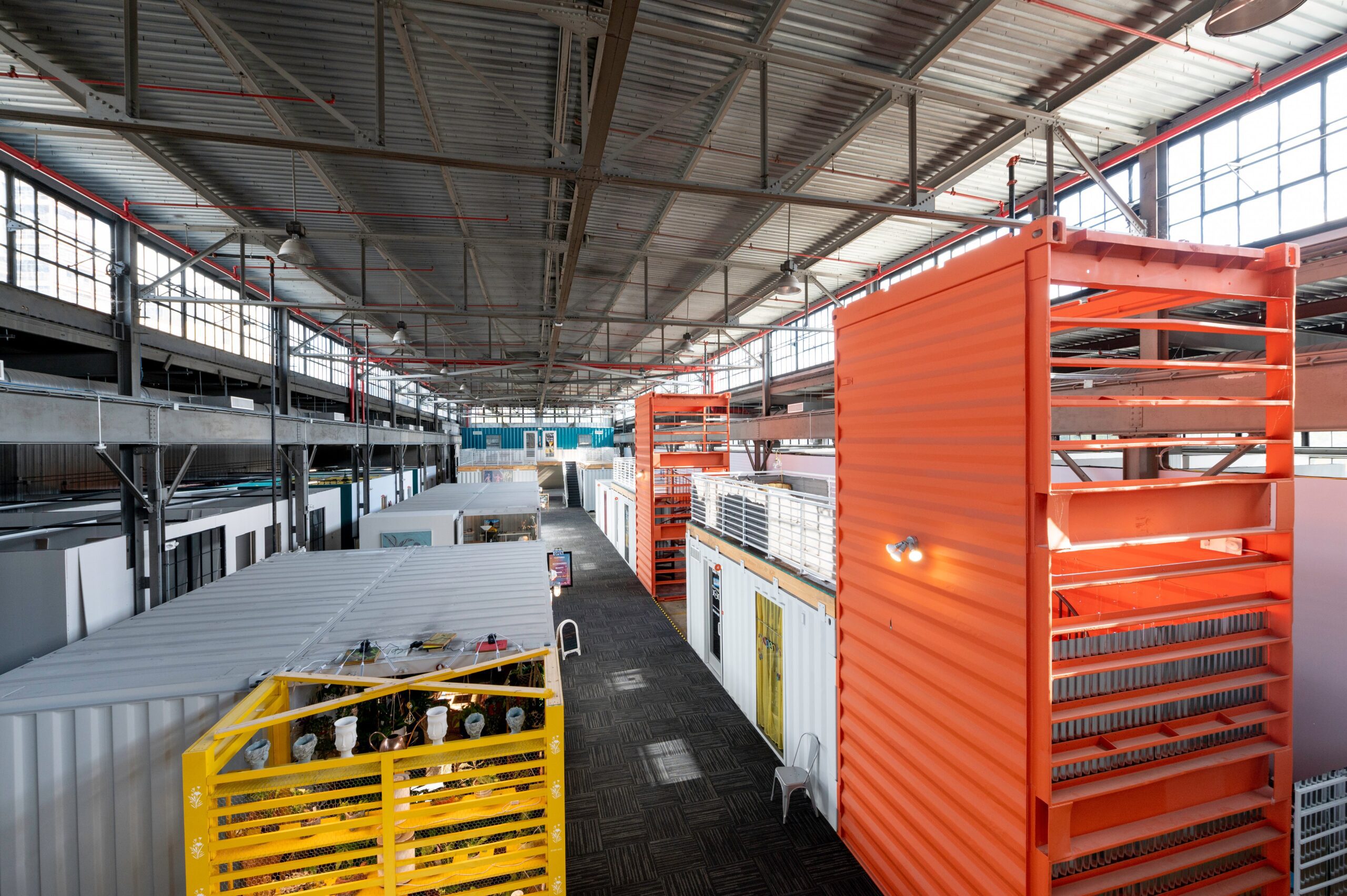
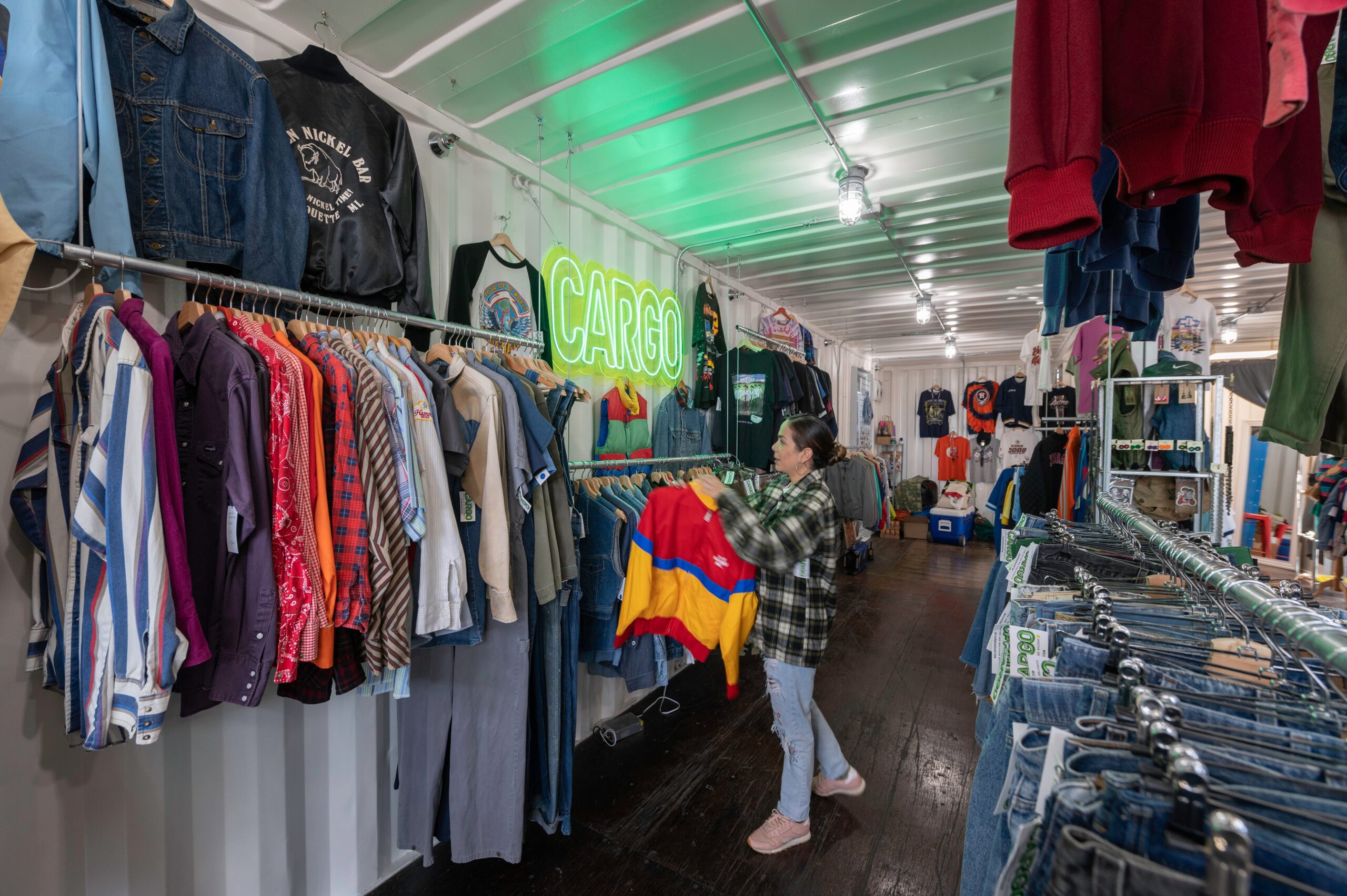
Captions: (Left and center photos) The Ironworks building houses various businesses ranging from vintage apparel, coffee, law group, tattoo artist, plant shop, and more using containers inside the warehouse space. (Right most photo) Here is the Cargo vintage shop with a tenant picking out some clothing.
“After researching the various uses of containers, I found that many were repurposed into homes so I decided to develop a different concept of designing them as creative workspaces. When I started developing my vision for IRONWORKS, I knew this would fit with the industrial look I wanted to capture in the space,” noted Andrew Kaldis, owner of Ironworks and Kaldis Development.
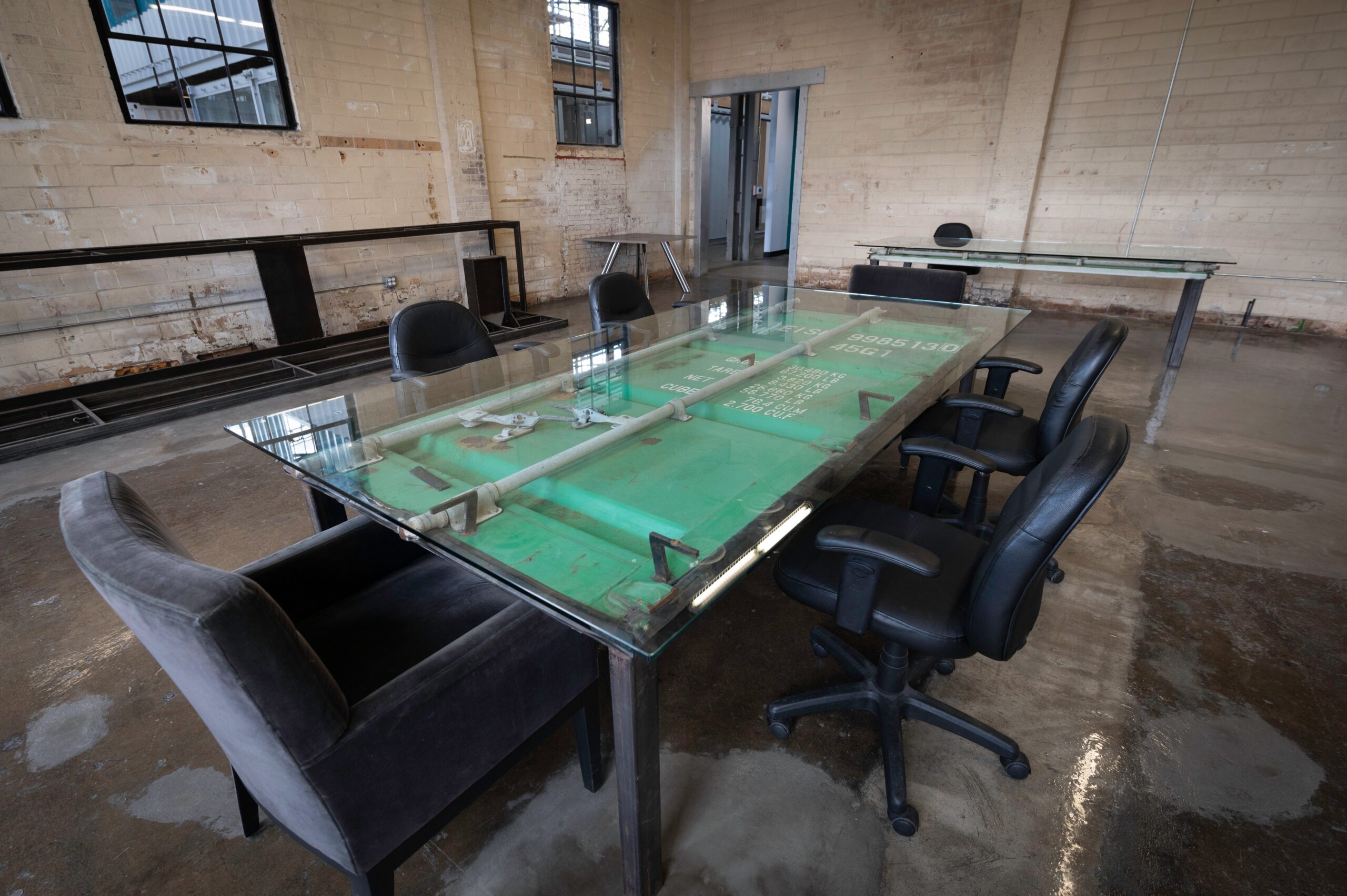
Caption: photo of container door used as table in the Ironworks Building conference room.
“I was able to establish a relationship with the right fabricator to alter the containers per my design. My hope for the building is that it continues to be a landmark for the area. It is very rewarding to contribute to a neighborhood and see it flourish,” noted Kaldis.
East ENd River Mural

Caption: David Maldonado, a local Houston artist devotes his time to create murals and other pieces of art that represent the city. Mural agency Muros hired Maldonado to complete the East End River Mural on Clinton Drive using containers as the canvas.
“My great grandfather and grandfather worked as longshoremen. To this day, my father and many family members continue to work as longshoremen as well. I feel proud and honored when I get to do a project with historical background,” said Maldonado.

Caption: David Maldonado puts the finishing touches on the East End River Mural displaying elements of Houston including NASA, the Port of Houston, nature and city scape.
“Art has a way of building bridges in the community and public art is a great way of doing that. This [East River Mural] is the first time I’ve worked with shipping containers, and I would use them for future projects. I think it’s great when things are repurposed and used in other ways.”
Moonstruck Drive In Cinema
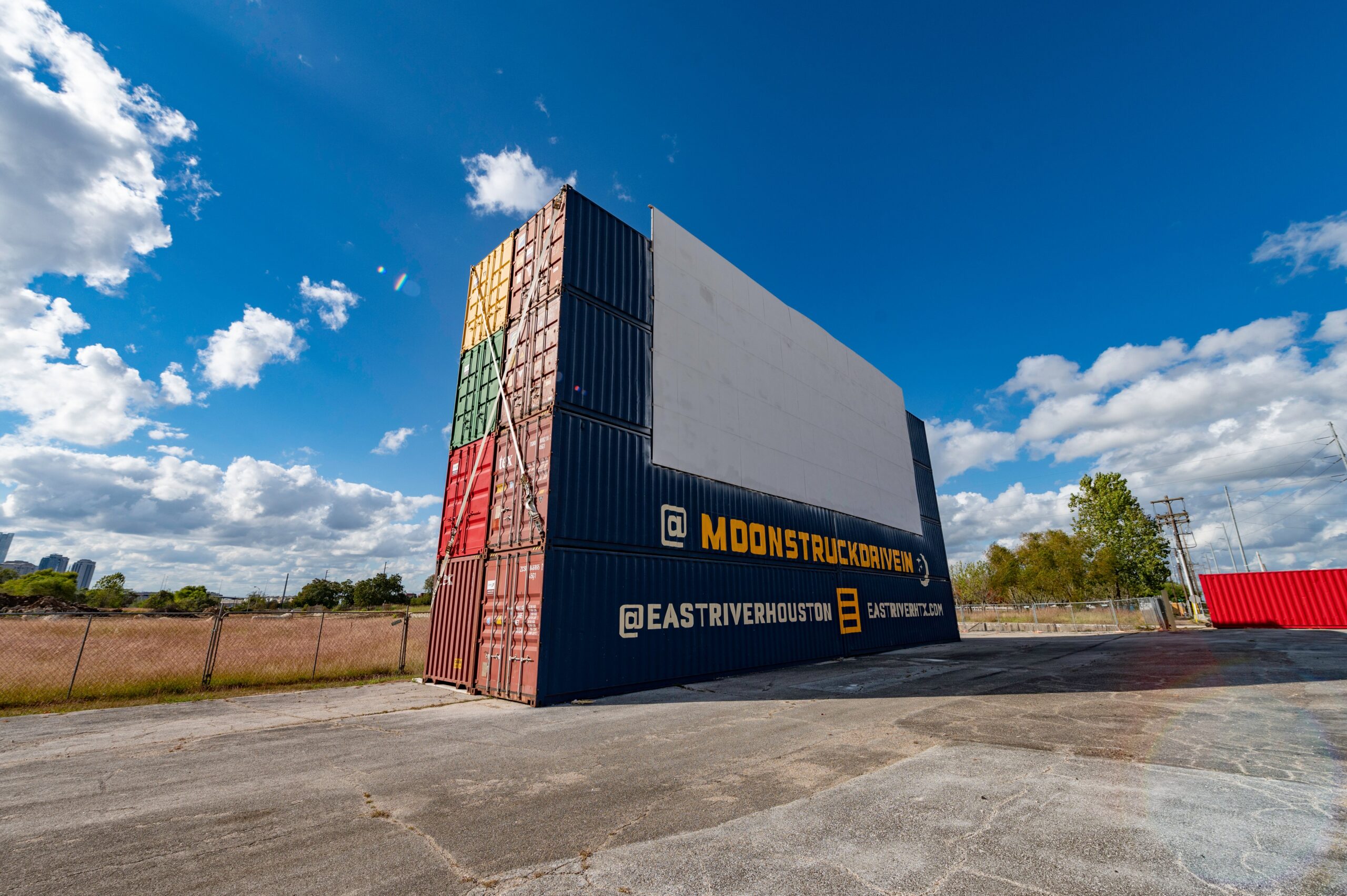
Caption: Moonstruck Drive In is a new addition to the East End, the drive in utilizes stacked containers to screen movies outdoors. Families can watch old-time movies up to the most recent releases from the comfort of their cars.
Moon Tower Inn
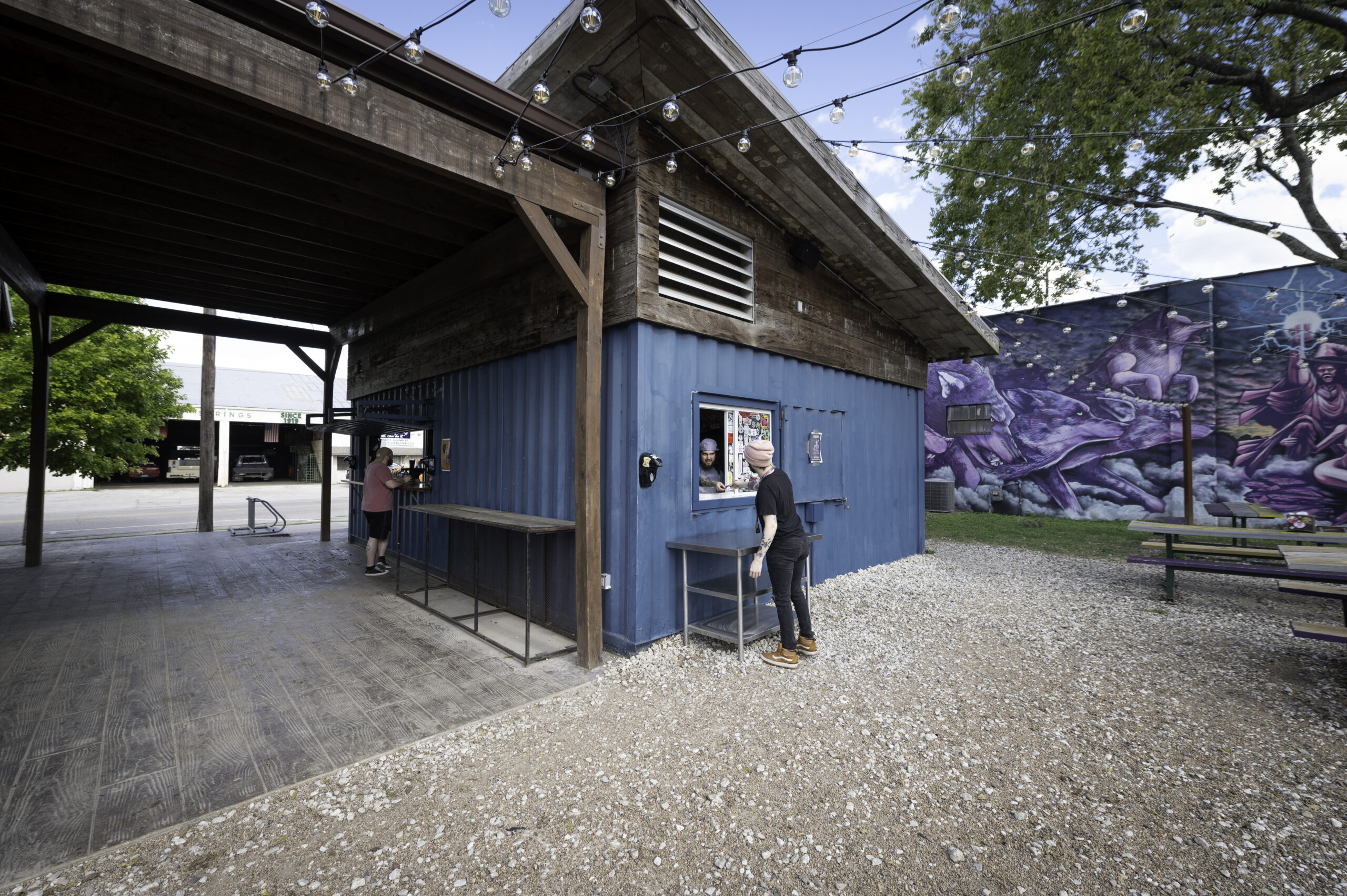
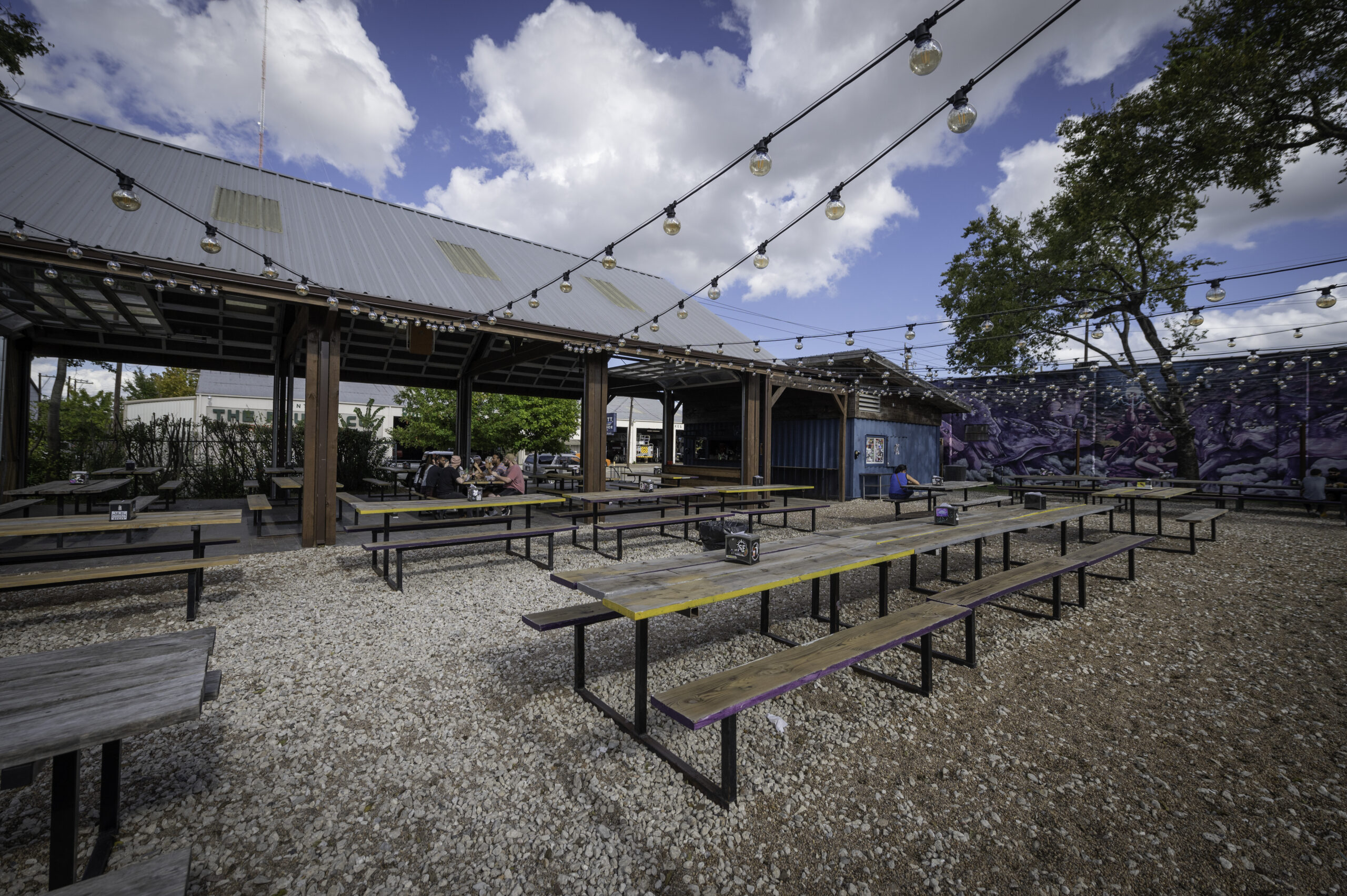
Caption: Moon Tower Inn is an American restaurant specializing in game-meat and hotdogs along with a variety of beer for an outdoor pub feel. The bar area is housed in a container.
The post The After Life of a Container appeared first on Port Houston.
]]>The post E-Commerce Triggering Need For Distribution Centers Near Port Houston appeared first on Port Houston.
]]>
Ecommerce Steadily Rising
“With a trillion-dollar year on the visible horizon, coupled with the size and continued growth of the Houston area, I wholeheartedly believe Houston’s industrial market is primed for a windfall of e-commerce leasing activity in the coming months and years,” said Justin Tunnell of Lee & Associates.
The City of Houston is still in its infancy for e-commerce, as it has historically been served by regional distribution centers in Dallas, noted Justin Robinson of Stream Realty Partners. “However, that model has rapidly changed due to accelerated delivery expectations of consumers,” Robinson said. “As a result, e-commerce companies have established facilities in Houston to more efficiently and effectively meet consumer needs.”
Distribution Center Locations
Much of the cargo activity has occurred around Port Houston. Stream has been involved with Principal Real Estate’s Bay Area Business Park, which has grown a 3.3 million square foot Class AA industrial development and minutes away from the Bayport and Barbours Cut Container Terminals.
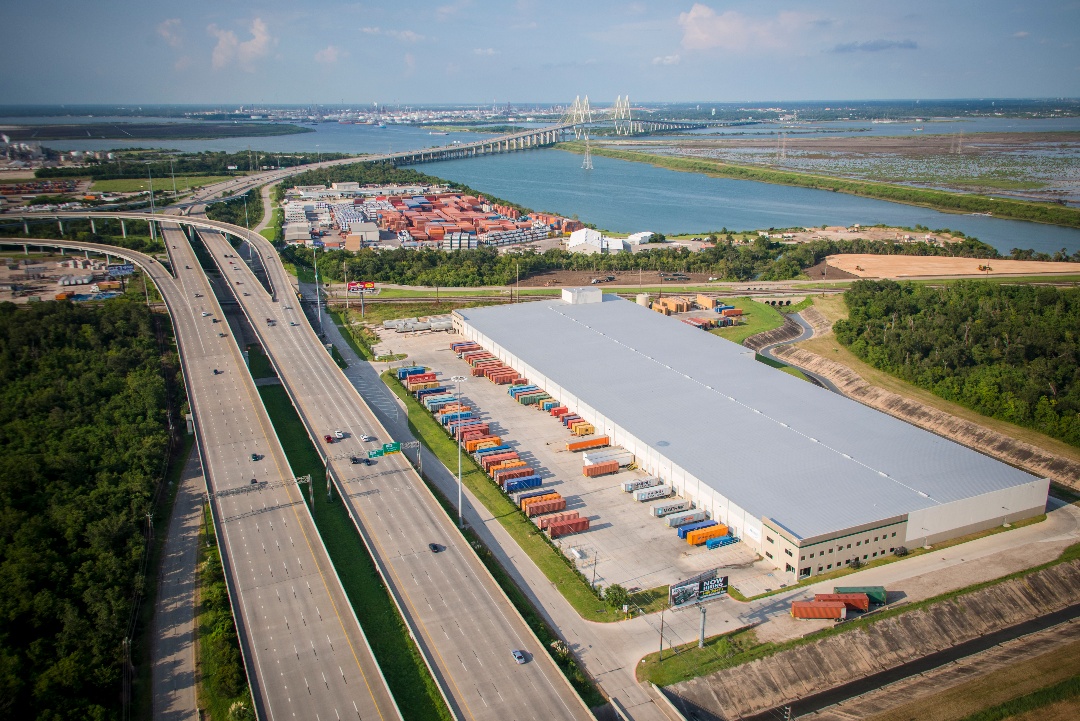
A host of distribution centers already had been taking shape in the greater Houston region in recent years. For example, furniture distributor IKEA acquired more than 143 acres at Generation Park in northeast Houston for a distribution center that will top 1 million square feet. Additionally, Dollar Tree, Inc. is building a new distribution center in Rosenberg, investing $130 million in the facility. Retailer Five Below has completed and is occupying its new 860,000-square foot facility located in Houston suburb Conroe. Retailer Ross Dress for Less is building a large distribution center in Waller County, southeast of Brookshire. Amazon has also expanded its footprint around the city building two more centers to bring its total to five distribution centers in the Houston area. Proximity to the Houston Ship Channel remains a prime area for distribution centers keeping logistics practical and more efficient.
Growth for the City and Port Houston
“Port Houston continues to be among the fastest-growing container ports in the country, fueled by an increasing number of import distribution centers in the Houston region and a robust manufacturing base in the state of Texas,” NAI wrote.
That growth is projected to continue, CBRE said in a newly released report.
“Houston is a growing port of entry to supply the Southcentral U.S, which is projected to increase in population by 7.1 percent over the next five years,” stated the report, entitled “The Changing Flow of International Trade.”
The growth of imports has factored into the decision-making by Port Houston leadership to continue to expand infrastructure. Three new Neopanamax electric cranes for the Bayport Container Terminal, which is still being built out, are under construction now. The $35 million ship-to-shore cranes, which are for Wharf 5 at the Bayport Container Terminal, are expected to be operational in the summer of 2021 and will be capable of handling 18,000-TEU ships. The cranes will bring Port Houston’s fleet of ship-to-shore cranes to 29.
Retailers in Texas and beyond are banking on that kind of growth and investing in Houston. The port and city drive home Houston’s fast-emerging image as a major gateway for imports.
The post E-Commerce Triggering Need For Distribution Centers Near Port Houston appeared first on Port Houston.
]]>The post How Port Houston Preps for Hurricane Season appeared first on Port Houston.
]]>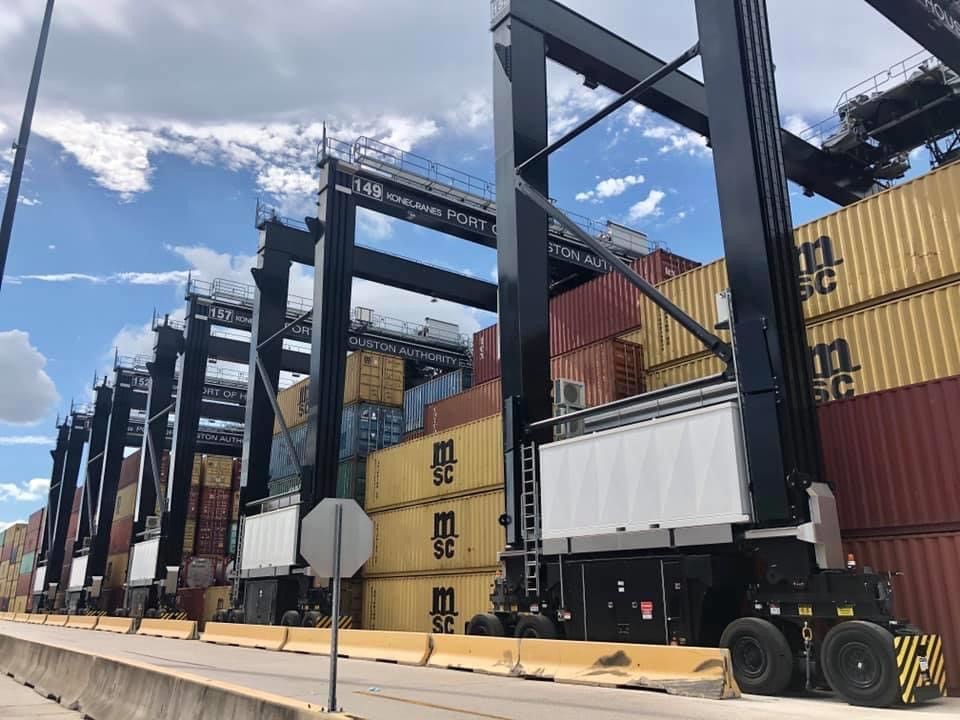
Days before Hurricane Laura stormed the coast between Louisiana and Texas with sustained winds up to 150 miles per hour, Port Houston maintenance workers busily went about the task of protecting assets and securing facilities from the much-anticipated stiff winds. This is necessary anytime a storm as ferocious as Hurricane Laura enters the gulf and threatens the gulf coast’s biggest container facility. While Hurricane Laura spared Houston this time, this was a big wake-up call for what may come.
Hurricane season runs from June 1st through November 30th, keeping the port on high alert for several months. Port Houston though is always ready to spring into action under the leadership of Roger Guenther, Port Houston Executive Director.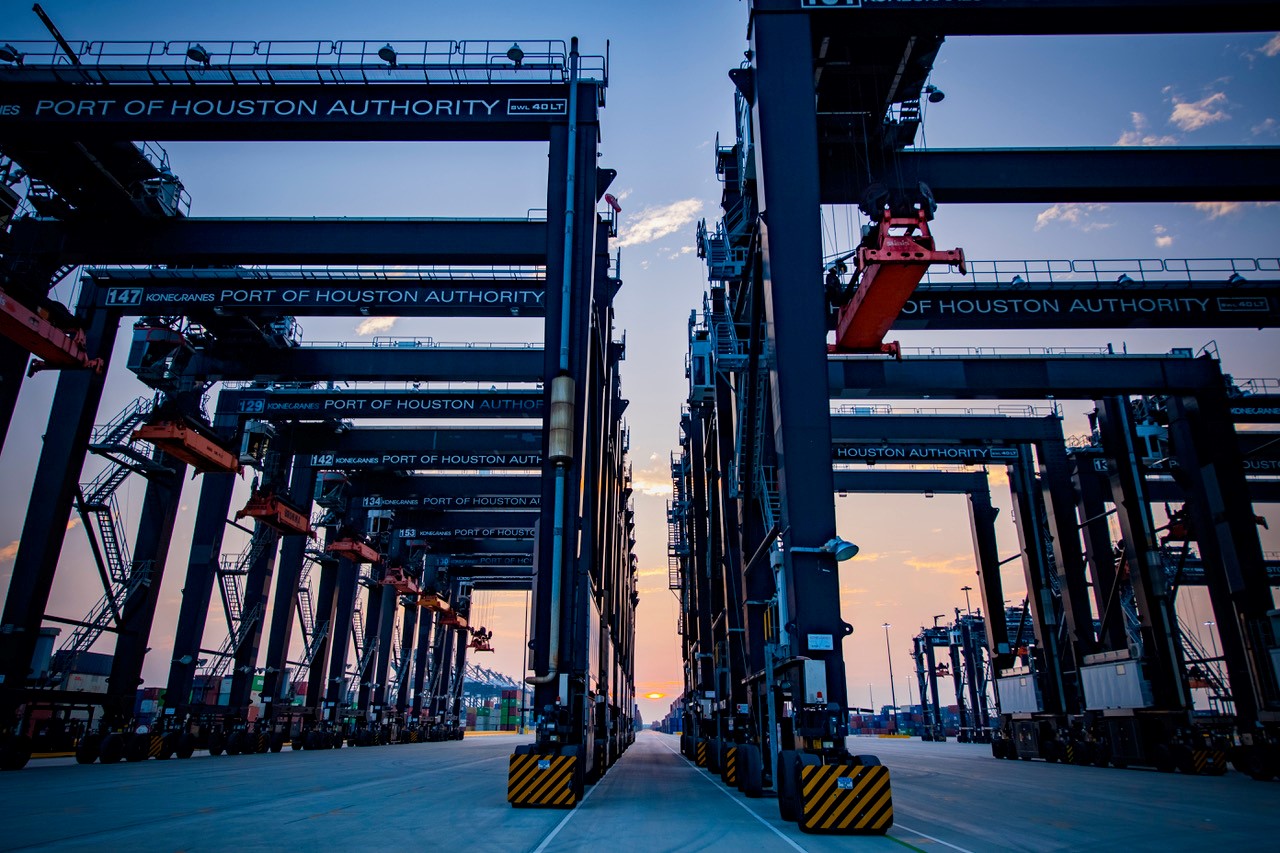
“This [Hurricane Laura] was a massive storm and we were really fortunate to miss major damage in our region, but we were prepared,” Roger Guenther wrote in an email to employees after the hurricane made landfall. “I am extremely pleased with the coordination of our Emergency Management Team and all of our employees working together to protect our Port employees and assets during preparation.”
Though the work that goes into preparing for a major storm is time-consuming, Hurricane Laura made us even better prepared for future events, Guenther noted.
The true backbone for running smoothly during these critical situations are our Emergency Management and Operations teams. Just like when COVID-19 hit earlier this year, both teams have essential personnel that work the front lines of our terminals making sure the port is prepped in case of a catastrophe.
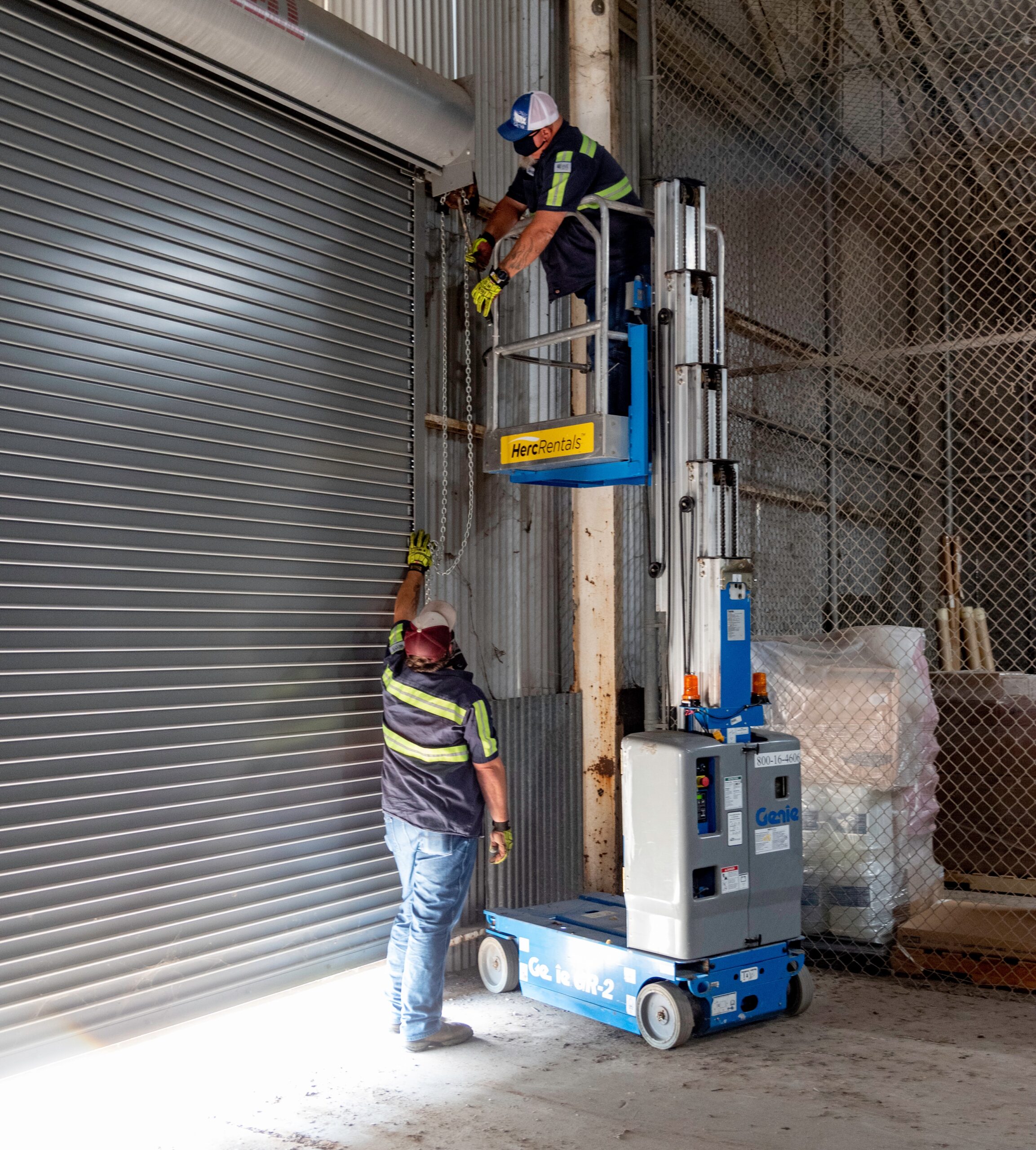
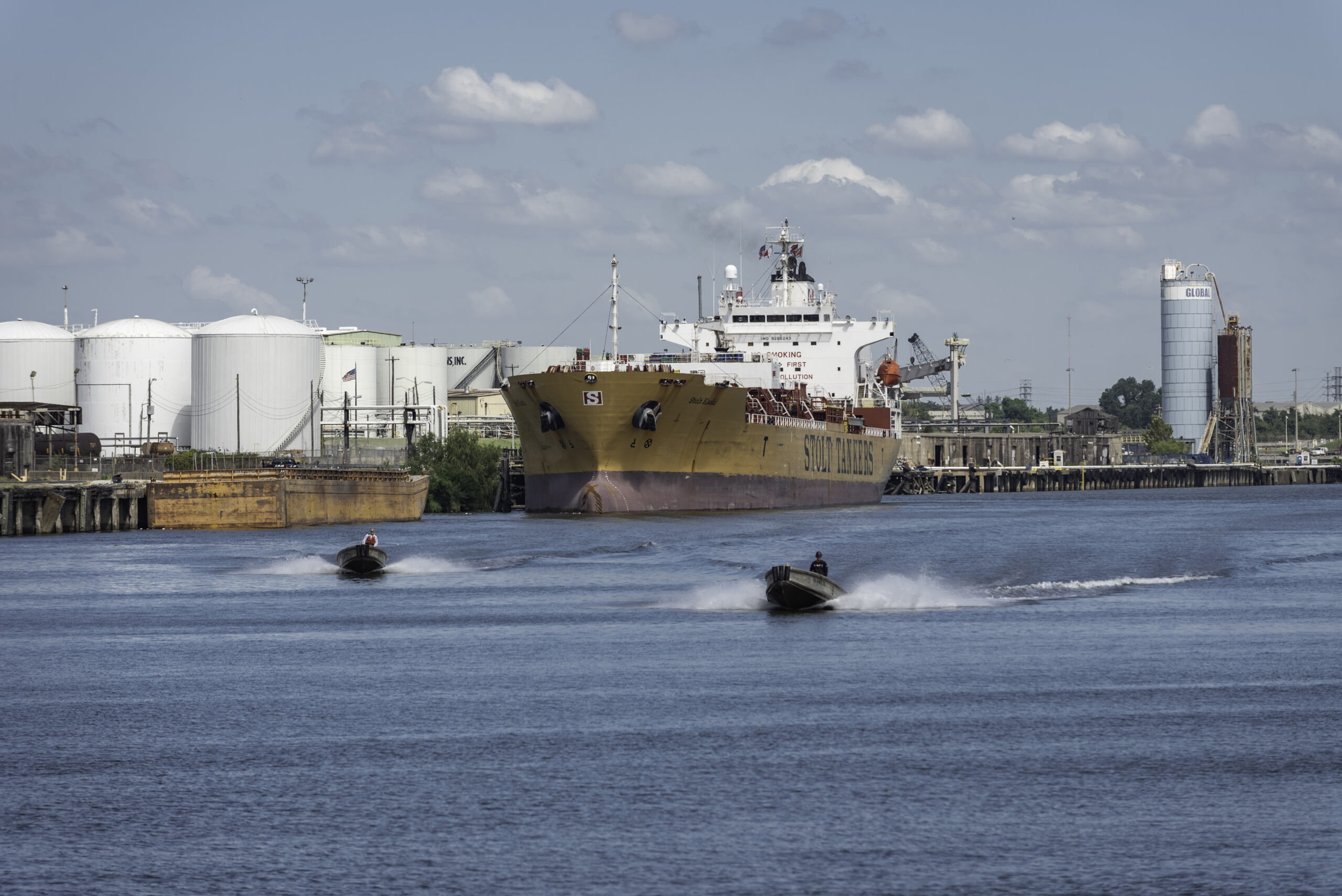
The Operations team handles most of the heavy lifting and prepping at port terminals. They are responsible for gathering and replacing all emergency supplies, stacking loaded containers in an orderly and strategic fashion, organizing cranes to function as barriers, and making sure all portable buildings are properly secured. In addition, they secure all terminal equipment, fill extra drums with fuel, lubricants, water, and hydraulic fluids for use after the storm, board up all windows, and keep all transportation vehicles supplied with fuel (boats, cars, vans, trucks, etc.).
The Port Houston Emergency Management team, part of the Port Security and Emergency Operations (PSEO) division, works closely with the U.S. Coast Guard in keeping the Houston Ship Channel safe. Port Houston Emergency Manager Colin Rizzo said one of his greatest fears is that a hurricane could hit the port and damage crucial infrastructure like ship-to-shore cranes at the container terminals, which could take a months to repair or replace.
“You can’t take these huge cranes down and hide them from the wind,” Rizzo said. “The maintenance department does a great job of tying them down.”
When there are potentially big storms looming, the National Hurricane Center updates the storm tracks morning and night, and Port Houston monitors those updates, Rizzo noted. The Emergency Management team then weighs matters carefully, conferencing daily with Port Houston chiefs, and other local jurisdictions, taking note of what actions other agencies are taking. Once the storm is less than 24 hours from impacting the area the Emergency Operations Center (EOC) is activated. The EOC is staffed around the clock until the hurricane threat passes.
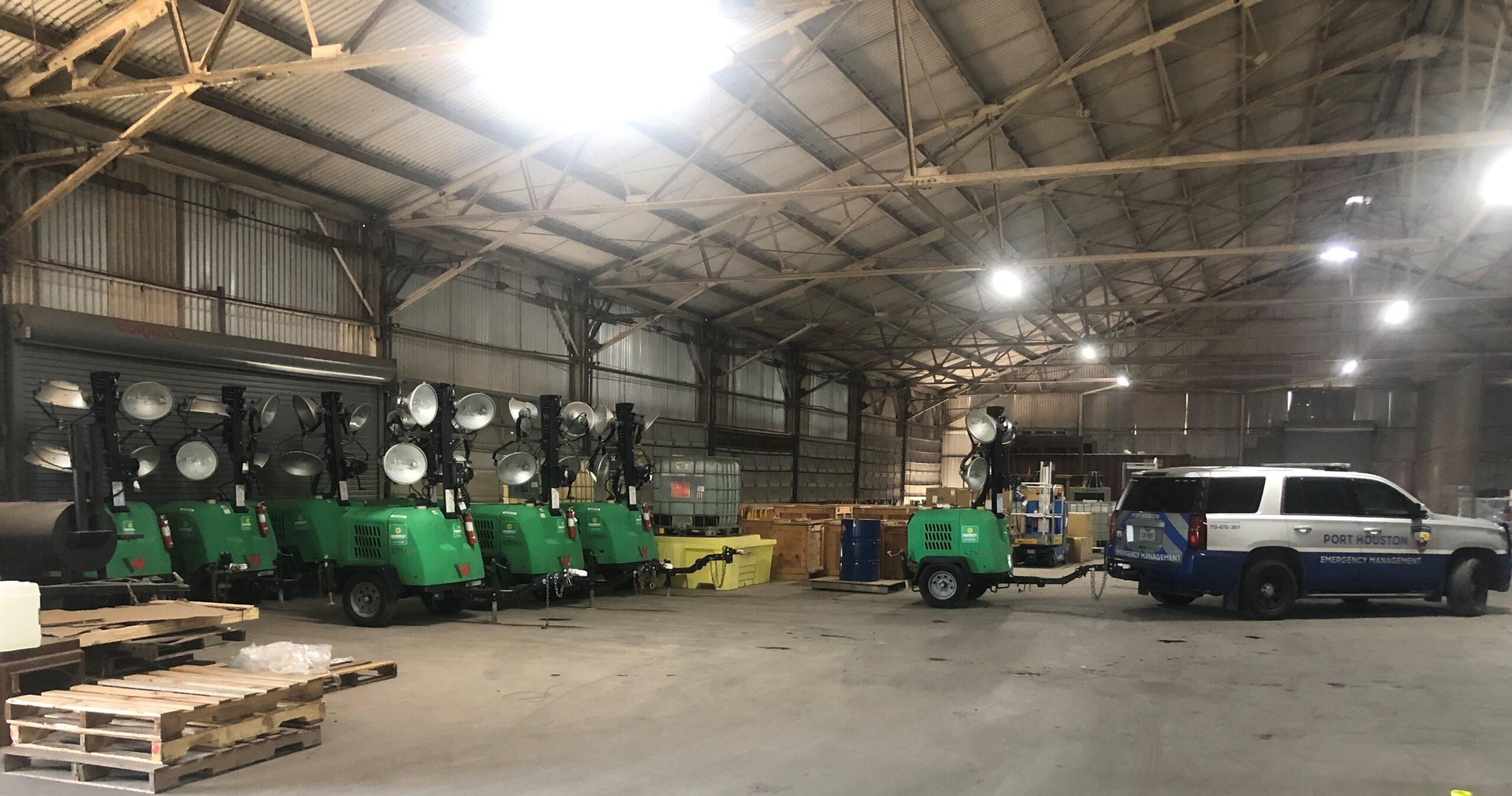
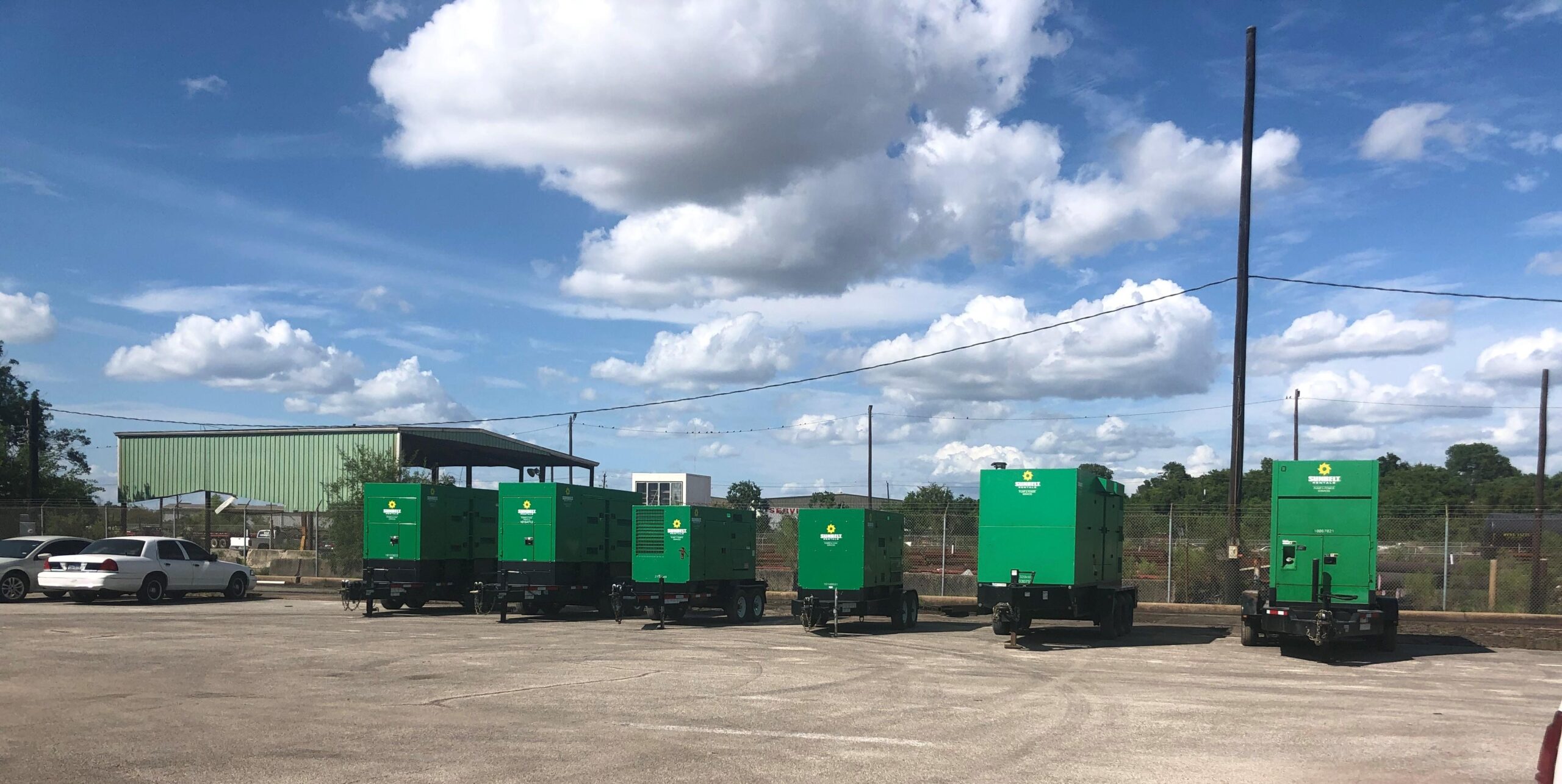
Though most of the work goes into prep, the recovery process can be tireless depending on the amount of damage caused. The potential for such serious damage keeps the Port Houston Office of Emergency Management officials ever vigilant. The Coast Guard, Port Officials, Emergency Management, Operations, and Port Executives all do various assessments to determine the amount of damage that may have occurred.
While hurricanes pose the greatest threats to property and life, tropical storms and depressions can also be devastating. It’s important for us to prepare before storms arrive, clean-up damages in the area, and help our community recover from these destructive storms.
The post How Port Houston Preps for Hurricane Season appeared first on Port Houston.
]]>The post U.S. Department of Transportation MARAD Grant Awarded to Port Houston appeared first on Port Houston.
]]>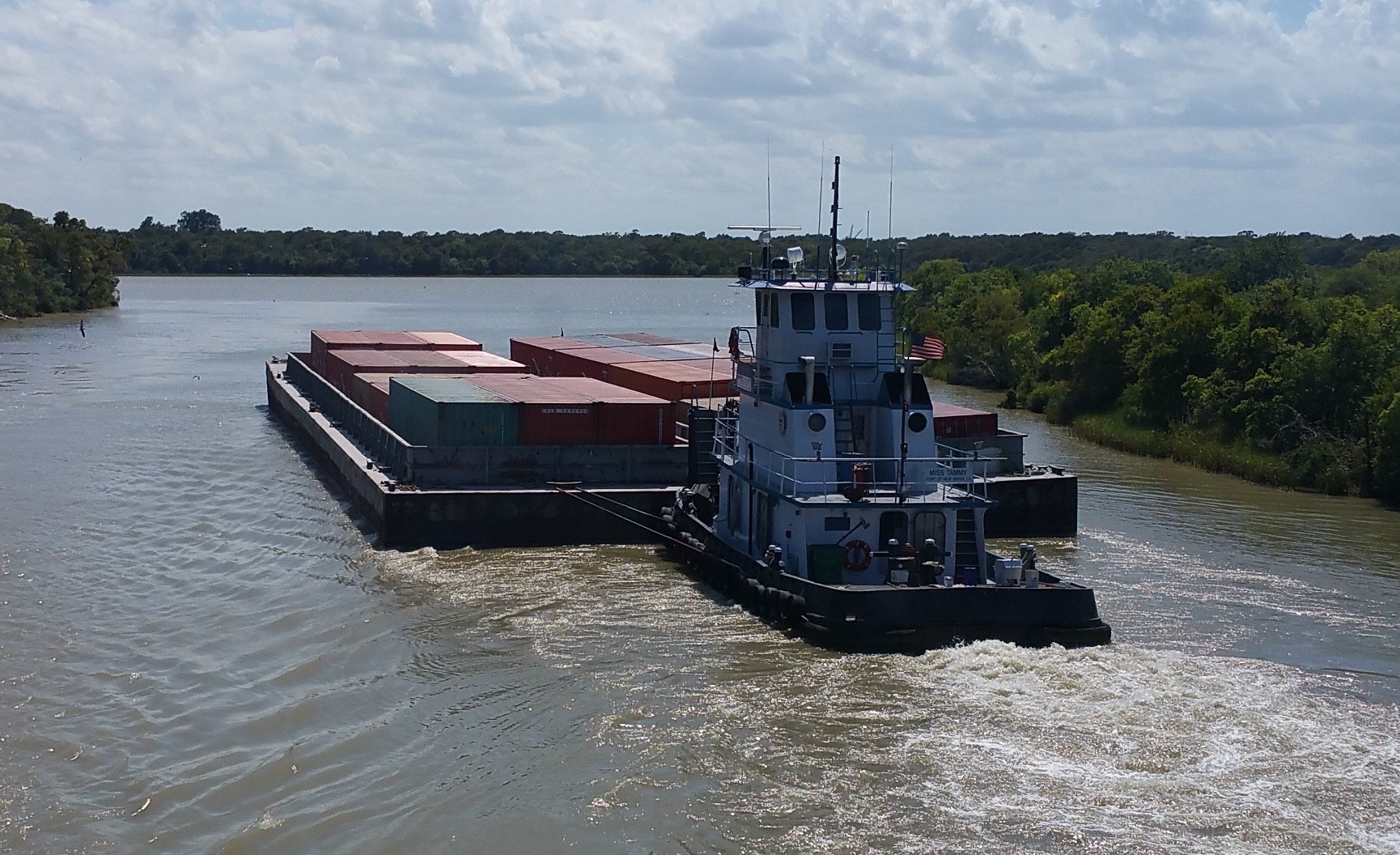
Caption: Container-on-barge transiting along the Houston Ship Channel.
The U.S. Department of Transportation’s Maritime Administration (MARAD) announced its latest round of grants for its America’s Marine Highway Program. Port Houston was one of nine U.S. ports awarded funding, receiving a grant for development of a business case study to explore options of building a container-on-barge facility.
Continuously striving for innovation and a diverse business portfolio, we will use the $180,000 grant to create an Operational Plan to determine if building a container-on-barge facility, located near either of our two container terminals, is a feasible option.
This study is part of an effort to explore potential for future growth and opportunities for infrastructure modifications. “This grant is an opportunity for us to explore new avenues for handling freight with greater efficiency, as volumes in this region continue to grow,” said Rich Byrnes, chief infrastructure officer for Port Houston. “We are honored to be a grant recipient and to work with MARAD.”
This is the second grant that Port Houston has received from MARAD. The first grant, for $10 million, was to build wharf 2 at the Bayport Container Terminal.
The post U.S. Department of Transportation MARAD Grant Awarded to Port Houston appeared first on Port Houston.
]]>The post Big, New Ship-to-Shore Cranes Authorized by Port Commission appeared first on Port Houston.
]]>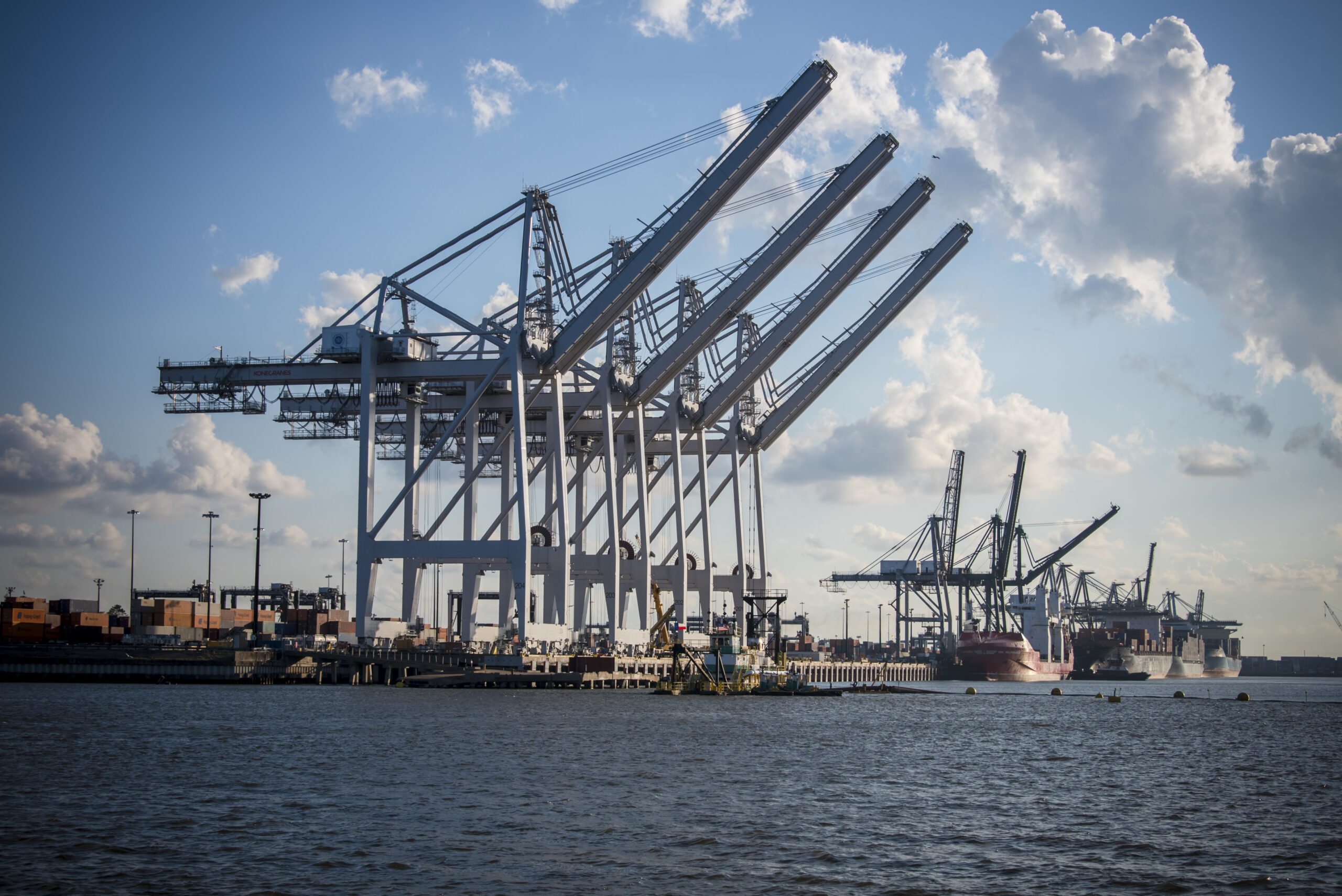
Caption: Neopanamax cranes at Bayport. Three additional cranes are expected to be operational in 2021.
A contract for three new Neopanamax electric cranes for the Bayport Container Terminal was approved Sept. 24 by the Port Commission of the Port of Houston Authority. The $35 million dockside cranes are for Bayport’s Wharf No. 5.
The three new ship-to-shore cranes are expected to be operational in the summer of 2021 and
will be the tallest to date for Port Houston, standing at 158 feet (48 meters) under the spreader
and will be capable of handling 18,000 TEU-sized container ships. The three cranes will bring Port
Houston’s fleet of ship-to-shore cranes to 29.
“Operationally, our facilities have handled close to 30 million tons of cargo through August, an
increase of 7 percent over last year as both container volumes and steel have maintained their
upward trends in 2019,” Executive Director Roger Guenther said during the Port Commission’s
September meeting.
The number of twenty-foot equivalent units or container TEUs handled through August totaled nearly two million, an increase of 11 percent compared to this time last year. Guenther said that he expects to approach three million by the end of the year. Financially, operating revenues stand at $260 million year-to-date, combined with favorable cash flow.
The post Big, New Ship-to-Shore Cranes Authorized by Port Commission appeared first on Port Houston.
]]>The post Port Houston’s 2018 Container Business Booming appeared first on Port Houston.
]]>
Port Houston exceeded the two million TEU mark in September. Container volume at Port Houston’s container terminals remains vigorous as cargo movement continues to lead last year’s pace showing a 10 percent growth through the third quarter.
In 2015, history was made when Port Houston broke the two million twenty-foot-equivalent units (TEUs) barrier for the first time.
“In fact, we already surpassed the two Million TEU mark in September, the earliest by far that we have reached that milestone,” Executive Director Roger Guenther said in his report to the Port Commission of the Port of Houston Authority during its regular monthly meeting held in October.
All indicators point toward container activity to maintain this stride through the end of the year. “There is still a lot of activity across our docks and the trends are positive through Port Houston terminals as we make the stretch run through the end of 2018,” Guenther said.
Import steel at Port Houston terminals continues at a solid rate through the third quarter, pushed by the strength of production in the energy sector, Guenther noted in his report. The general cargo terminals handled 3.5 million tons year-to-date with more than 478,000 tons in steel recorded in September alone.
Overall tonnage for the year reflects a healthy growth of 8 percent over last year, with more than 31 million tons recorded.
The post Port Houston’s 2018 Container Business Booming appeared first on Port Houston.
]]>