The post Biggest July Ever for Container TEUs at Port Houston appeared first on Port Houston.
]]>The post Biggest July Ever for Container TEUs at Port Houston appeared first on Port Houston.
]]>The post Capital Enhancements to Support Rapid Growth: Accelerating Infrastructure Investments to Meet Demand appeared first on Port Houston.
]]>
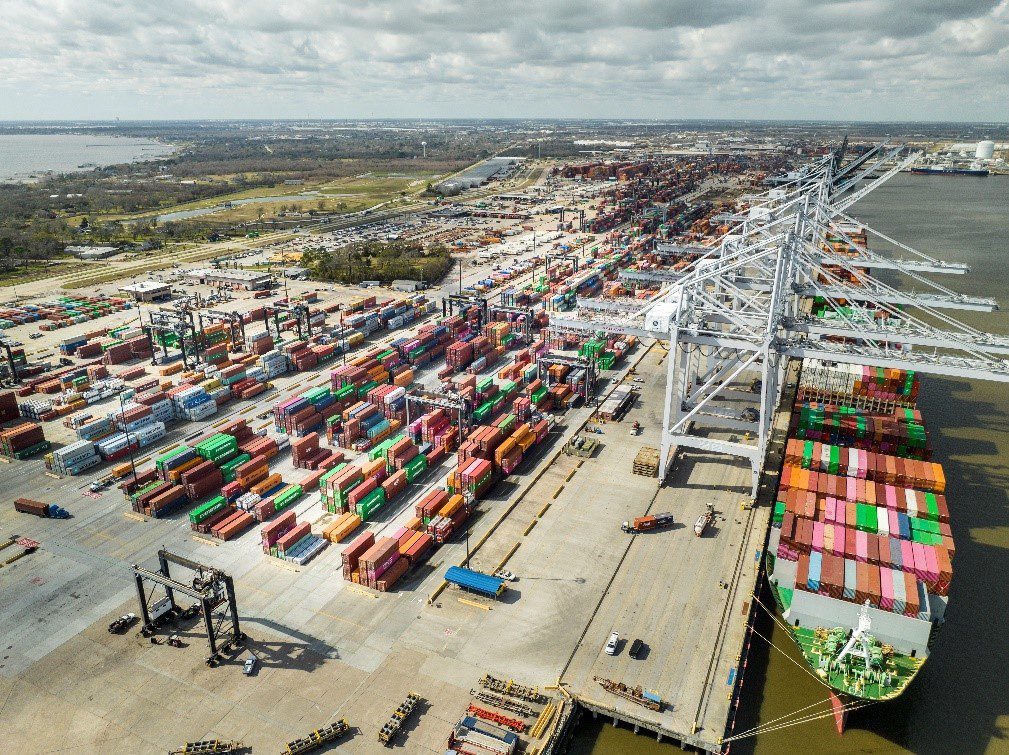
“Port Houston continues to build capacity and adjust to the changing market by providing more yard space, more equipment, and more hours of service to our customers. Port Houston is meeting with customers, communicating updates and working with our partners in the ILA to maintain cargo fluidity,” said Roger Guenther, Executive Director at Port Houston.
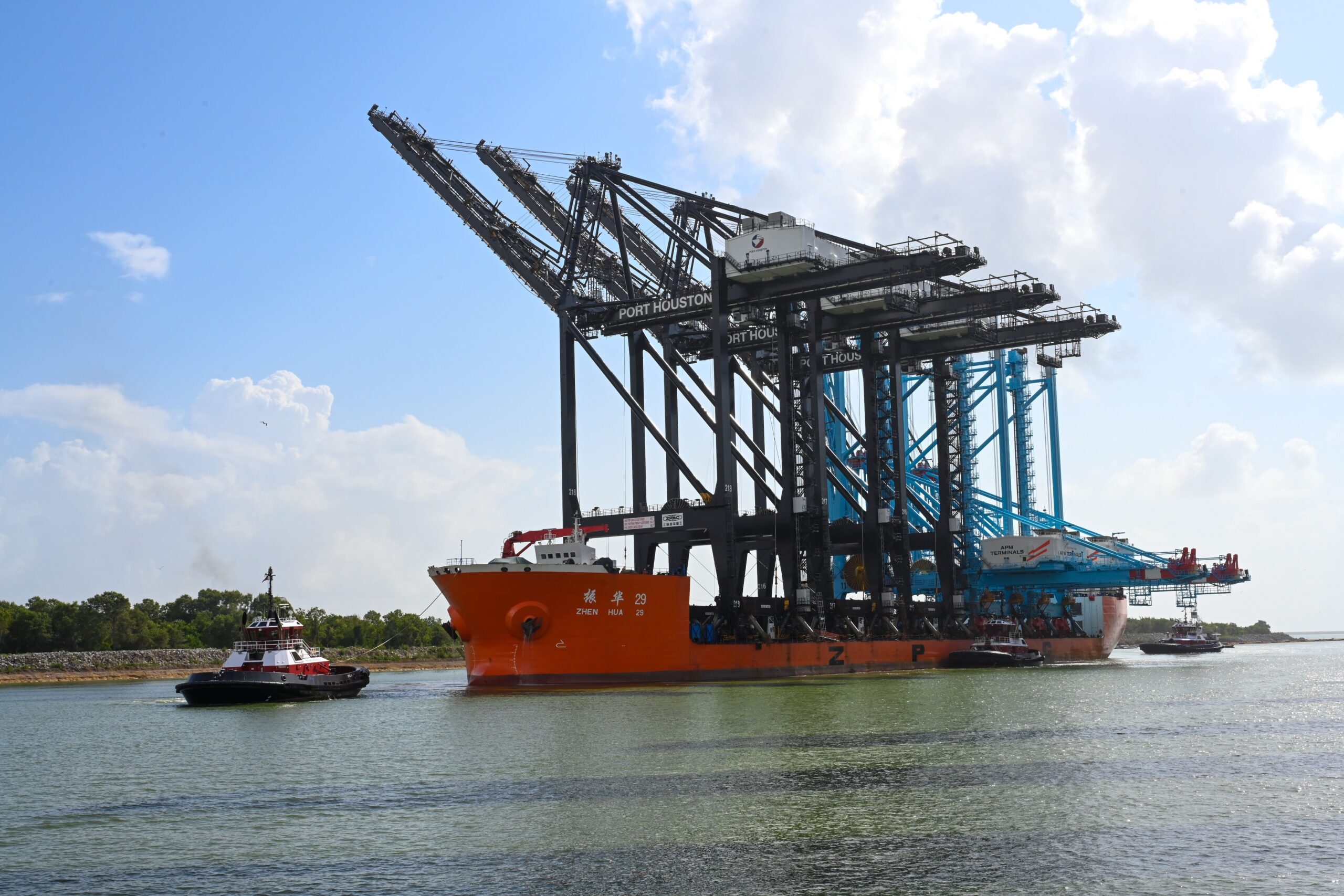
Most recently, the Port received three new ship to shore (STS) cranes and finished construction of the new Wharf 6 at Bayport Container Terminal. This added wharf and new STS cranes will help service vessels up to 15,000 TEUs in size upon completion of the Bayport Channel Segment in 2024 of the Houston Ship Channel Expansion – Project 11. Additionally at Bayport, we’ve invested a more than $425 million in infrastructure improvements to help with traffic flow on Freight Station Road and empty and loaded container storage capacity.
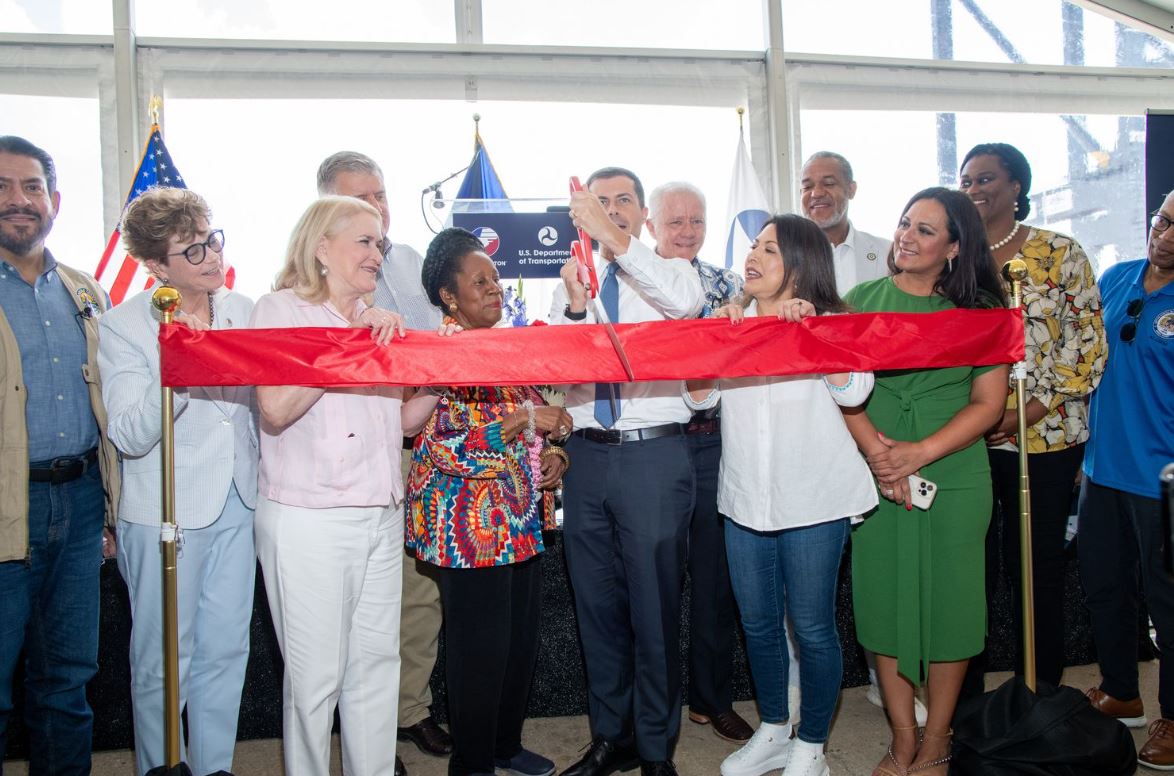
Port Houston has also purchased three additional STS cranes and 26 rubber-tired gantry (RTG) cranes to strengthen our vessel and yard operations. Those are expected to arrive in early 2024.
Additionally, at Barbours Cut Container Terminal , Port Houston has invested $43 million to enhance the overall terminal traffic flow, and is investing more than $650 million over the next 5 years to help redevelop and rehab existing areas around the terminal. In 2022 we nearly doubled our in-gate capacity, adding 14 new gates to bring our total to 29 entry gates. We also enhanced technology and support areas to help expedite entry into the terminal. This year, we’ve redeveloped 14.5 acres at the west end of the terminal for additional container storage space and we’ve begun rehabilitating wharves as well as container yards to make terminal operations more efficient.
Ryan Mariacher, Port Houston’s Director of Container Terminals, said, “We continue to expedite wharf and container yard expansion projects to regain capacity for anticipated demand. With the dramatic improvement of cargo fluidity, we are focused on process optimization to improve terminal service levels through technology implementation and collaboration with customers and terminal users.”

The Houston Ship Channel Expansion – Project 11 has also been moving along rapidly. In 2023, Port Houston has completed Segment 1A Bolivar Roads to Redfish which has eliminated daylight restrictions for larger vessels within this segment and is positively helping cargo move smoothly. We’ve also cleared existing shoreline vegetation near Bayport, begun building San Leon and Dollar Reef Oyster mitigation sites, and begun dredging the Bayport Ship Channel. The completion of Project 11 in late 2026 will facilitate handling of larger vessels, which is a critical step to increasing the efficacy of the nation's logistics infrastructure.
Port Houston knows how important reliability and efficiency is to customers. You can count on Port Houston to continue to meet our customers’ needs now and in the future.
Click the button below to learn more about the investments Port Houston is making to advance cargo movement.
The post Capital Enhancements to Support Rapid Growth: Accelerating Infrastructure Investments to Meet Demand appeared first on Port Houston.
]]>The post Port Houston Posts Record Volume in 2022 appeared first on Port Houston.
]]>The post Port Houston Posts Record Volume in 2022 appeared first on Port Houston.
]]>The post Dreams Do Come True: First Women Graduates of RTG Certification Program appeared first on Port Houston.
]]>
The global supply chain is in a time of evolution. With ships getting larger and cargo increasing, the constant focus on growth is undeniable. More equipment and upgrades to infrastructure will be necessary, but so is a properly trained workforce. Who will be the next generation of maritime workers supplying that manpower to sustain the supply chain? Whether truckers, equipment operators, logistics specialists, longshoremen or crane technicians, these are all key roles that keep operations running efficiently; and the industry needs more of them. A lot more.
Port Houston Helps Expand the Workforce
As a port operator and advocate for the Houston Ship Channel, Port Houston plays a special role in the nonstop dance to operate equipment, move cargo, make space available and process trucks coming through the gates. Port Houston is on the path of expansion, both with the Channel itself as well as with Port infrastructure. The Houston Ship Channel Expansion – Project 11 will widen the Channel from 530’ to 700’ and deepen some upstream segments.
Port Houston is also making enhancements to optimize its terminals and adding cranes and other infrastructure to handle seven million TEUs by 2040. These terminal enhancements alone will generate more than 32,000 additional jobs. “The limited availability of labor has led us through a path of discovery; analyzing better ways to improve operations and remove disparity. We are working diligently with our partners in labor and training to ensure that the port’s goal to increase capacity is met with the necessary labor to sustain that growth,” said Ryan Mariacher, director of container terminals at Port Houston.
Working with the ILA and WGMA
Port operations along with the International Longshoremen Association (ILA) and the West Gulf Maritime Association (WGMA) have recently developed opportunities to streamline the certification process for ship-to-shore crane operators and RTG operators, among other roles, through added trainers and investments in simulation equipment to better equip trainees in the program.
“Since revamping the RTG training program on September 1, 34 new RTG operators have been certified, increasing the pool by 20%.” said Mariacher. “We have done this not by cutting corners – everyone going through the program must still meet the thresholds and requirements to be certified – but by finding ways to streamline and utilize equipment to train individuals and leveraging our veteran operators to supplement the training program.”
West Gulf Maritime Association operates two crane simulators, one of which Port Houston invested in back in 2018 to improve training capabilities. The WGMA’s training arm supports a variety of certifications including safety, longshore skills, yard tractor, supervisory skills, and STS/RTG operation.
The ILA, the union of maritime workers in North America, supplies the necessary labor to move cargo and represents more than 65,000 longshoremen on the Atlantic and Gulf Coasts, Great Lakes, major U.S. rivers, Puerto Rico, and Eastern Canada. At Port Houston, consistent communication with the area hiring halls of Local 24, Local 28, and Local 1351 as well as the ILA District Office has created a strong bond that enables both organizations to work smarter and faster despite the challenges. More than 200 people are hired daily to work at both container terminals and additional workers are added as demand requires.
First Women to Complete the RTG Certification Program
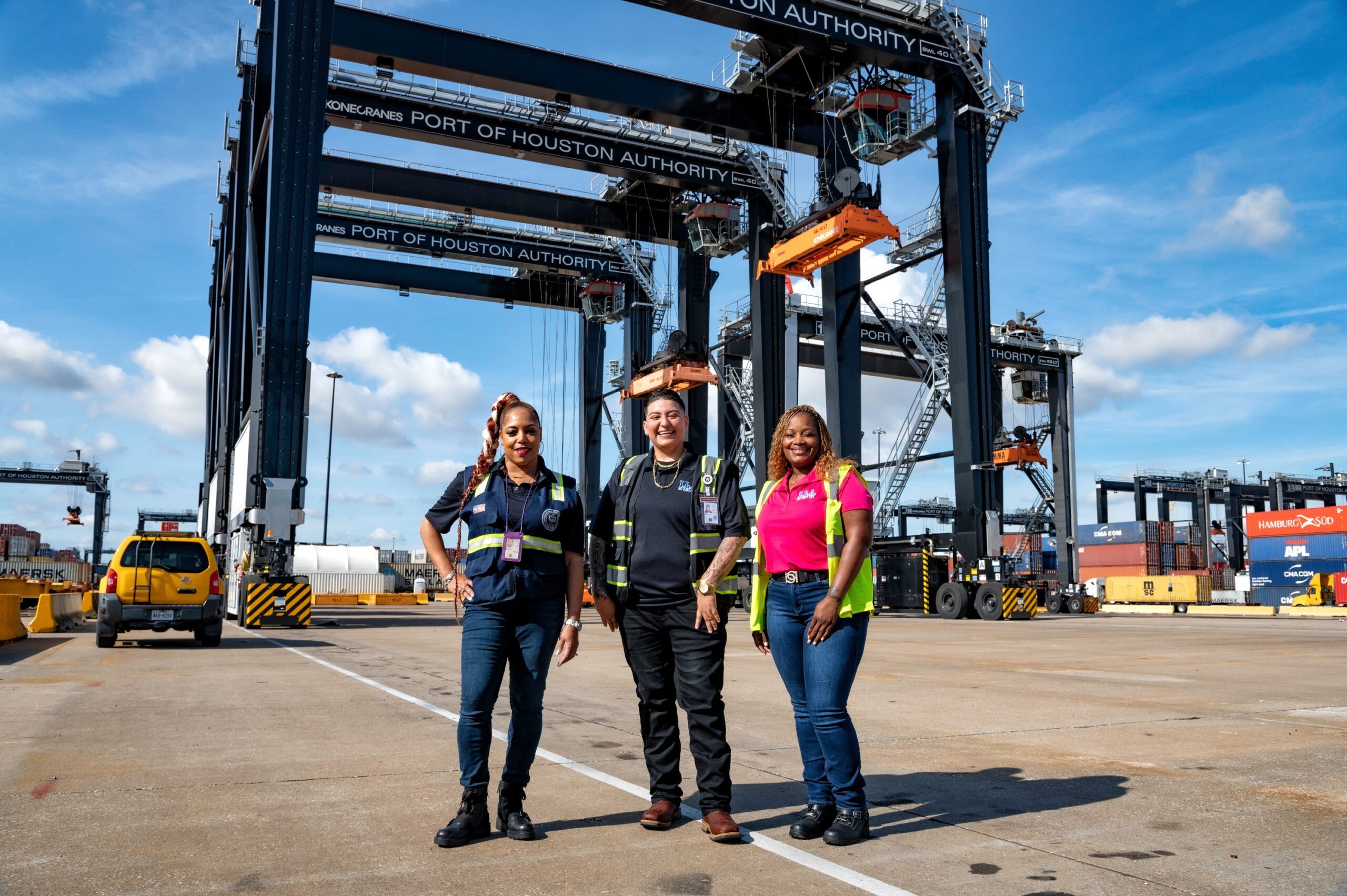
The ILA is also reaching great milestones as they continue to recruit workers to complete ship-to-shore (STS) crane and RTG operator certification. Just this October, Samantha Piña became the first woman in the history of the ILA local 28 to be certified as an RTG operator.

“The program is rigorous. It requires nerves of steel, but most of all determination to complete it. Workers looking to move up the ranks must go through a vetting process and have accumulated hours of experience.” said Tim Harris, Executive Vice President of the ILA local 28.
Samantha Piña has been working in the ILA for seven years, and she waited three years to enroll in the program. “You need 2,000 hours of hands-on experience. I worked with heavy machinery, and on top loaded, heavy-lift, pencil, and empty yard jobs. I also had to complete a minimum of 250 hours of ‘on the seat’ training and take a written test to get to this point.”
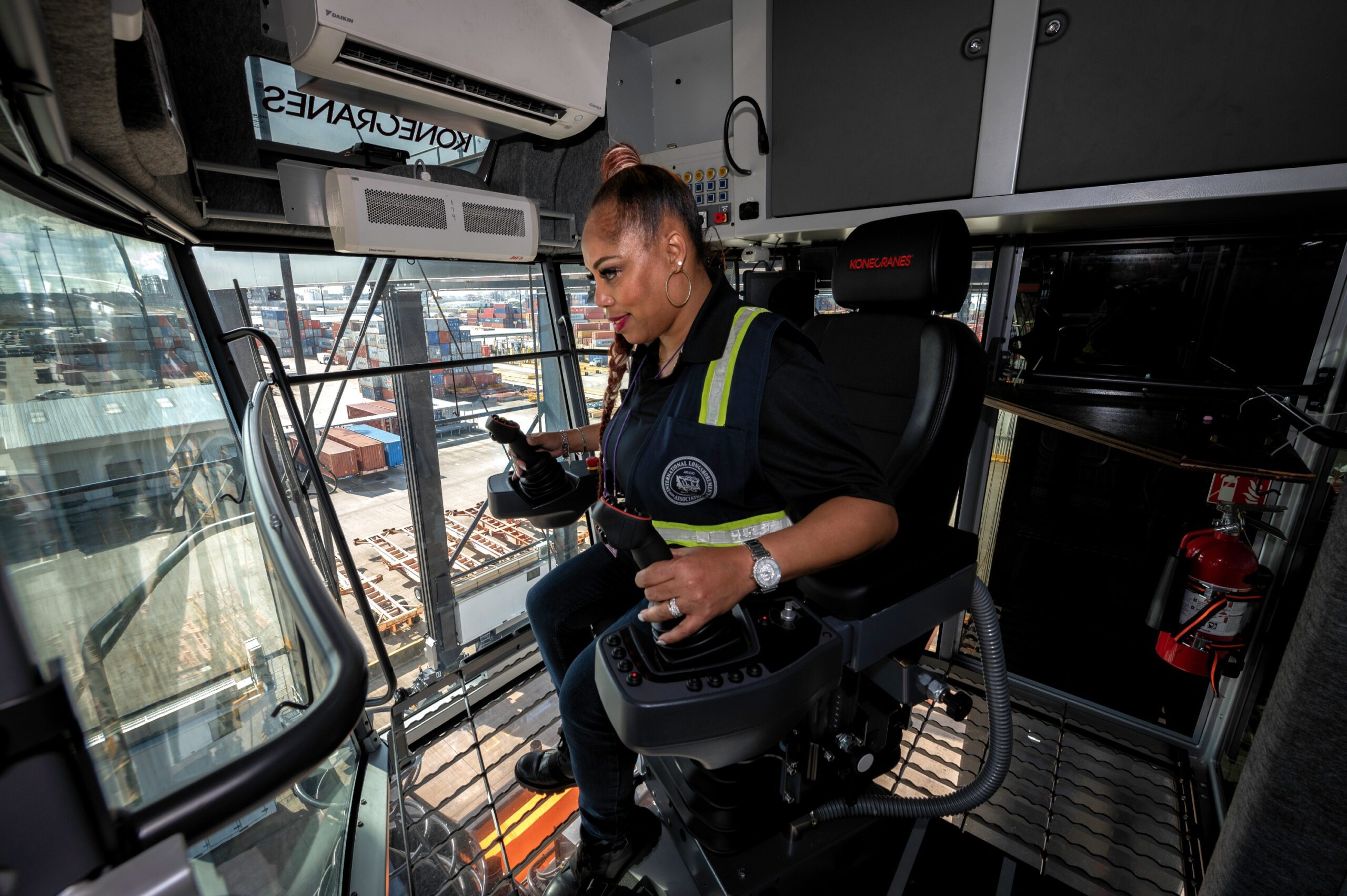
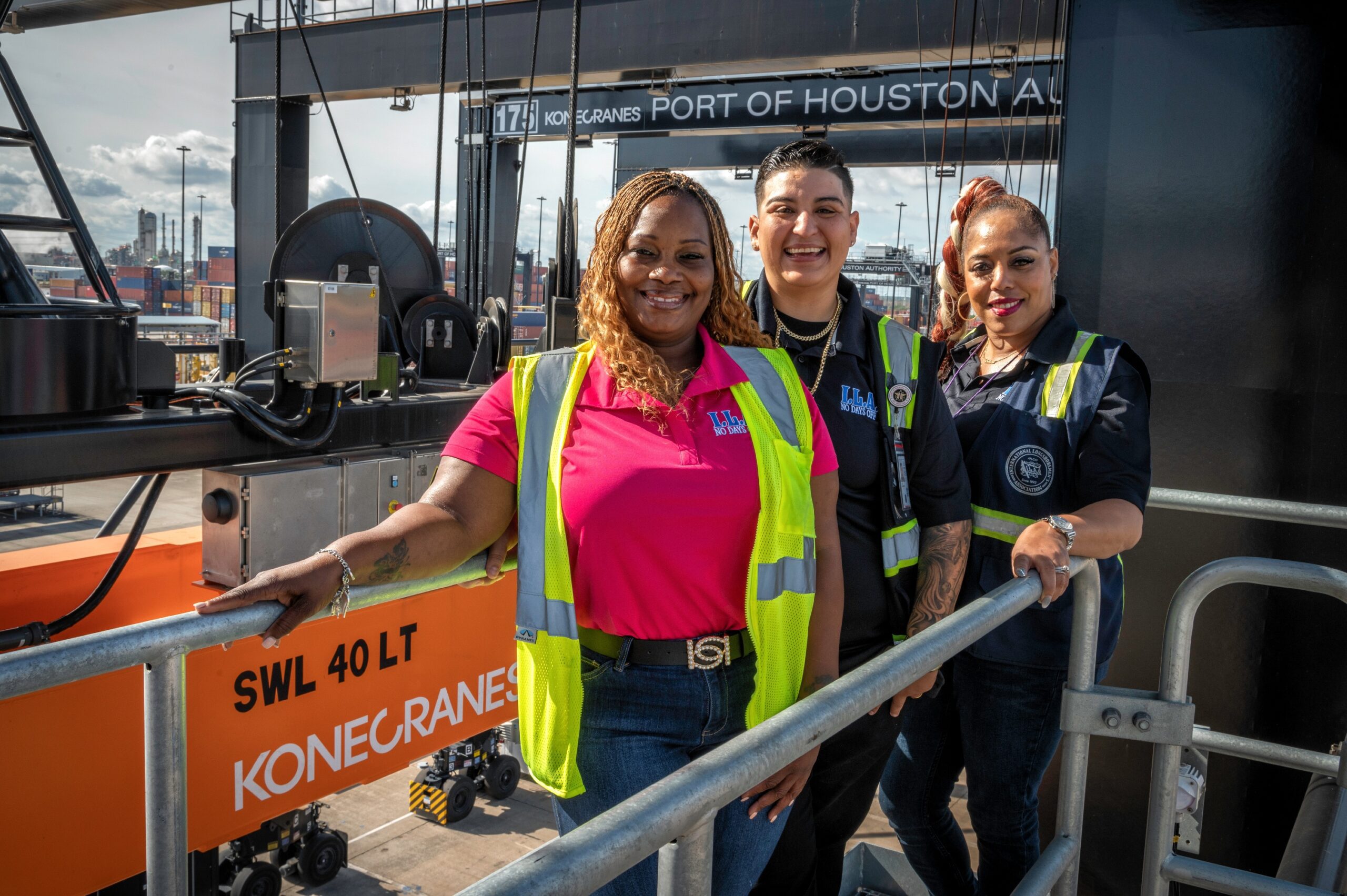
More women have also enrolled and completed the program since, noting the impact of making a commitment to push forward. Chataria Biscoe has been working with the ILA local 28 for 17 years and originally came to the ILA with her father to work. After her father passed and the pandemic hit, she knew that she wanted more for her career. “I felt like everything finally fell into place once I started the RTG operator certification process. Although I was nervous and felt pressure at first, I was encouraged to keep going to pursue my dream,” she states. “Now I have a great sense of accomplishment and can be a role model for the next women.”
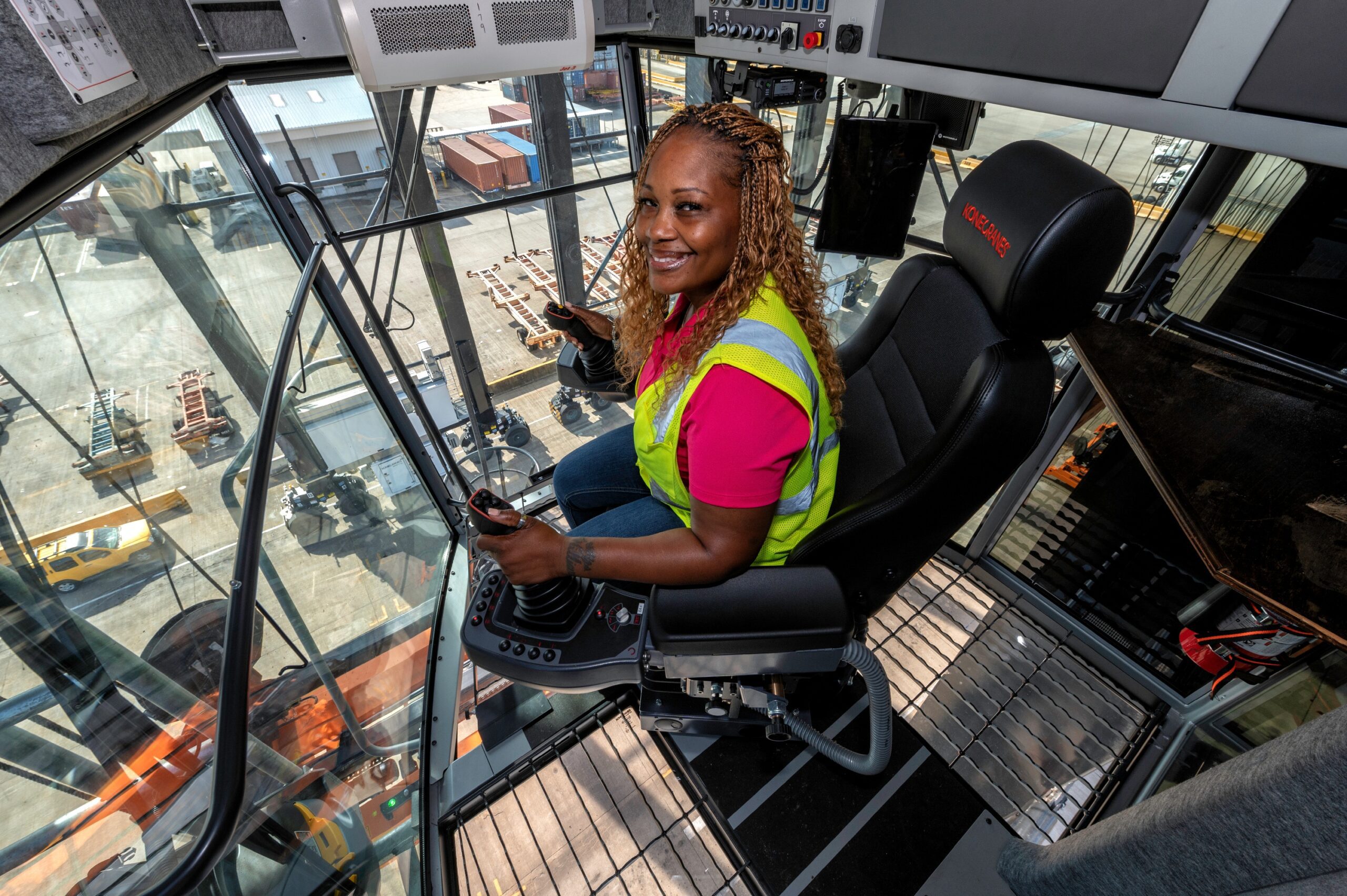
Tasha Williams also went through the certification process and felt overjoyed when she completed the rigorous test. She states, “I started as a truck driver eight years ago and didn’t think I would be where I am today. Putting in the long hours of work, ride-alongs, simulator trainings, and several weeks of monitored training has been worth it. Although this is a male-dominated field, I want to inspire the next generation of workers.”
The post Dreams Do Come True: First Women Graduates of RTG Certification Program appeared first on Port Houston.
]]>The post Freight Mobility Improvements Require Team Effort appeared first on Port Houston.
]]>
As the nation’s largest tonnage and one of the busiest ports, there has always been a need to make improvements and keep logistics efficient. Being open for business more than 100 years also comes with trouble spots along the way. However, Port Houston is focused on making infrastructure improvements before any serious problems come under fire. In particular, the area of freight mobility has grown tremendously over the years and this is largely due to the Port Houston teams that make these projects possible.
Meaning of Freight Mobility
What is Freight Mobility you ask? In short, freight mobility is a broad term that refers to cargo vehicles – trains, trucks or airplanes – traveling to different destinations around the world transporting various goods. Most organizations in the logistics or supply chain sector rely on the Port’s freight mobility group to monitor how efficiently cargo is moving and see where infrastructure improvements need to be made. Port Houston relies heavily on the freight mobility department to advocate for and facilitate the investment in the freight network around the Houston region.
Freight Mobility Projects at Port Houston
Everyone knows that large projects require a lot of teamwork, collaboration as well as time management and freight mobility is no exception. For the port, there are multiple cross-functioning departments — including Construction, Operations, Legal, Grants, Real Estate, and more — that contribute to make key enhancements around our terminals and drive growth. No projects can happen without our cross-functional teams at the port and the partnerships we build with outside entities. Some of closest partnerships have been with Harris County, the regions railroads, Texas Department of Transportation (TxDOT) and local Houston associations. Keeping these relationships open has allowed the port to get many freight mobility projects completed and in turn help the local communities.
In 2019, the port received a 50-50 grant shared with the Houston-Galveston Area Council (H-GAC) and the Port Terminal Railroad Association (PTRA) to help complete the port’s Broadway Double Track project. This project added a second railroad track near Turning Basin Terminal and Broadway street (inside Loop610), substantially completing double tracking of the PTRA which will improve cargo rail mobility to/from the port. This $23 million investment not only increased efficiency of freight movement but reduced emissions and improved safety.
In 2020 freight mobility improvements have continued across various areas of Port Houston. TxDOT has been a big contributor to the Port Road Expansion project and Barbours Cut Blvd/SH-146 Intersection project. More details about these specific projects can be found here: /road-widening-projects.
Additional developments are being made around Port Houston’s Jacintoport terminal, including the Peninsula Road Improvement project and Sheldon Road Expansion project. The Peninsula Road Improvement project has been mostly completed, with enhancements being made to roads and rail crossings improving overall cargo mobility, safety and air quality. Peninsula Road itself will by widened from 2 to 4 lanes allowing trucks to easily get in/out of Jacintoport. This was one of the most congested and dangerous areas within the port region and the $12+ million project, with80% funded by Rider 48 funds from the Texas Legislature, has made it one of the safest and most efficient regions of the port.
The Sheldon Road Expansion project also is vital to improved efficiency around Jacintoport terminal. The first phase of this project includes widening the road from 2 to 4 lanes for easier truck accessibility. The port was awarded $1.2 million with a 50-50 cost share with Rider 38 funds from TX Legislature and Harris County. Additional phases will include more improvements to Sheldon Road with around $18 million in further enhancements.
As Port Houston continues to grow, freight mobility will persist as a vitally important piece for enhancing efficiency with port roadways and railways. Port Houston teams are tireless working to keep up with the growth and maintain outstanding relationships with our stakeholders and communities.
The post Freight Mobility Improvements Require Team Effort appeared first on Port Houston.
]]>The post Port Houston Successfully Completes NAVIS N4 Upgrade appeared first on Port Houston.
]]>
Caption: Port Houston container terminal truck gates.
Port Houston recently executed a successful technology upgrade to NAVIS N4, a terminal operating system that optimizes planning and management of container and equipment moves at the port’s container terminals. The system is used for daily operations that include road, vessel, yard planning, billing and reporting.
Port Houston upgraded from version N4 2.6.34 to version N4 3.6.9, which required new infrastructure. The upgrade was performed by Port Houston’s technology, operations and IT personnel over a weekend after months of preparation and testing. With this advancement, Port Houston aims to improve and maintain a competitive edge consistently with business and technology innovations.
“The project’s success was a collaboration of efforts put forth by multiple departments,” said Port Houston Terminal Operating Systems Manager Mayra Ruiz. “The NAVIS upgrade will allow us to capitalize on new technologies and industry development.”
The upgrade embodies Port Houston’s goal of becoming America’s distribution hub for the next generation by providing increased support and scalability for customers. Further, the program adds improved security and operational performance with new features and functions.
Port Houston will continue to take the necessary steps to equip the business for the future and provide value-added services to our clients as upgrades are continued throughout the organization.
The post Port Houston Successfully Completes NAVIS N4 Upgrade appeared first on Port Houston.
]]>The post Use of Drones Triggers Security Actions at Port Houston appeared first on Port Houston.
]]>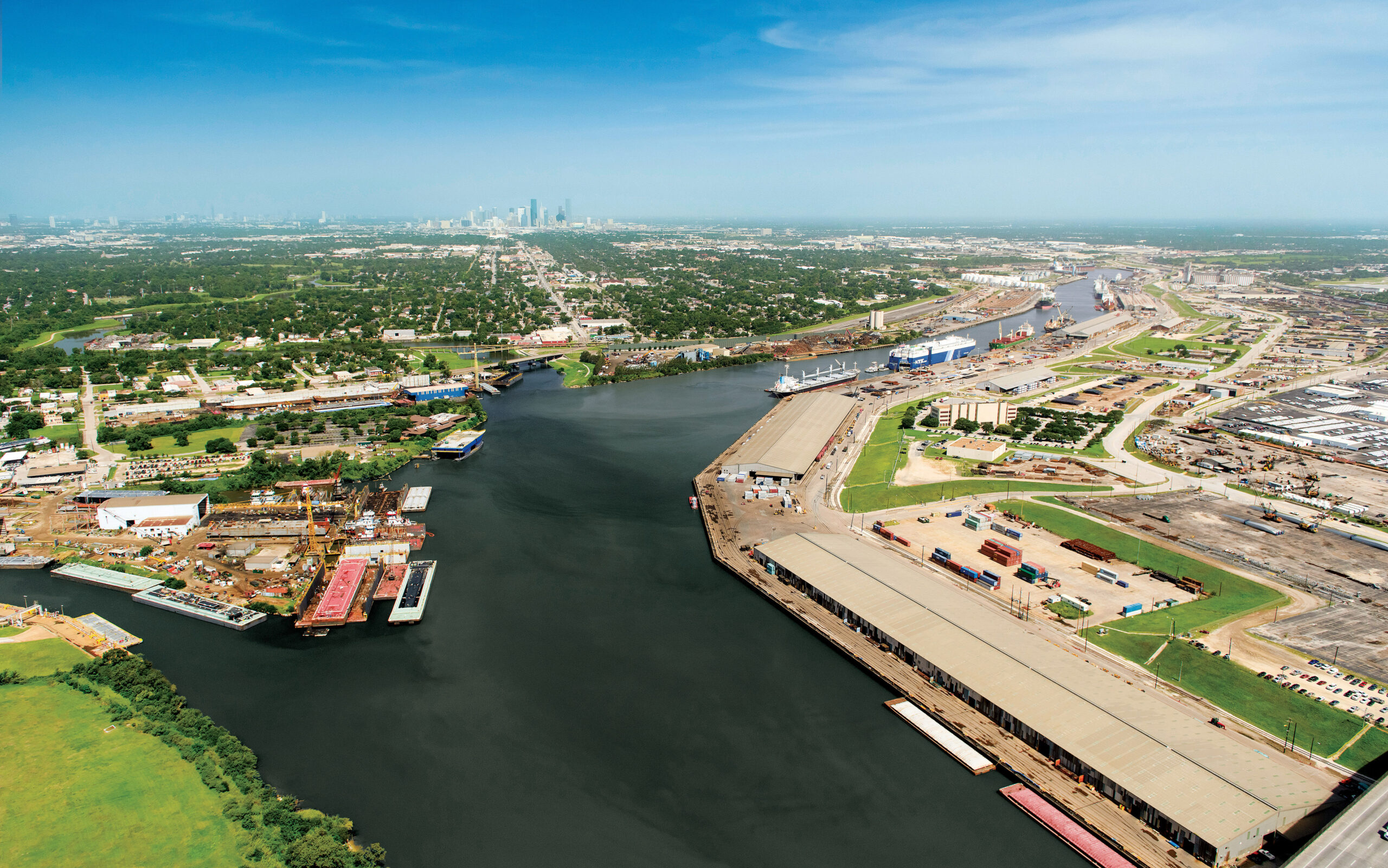
When a small camera-equipped drone fell out of the sky trailing smoke over Port Houston’s Turning Basin Terminal recently, it raised some serious security concerns.
The incident last Spring triggered an immediate investigation. The drone was being flown over port property without authorization. The Federal Aviation Administration (FAA) requires that all owners of Small Unmanned Aircraft Systems follow strict regulations and laws.
Within minutes of the incident taking place, port police and firefighters were dispatched to the scene. The initial investigation determined that a freelance photographer had taken photos of the port with the drone. The drone was in the air over the port for at least 30 minutes and 60-plus photos were taken of vessels, rail infrastructure and other structures.
Red flags were also raised by the fact the operator of the drone, which was manufactured in China, was in a rental car with out-of-state license plates that differed from the state on the person’s driver license.
The FAA requires hobbyist drone operators to contact air traffic control and/or airport management if they are operating within a 5-mile radius of any local airport. The port’s Turning Basin terminal falls into that category because of its proximity to Hobby Airport.
Because no permission was sought or granted, operators in situations like this can be charged with a Class B misdemeanor under Texas state law.
The use of drones both commercially and recreationally has skyrocketed in recent years. Some of the top non-military uses include journalism, film and aerial photography, shipping delivery, search and rescue, geographic mapping, law enforcement and border patrol and construction sites. Regardless of their intended purpose, the use of drones around ports raises special concerns. Drone owners and operators should follow all regulations and laws, especially when near port facilities.
You can read more about drones in the port's 2018 summer magazine here.
The post Use of Drones Triggers Security Actions at Port Houston appeared first on Port Houston.
]]>The post Strong Year-End Results Delivered by Port Houston appeared first on Port Houston.
]]>
Caption: Port Chairman Janiece Longoria presiding over her last Port Commission meeting in January.
Year-end results for 2018 show that Port Houston’s business continues to be solid, with records set in some areas.
“With the leadership and guidance of our Commission, our port continues to prosper,” Port Houston Executive Director Roger Guenther said in delivering his 2018 year-end report to the Port Commission Jan. 29.
Highlighting a host of achievements for 2018, Guenther announced that several records were broken, including total tonnage at Port Houston facilities, which hit 35.7 million tons. That reflected an increase of 9 percent from 2017.
“The strength of cargo activity helped drive operating revenue to $366 million for the year, shattering the previous record set in 2017 of $333 million,” Guenther said. Combined business through the port’s public facilities generated a total cash flow of $162 million, surpassing the previous record set in 2017 of $151 million.
“Cash generated from operations is critical to funding capital projects that support the port’s strategic objectives, including job creation and regional prosperity,” Guenther said.
Container twenty-foot equivalent units increased 10 percent to 2.7 million, a new record for the port.
“The increased volume was driven by solid growth in both import and export loaded boxes,” said Guenther. “This activity has created a balance of imports to exports for the year of 50/50 import to export, which keeps us well-positioned for growth in the coming years.” Steel tonnage recorded 4.4 million tons, a growth of 21 percent from 2017.
The post Strong Year-End Results Delivered by Port Houston appeared first on Port Houston.
]]>The post Port Houston Continues on Record Pace appeared first on Port Houston.
]]>
Caption: The Port Commission at the port's September public meeting.
The investments being made at Port Houston continue to pay off. As a result of the completion of the widening and deepening of its Bayport Channel and work on what’s known as the Bayport flare, Port Houston is seeing larger and larger vessels calling its container facilities.
Port Houston just received its largest container ship to date, a 9,500 twenty-foot equivalent (TEU) vessel.
As another example of the growing demand, in July the port recorded the largest number of container lifts on one vessel in its history at 4,800 lifts. That record has since been shattered twice, the latest being in September when more than 5,700 container moves were handled on one of the port’s East Asian services.
Port Houston leadership concluded the month of August by delivering strong results. Overall tonnage for the year at nearly 28 million tons reflects an 8 percent increase over last year. Steel tonnage remained steady through August, reflecting growth of 29 percent for the year.
Year-to-date activity continues to be strong with a port-wide increase of 11 percent overall in TEUs. Loaded container units are up 10 percent compared to last year.
Port Houston alone handles more than two-thirds of all U.S. Gulf container traffic.
The post Port Houston Continues on Record Pace appeared first on Port Houston.
]]>The post Strong Mid-Year Growth at Port Houston appeared first on Port Houston.
]]>
Port Houston moved 1.3 million container TEUs (twenty-foot equivalent units) through the first six months of 2018, a six percent increase from 2017, Executive Director Roger Guenther announced in his report to the Port Commission of the Port of Houston Authority in its regular monthly meeting in July.
Guenther also noted that Bayport Container Terminal recorded the largest number of single-vessel container box lifts in Port Houston’s history, with more than 4,800 lifts performed during one vessel operation. The historic performance involved a ship from one of Port Houston’s East Asian services (a 6,400 TEU-class vessel) that regularly calls at the port.
“This vessel would not have called Port Houston facilities without the expansion of the Panama Canal,” Guenther said. “We were able to handle this business due to the investments we have made in deepening and widening the Bayport channel, as well as investments in the equipment capable of handling this class of ship.”
“This historic operational performance eclipsed the previous record by 650 moves on one ship,” Guenther added. “This very productive rate was due to the diligent efforts of Port Houston operations personnel, our stevedoring partners and the labor we rely on each day.”
Port Houston operating revenues of $179 million set two monthly records during the first half of 2018; a revenue record was set in March and then was broken again in May, with revenue reaching more than $32 million. Guenther also reported that each sector of Port Houston’s business experienced revenue growth in the first six months, led by volume increases in its container business.
The post Strong Mid-Year Growth at Port Houston appeared first on Port Houston.
]]>