The post The Man Behind Barbours Cut Container Terminal appeared first on Port Houston.
]]>
Do you know where the name “Barbours Cut” came from? It was named after the great Captain Clyde A. Barbour who had the foresight to recognize the potential for expanding waterborne commerce within the Houston Ship Channel and help establish a turning point in the supply chain industry for Port Houston.
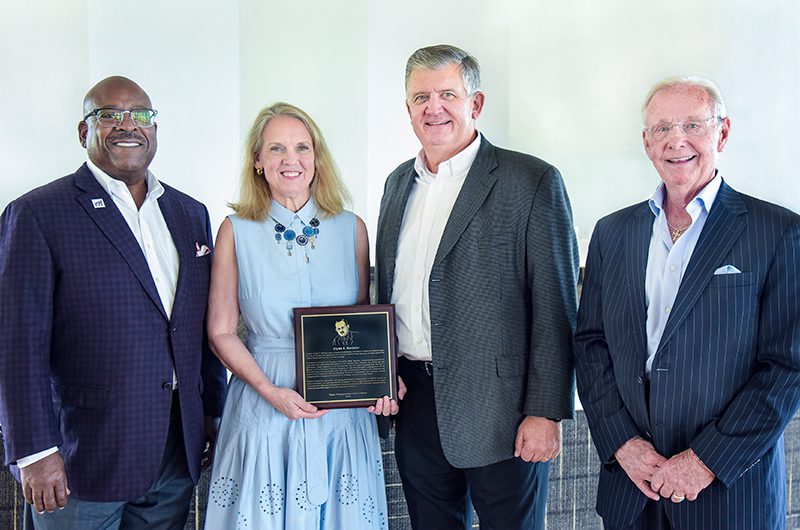 Left to Right: Texas A&M Transportation Institute Agency Director Greg Winfree; Nancy Potter; Port Houston Executive Director Roger Guenther; and Port Houston Commissioner Clyde Fitzgerald honoring the late Captain Clyde A. Barbour for his induction into the Texas Transportation Hall of Honor.
An event was held at the Sylvan Beach Pavilion in LaPorte, TX, by the Texas Transportation Hall of Honor in June to commemorate the late Captain Clyde A. Barbour. The event was organized to honor his pioneering contributions that led to the development of the Barbours Cut Container Terminal here at Port Houston, which was named after him. Captain Barbour's family, including his great-granddaughter Nancy Potter, attended the event, and after the induction, they were given a tour of the terminal. The tour provided them with a firsthand experience of just how Port Houston plays an essential role in the lives of many and contributes significantly to the growing economy of the region.
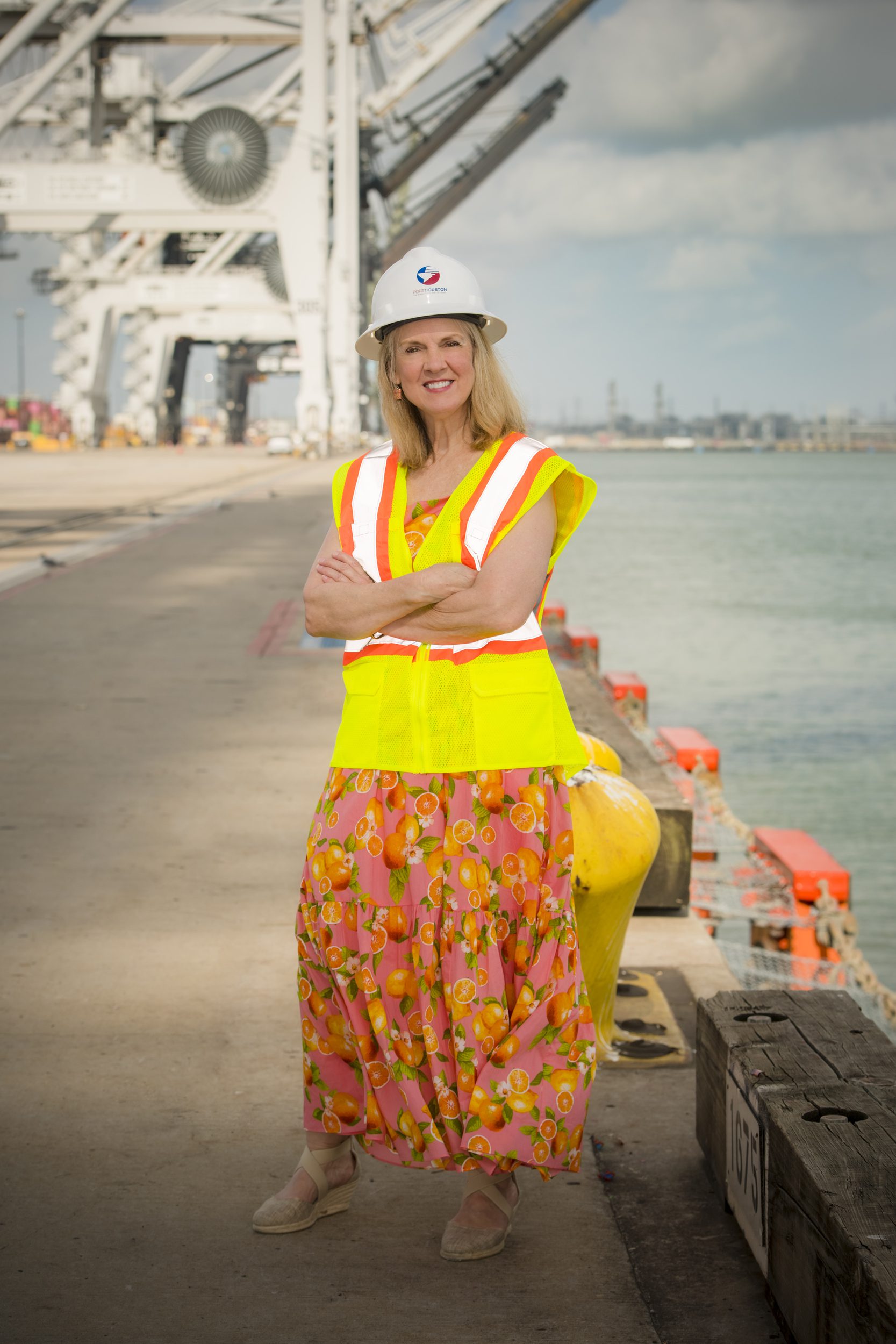
Captain Clyde A. Barbour's Great-Granddaughter Nancy Potter standing on a wharf at the present day Port Houston Barbours Cut Container Terminal.
Nancy Potter, says, “Through all the research I did learning about my great-grandfather, I have come to understand the immense struggles he faced throughout his life, the obstacles that seemed insurmountable, and the resilience that carried him forward. As I reflect on his legacy, I cannot help but be inspired by the lessons I learned from him. He instilled in me the belief that no dream is too big and no goal is out of reach. His story serves as a constant reminder that success is not defined by the circumstances we are born into, but rather by the passion, dedication, and resilience we bring to our pursuits.”
As a young man, Captain Barbour had the bold idea to dredge an inlet and build a terminal to shorten the trip up the Houston Ship Channel helping make Port Houston what it is today. Barbours Cut, which is the longest-standing container terminal at Port Houston, has been in operation for more than 45 years. The terminal currently offers 300 acres of container yard space, six berths, 29 entry truck gates, and more than 8,000 feet of working track that connects to off-site warehouses.
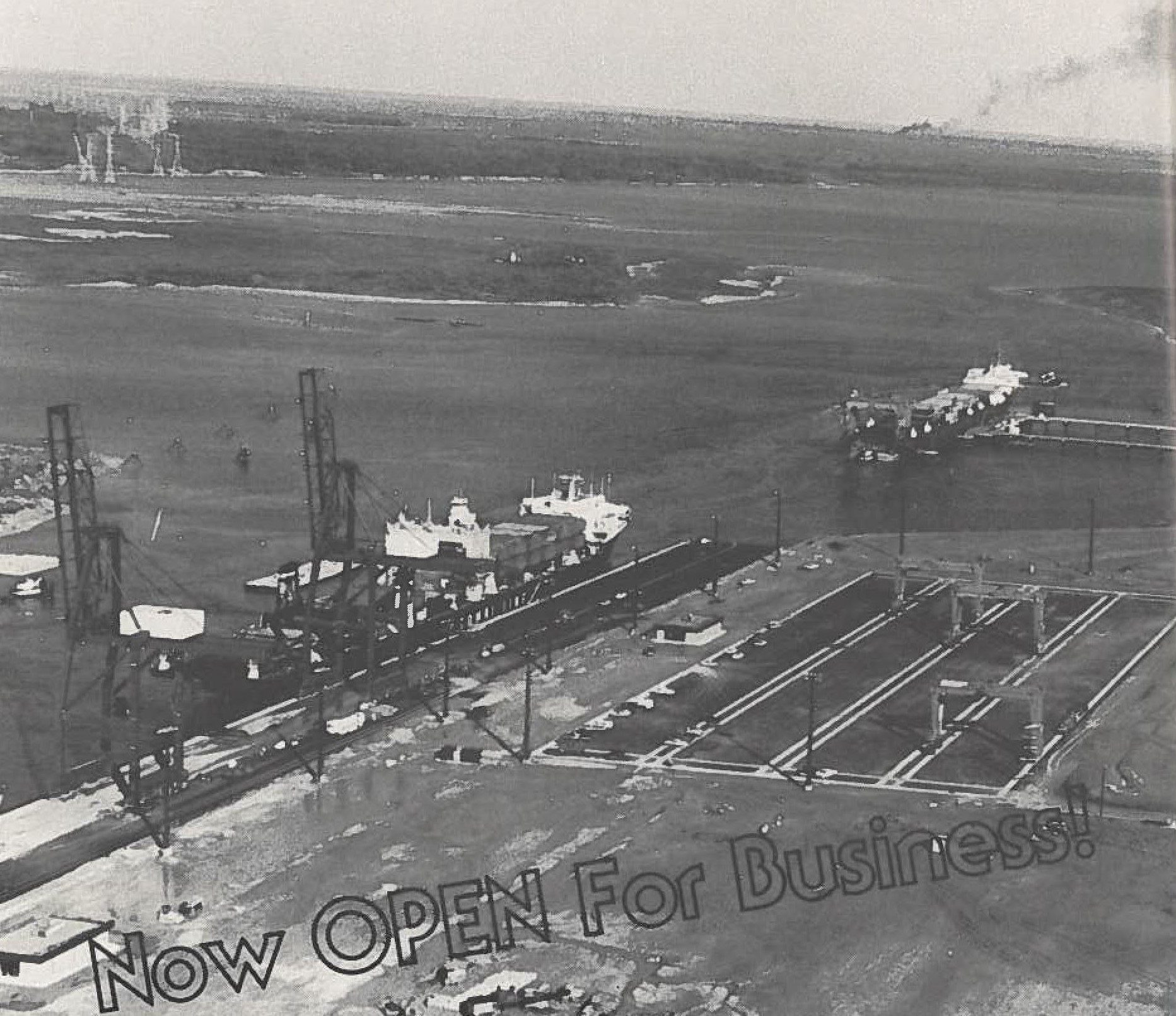
Barbours Cut Container Terminal first opened for business in January 1977.
Our dedication to maintaining Captain Barbour's legacy means that we are constantly looking for ways to improve and be innovative. Over the next five years, Port Houston plans to invest more than $650 million in capital improvements at Barbours Cut to modernize the facility and optimize capacity. This includes building container yard space, rehabilitating concrete, and adding more STS cranes to enhance our terminal fleet.
Barbours Cut Container Terminal operating in 2023.
Port Houston also operates Bayport Container Terminal, and collectively these terminals handled nearly 4 million TEUs in 2022, making Port Houston the fastest-growing container port in the U.S., and the fifth-largest container port in the country.
The post The Man Behind Barbours Cut Container Terminal appeared first on Port Houston.
]]>The post History of the Sam Houston Tour Boat appeared first on Port Houston.
]]>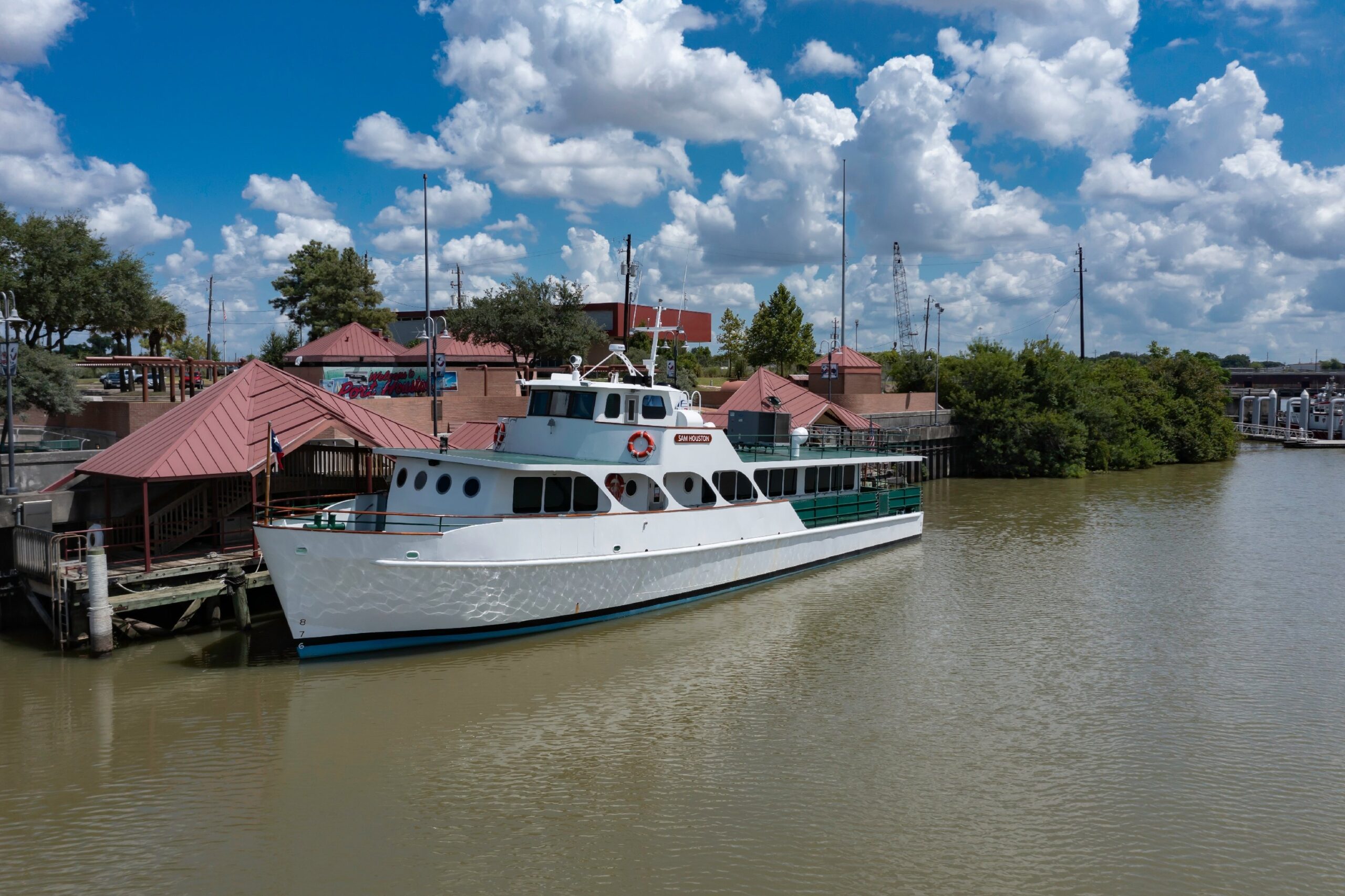
The Sam Houston II Tour Boat officially turns 64 on July 30th, 2022. The Sam Houston II provides a unique tour along the Houston Ship Channel and has been bringing joy to visitors of all ages. Unlike most boat tours, this is a completely free 90-minute ride that gives visitors a first-hand look at the Port of Houston and the maritime industry.
The very first tour boat was purchased by Port Houston in 1928. It was named the M/V R.J. Cummins after the longest-serving port commissioner at the time and carried about 24 passengers.
In 1948, the R.J. Cummins was replaced by the Sam Houston I. Port Houston bought an 85-foot inspection vessel which was converted from the hull of a World War II Coast Guard Cutter vessel. She was named the M/V Sam Houston I, in honor of the great liberator of Texas, and put into operation May 1949 taking up to 60 guests.
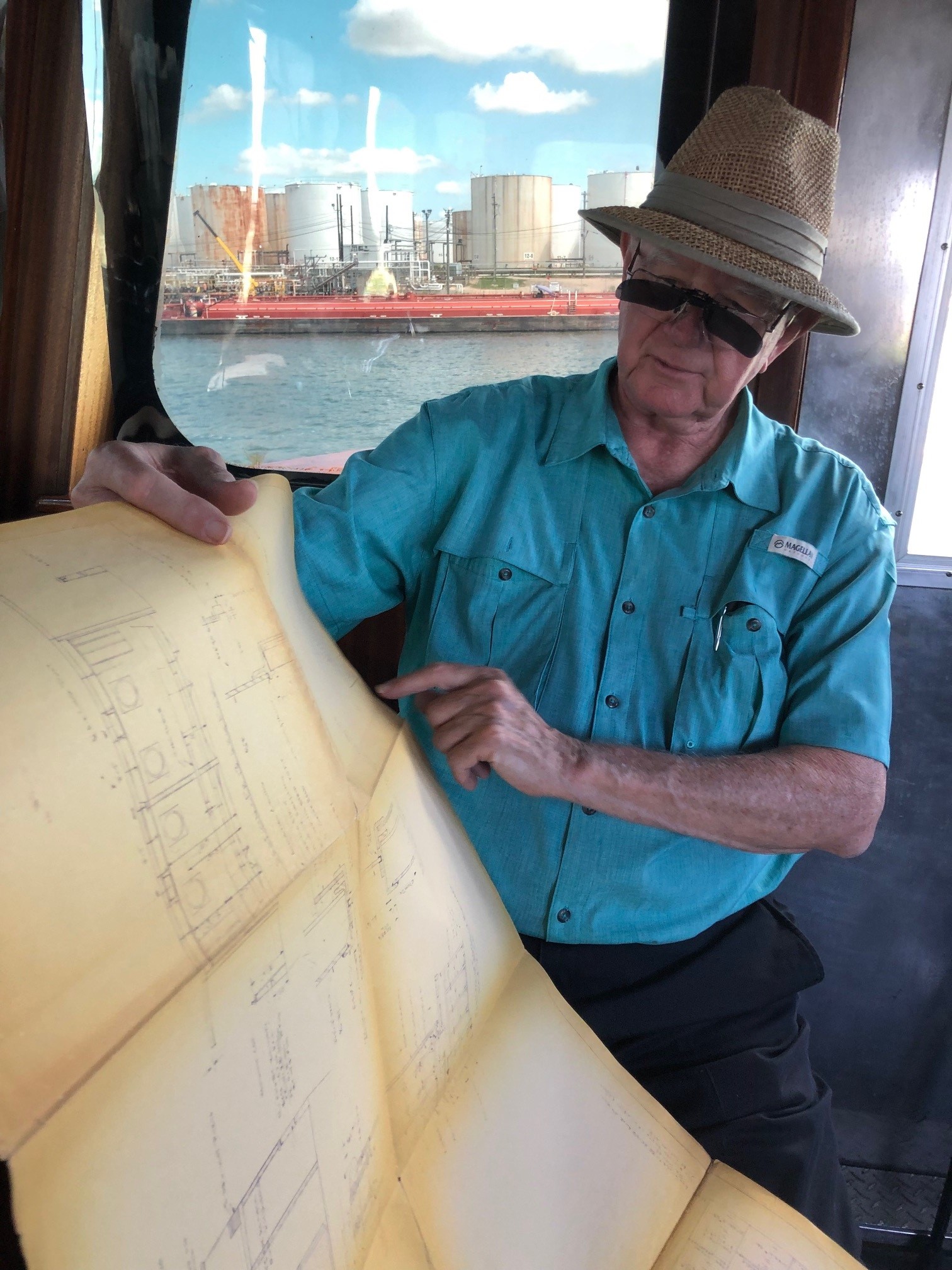
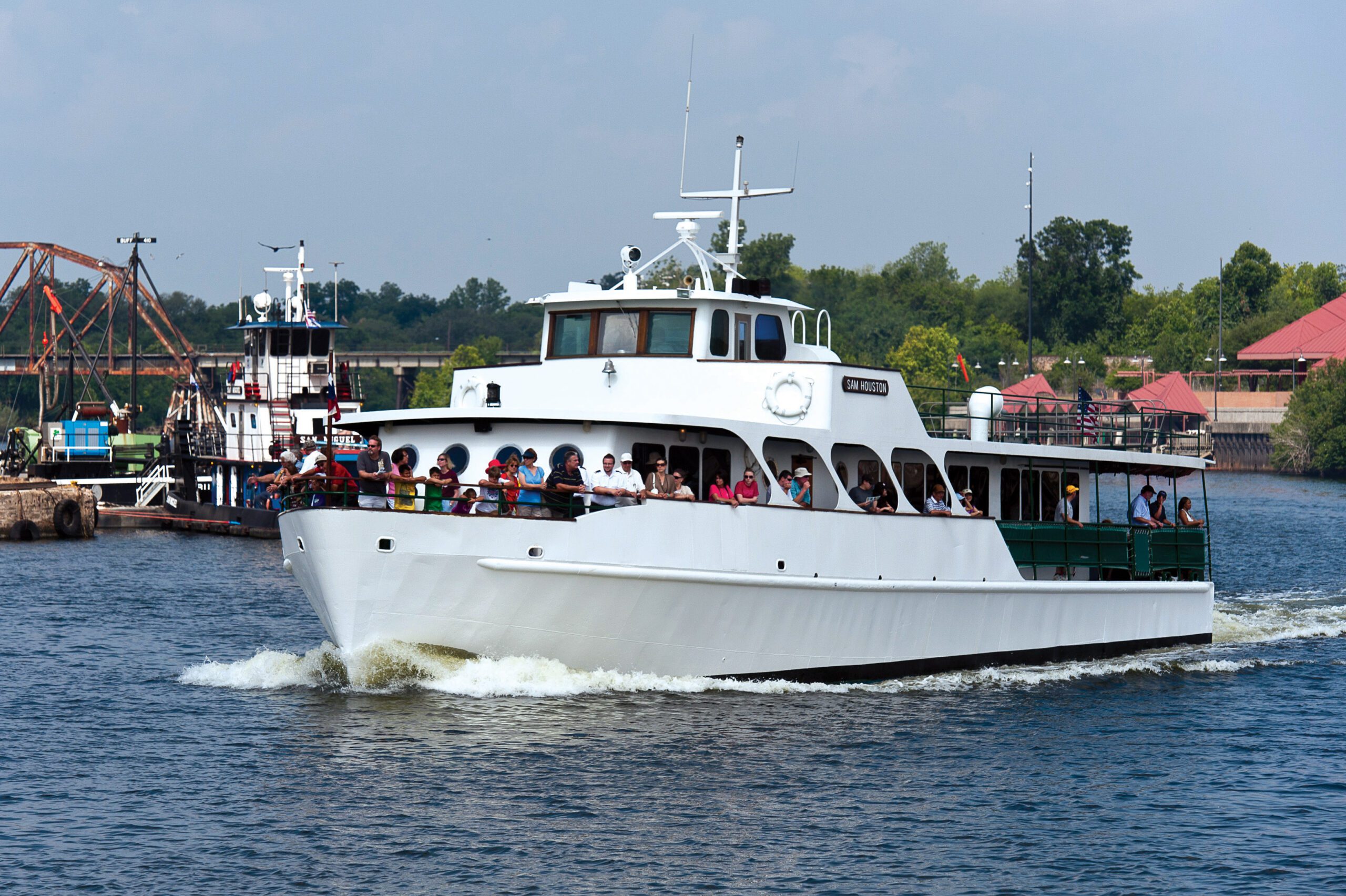
The current boat, M/V Sam Houston II, replaced the Sam Houston I after it had been in service for nearly eight years. The Sam Houston II was christened on July 30, 1958 when former Port Commission Chairman Howard Tellepsen’s 16-year-old daughter, Karen Tellepsen, wielded the champagne bottle against the Sam Houston’s bitt. Designed by L. B. Christenson Engineers, Inc., the Sam Houston II is 95 feet overall, has a 24-foot beam, and a maximum capacity of 100 passengers. It was outfitted in a manner comparable to a fine hotel carrying thousands of visitors from all parts of the world on cruises down the Houston Ship Channel.
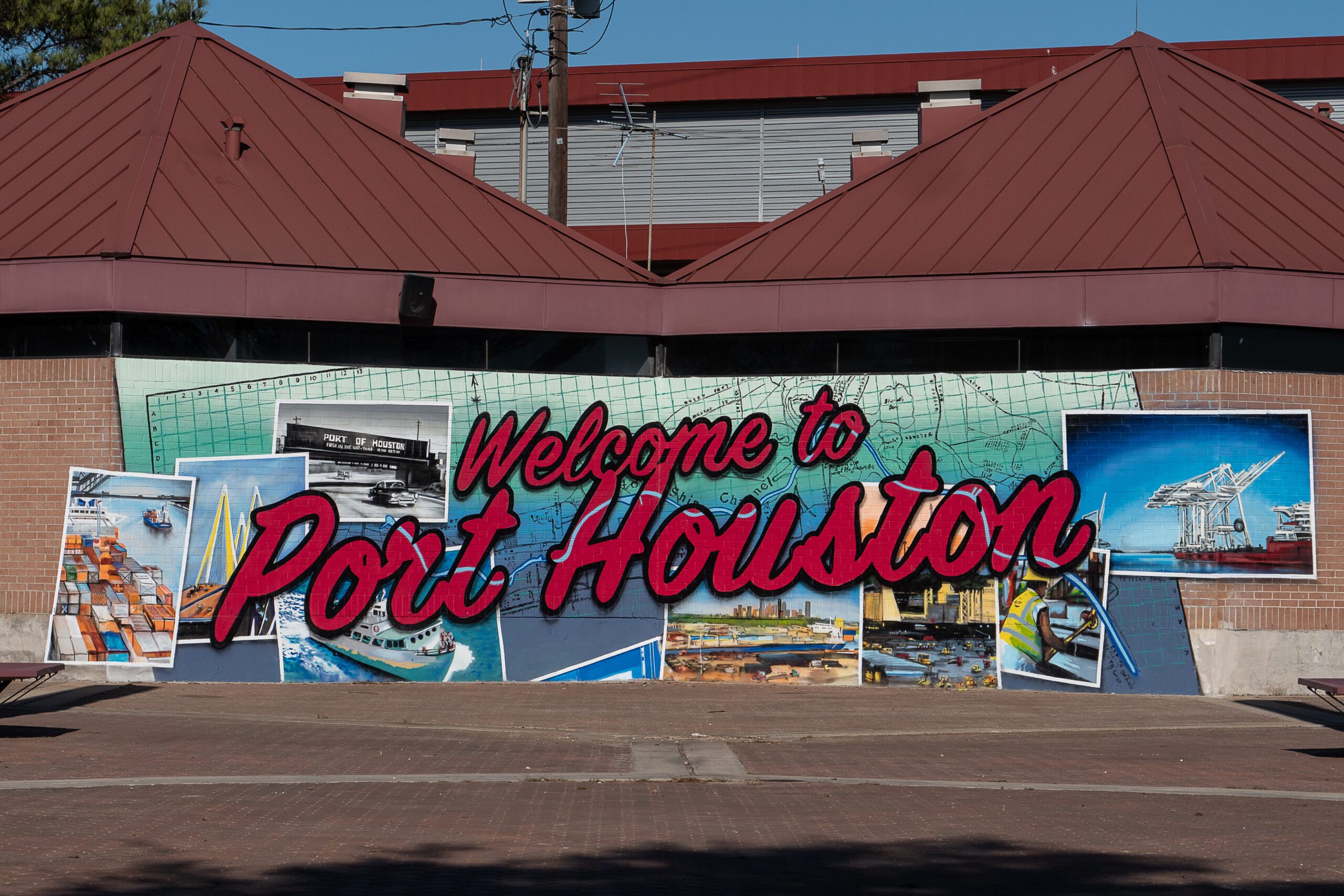
In 1992, the current Sam Houston pavilion opened. For Port Houston’s 90th anniversary in 2004, a mural created by the Museum of Cultural Arts Houston, depicting Port Houston’s rich history was added to the exterior walls of the pavilion buildings.
Guests aboard the tour boat have included royalty, celebrities, and politicians from around the globe, but most are everyday tourists from here or anywhere in the world who want to learn more about Port Houston. The tour on the Sam is just one of the many ways Port Houston reaches out to the public in a long tradition of commitment to the communities adjacent to the Houston Ship Channel. Register for your tour today!
The post History of the Sam Houston Tour Boat appeared first on Port Houston.
]]>The post The After Life of a Container appeared first on Port Houston.
]]>
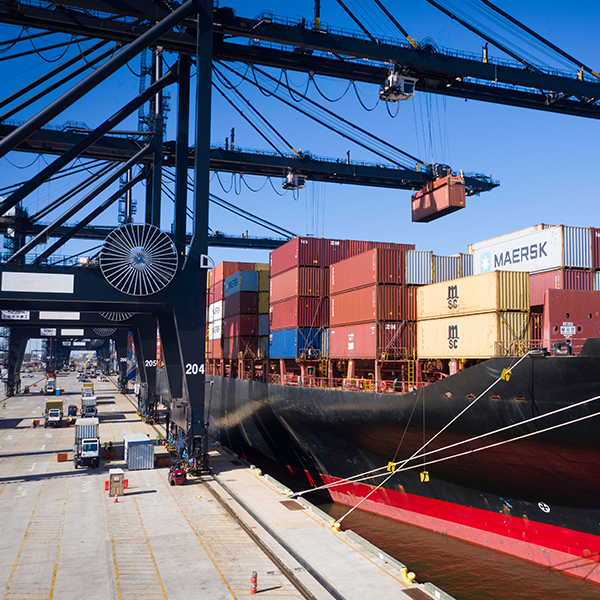
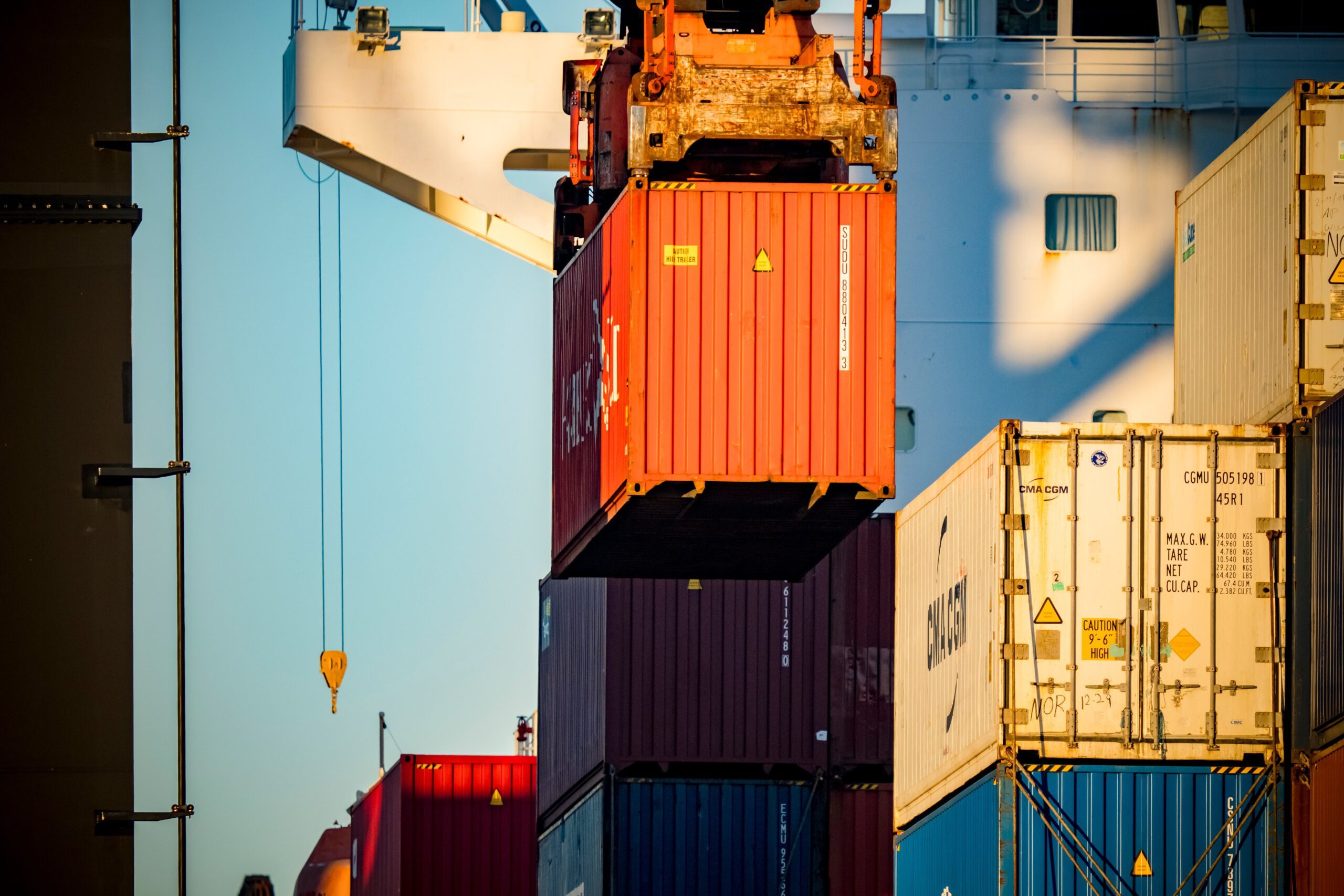
Caption: Containers being unloaded from vessel to the Bayport and Barbours Cut Container Terminals.
What Can You Do With a Container?
We have grown accustomed to seeing these TEUs on the road, behind a truck as they are whisked away to their next destination, but they can actually be transformed and utilized in many different ways. This begs the question, What can you do with a container?
In Houston, you may see them around the city, integrated in the design of businesses, thus giving the container a second life. Local bars like Truck Yard in East Downtown area or 8th Wonder Brewery use them. Closer to the East End, a historic community near Houston’s port you can find them at various places, ranging from use as murals, to screen movies, or retail.
On average, a container’s lifespan for transportation of goods can range from 10 to 12 years before it is taken out of service. However, a container can very well last up to 50 years depending on its use and ongoing maintenance to avoid rust, a typical culprit in its deterioration.
Places to visit in Houston
Ironworks Building
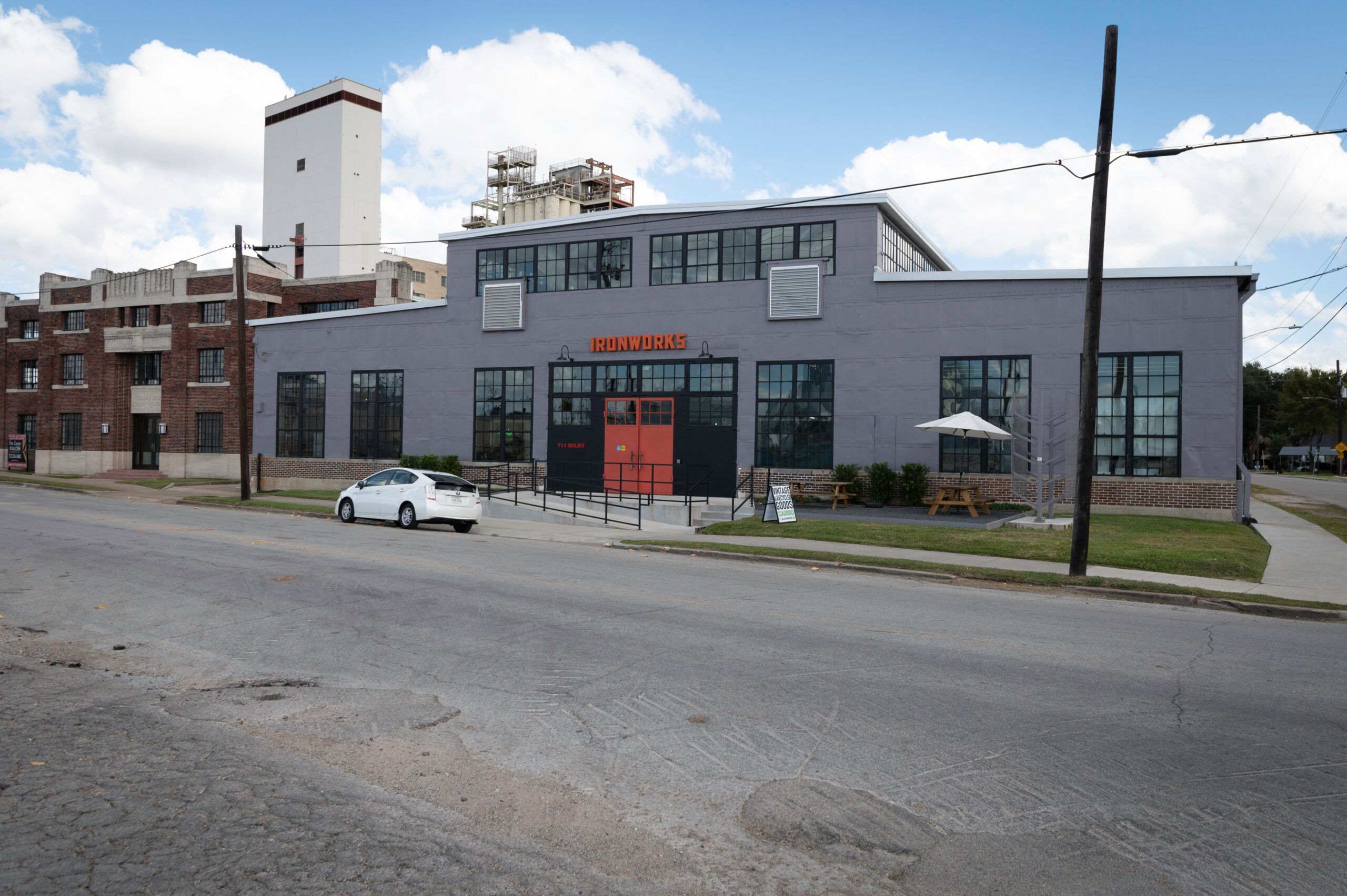
Caption: Front of Ironworks Building in historic East End Houston
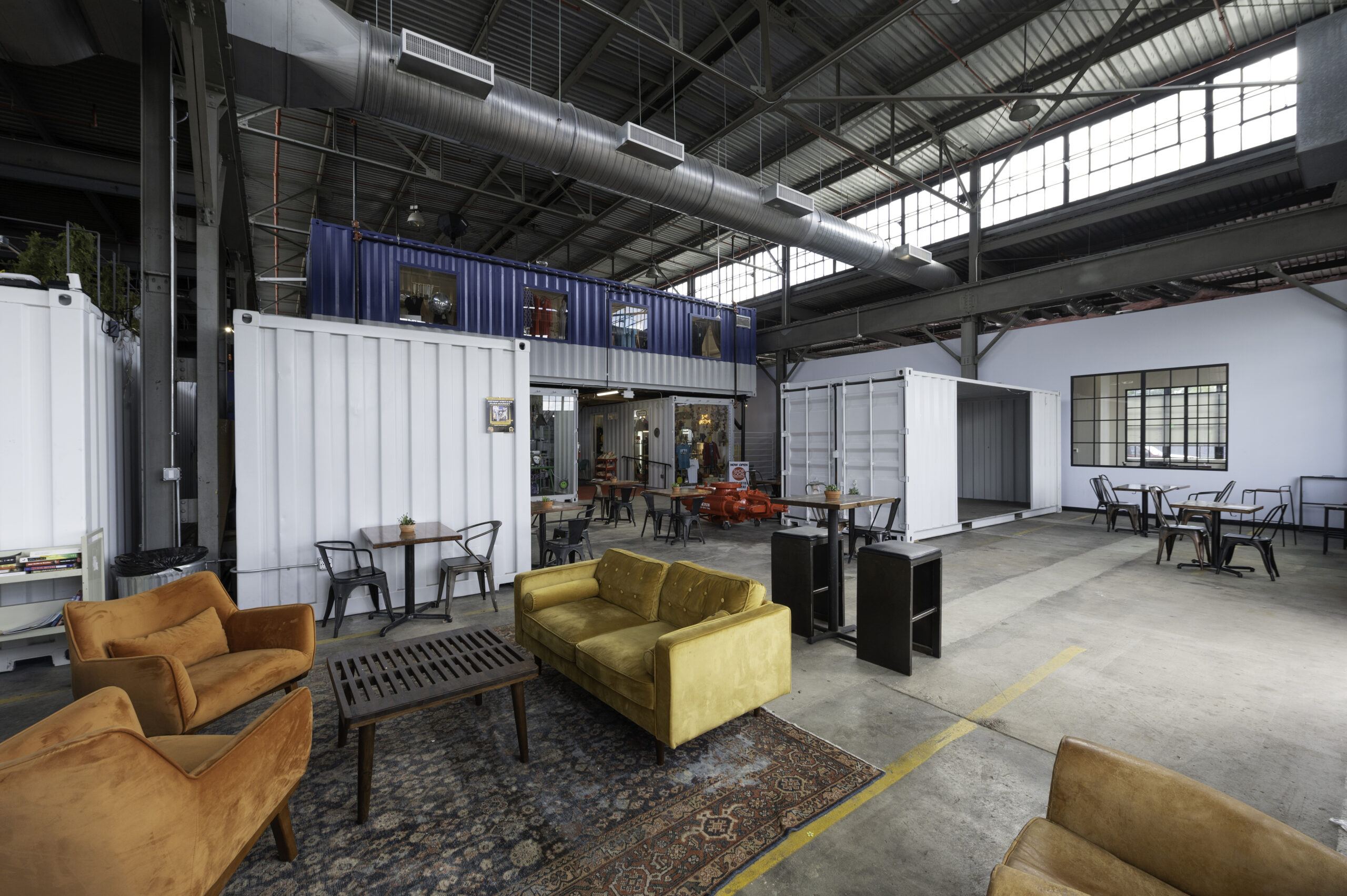
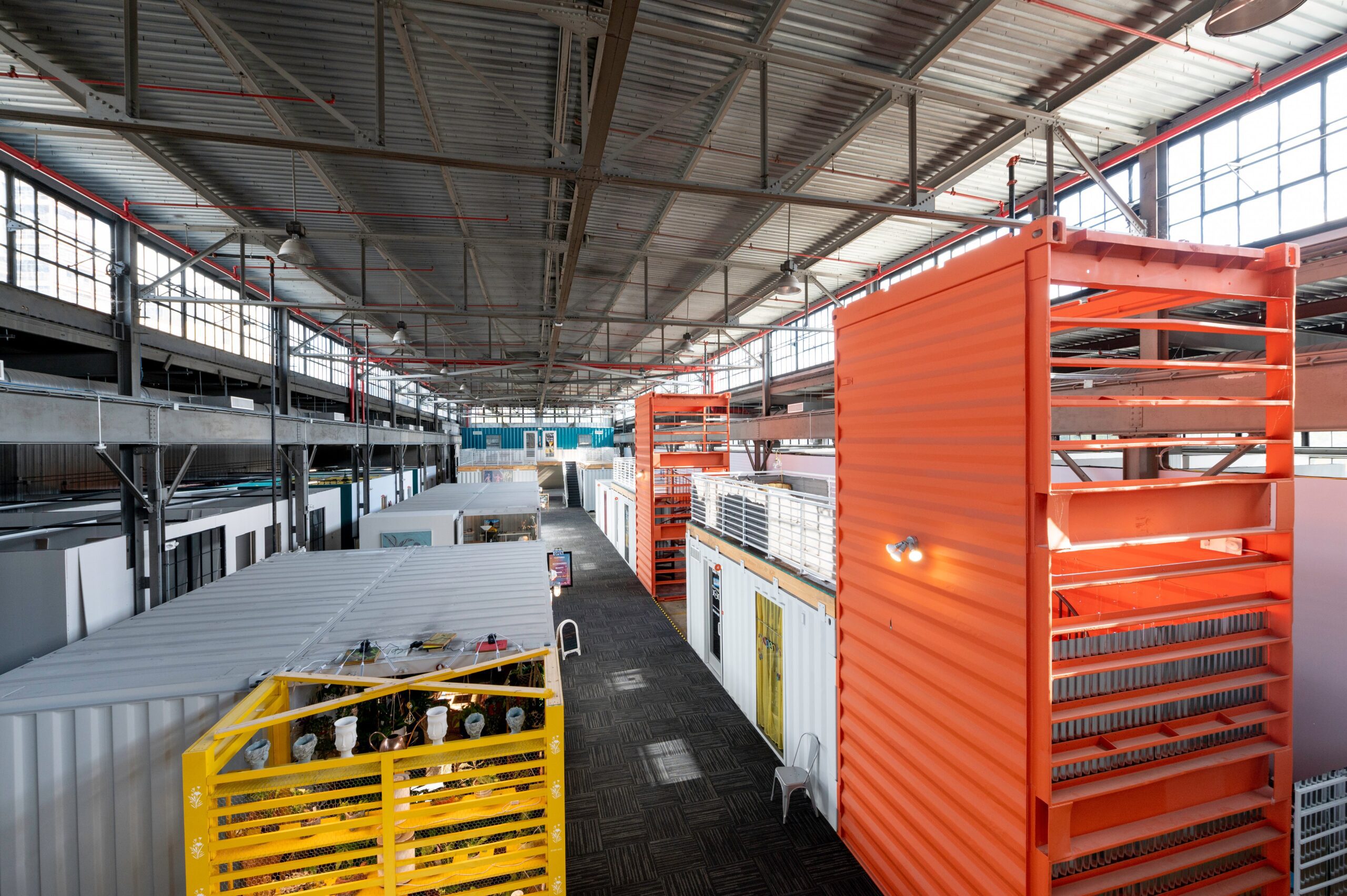
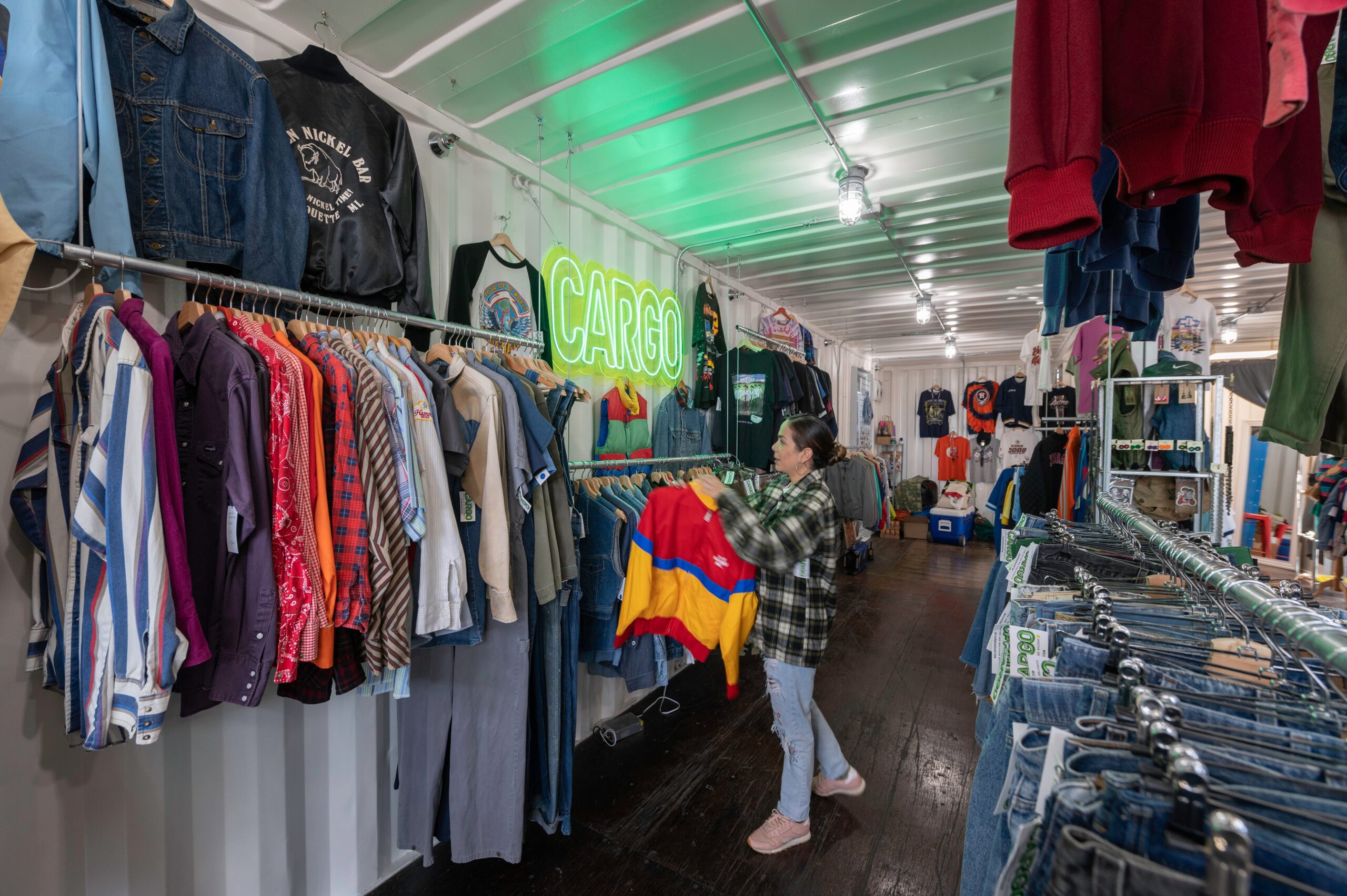
Captions: (Left and center photos) The Ironworks building houses various businesses ranging from vintage apparel, coffee, law group, tattoo artist, plant shop, and more using containers inside the warehouse space. (Right most photo) Here is the Cargo vintage shop with a tenant picking out some clothing.
“After researching the various uses of containers, I found that many were repurposed into homes so I decided to develop a different concept of designing them as creative workspaces. When I started developing my vision for IRONWORKS, I knew this would fit with the industrial look I wanted to capture in the space,” noted Andrew Kaldis, owner of Ironworks and Kaldis Development.
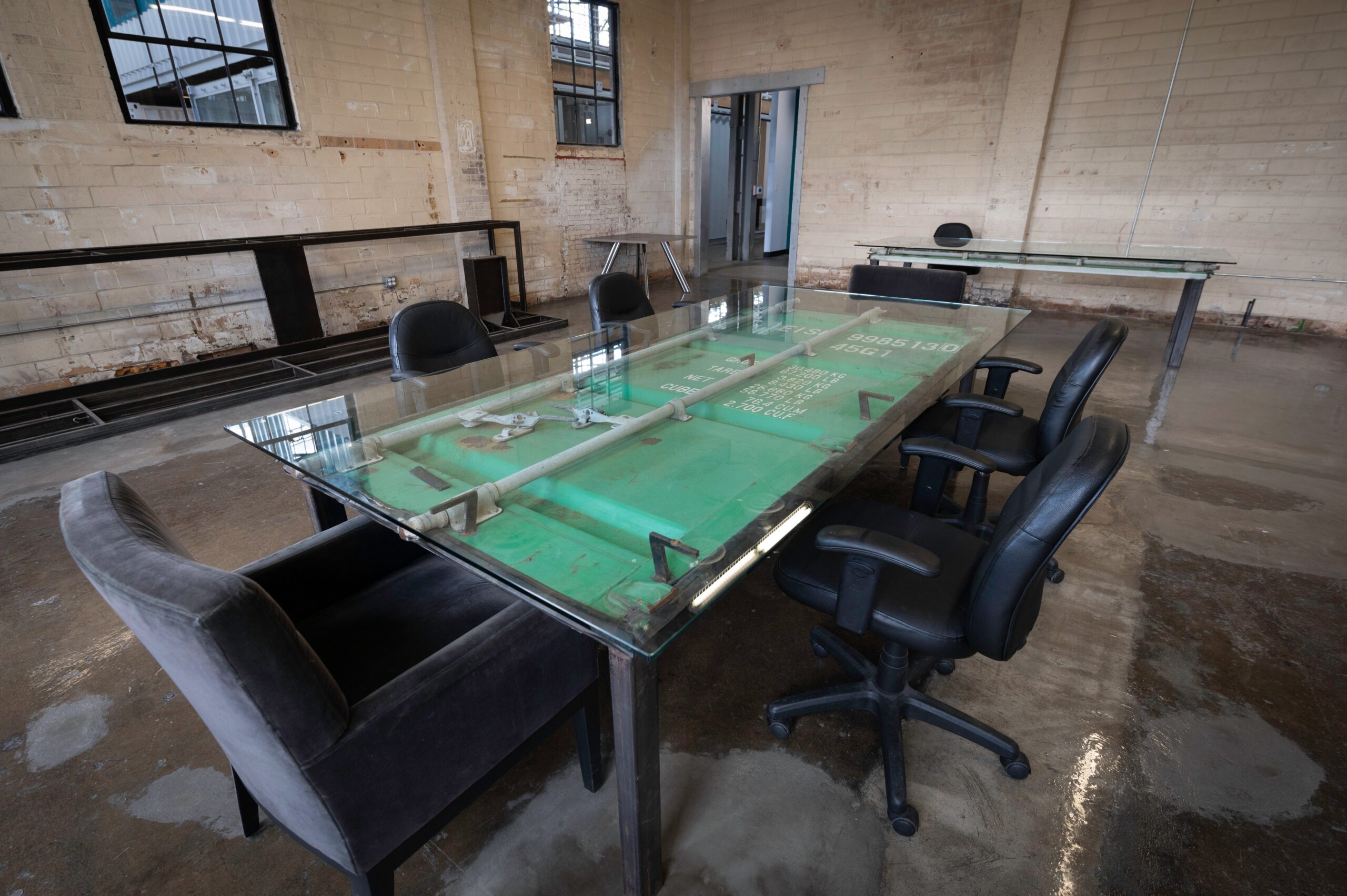
Caption: photo of container door used as table in the Ironworks Building conference room.
“I was able to establish a relationship with the right fabricator to alter the containers per my design. My hope for the building is that it continues to be a landmark for the area. It is very rewarding to contribute to a neighborhood and see it flourish,” noted Kaldis.
East ENd River Mural
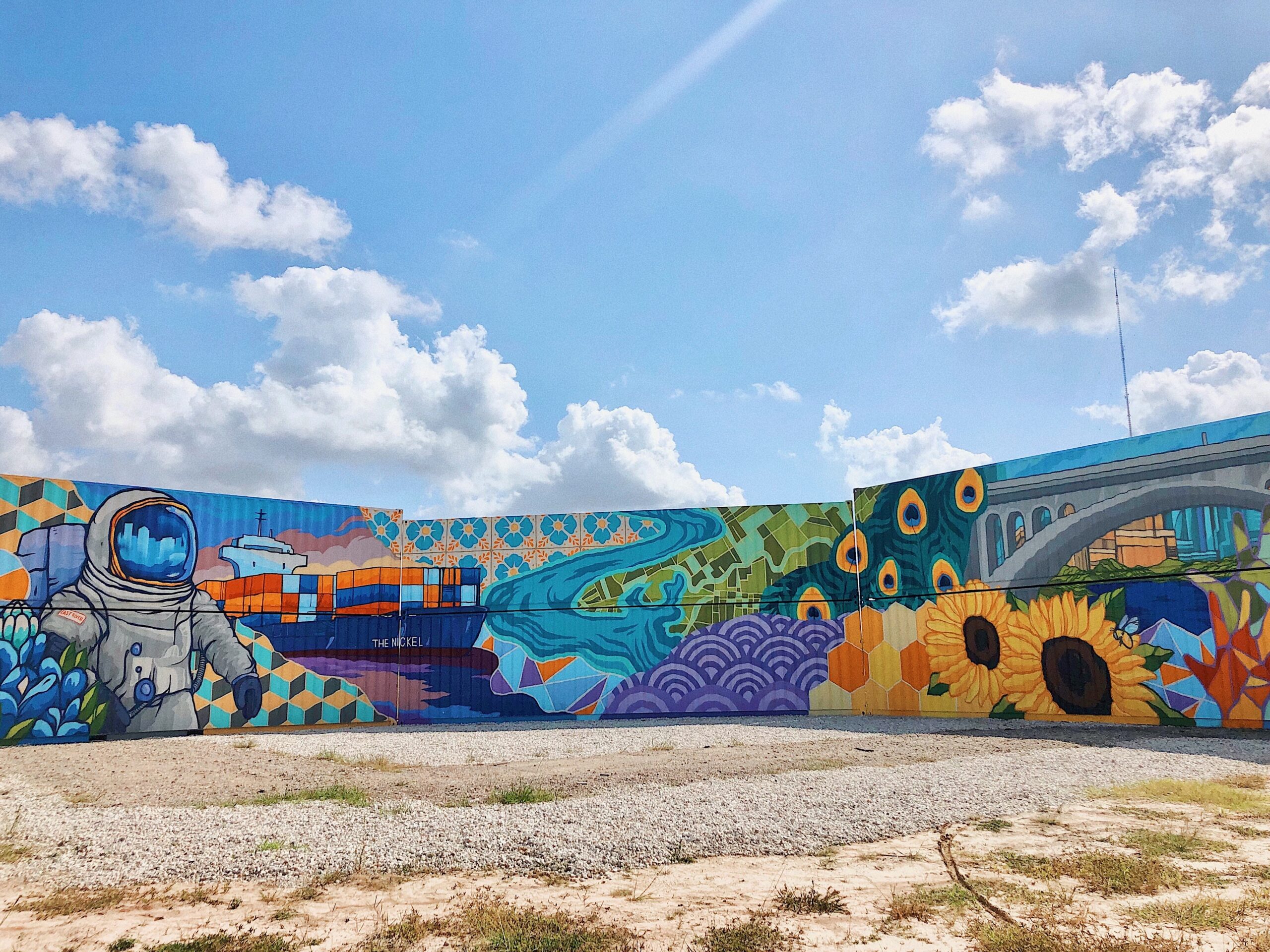
Caption: David Maldonado, a local Houston artist devotes his time to create murals and other pieces of art that represent the city. Mural agency Muros hired Maldonado to complete the East End River Mural on Clinton Drive using containers as the canvas.
“My great grandfather and grandfather worked as longshoremen. To this day, my father and many family members continue to work as longshoremen as well. I feel proud and honored when I get to do a project with historical background,” said Maldonado.

Caption: David Maldonado puts the finishing touches on the East End River Mural displaying elements of Houston including NASA, the Port of Houston, nature and city scape.
“Art has a way of building bridges in the community and public art is a great way of doing that. This [East River Mural] is the first time I’ve worked with shipping containers, and I would use them for future projects. I think it’s great when things are repurposed and used in other ways.”
Moonstruck Drive In Cinema
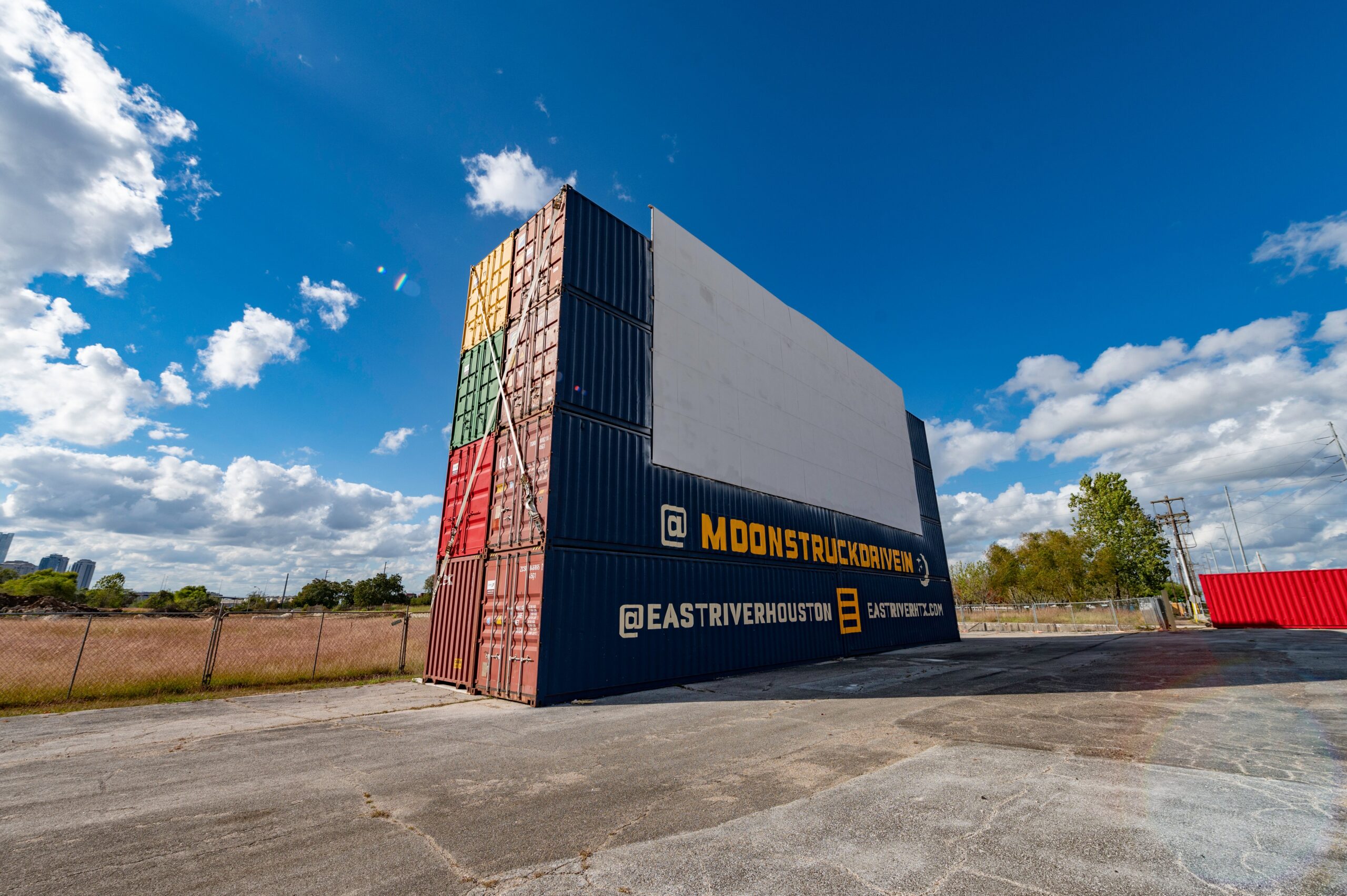
Caption: Moonstruck Drive In is a new addition to the East End, the drive in utilizes stacked containers to screen movies outdoors. Families can watch old-time movies up to the most recent releases from the comfort of their cars.
Moon Tower Inn
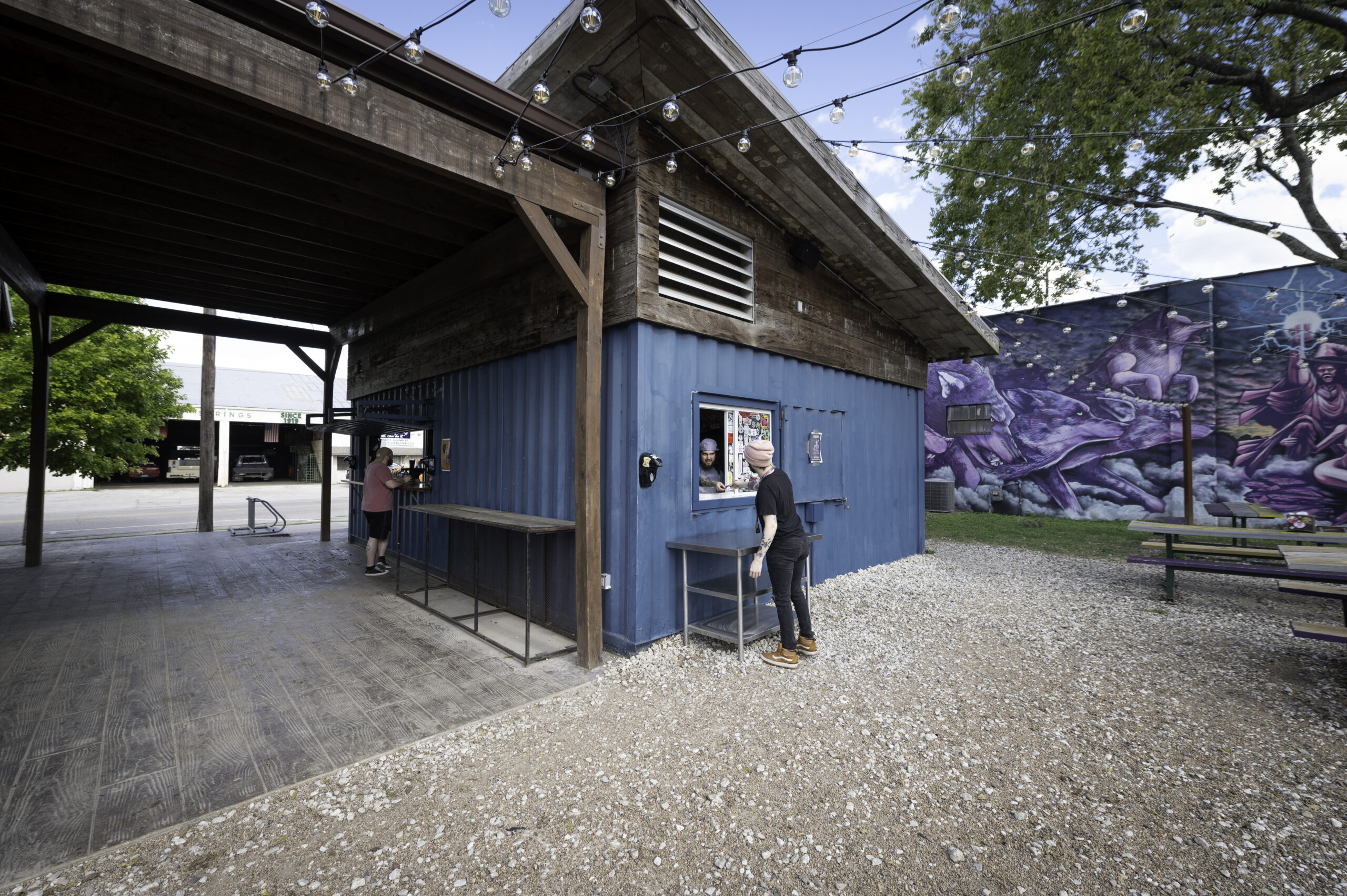
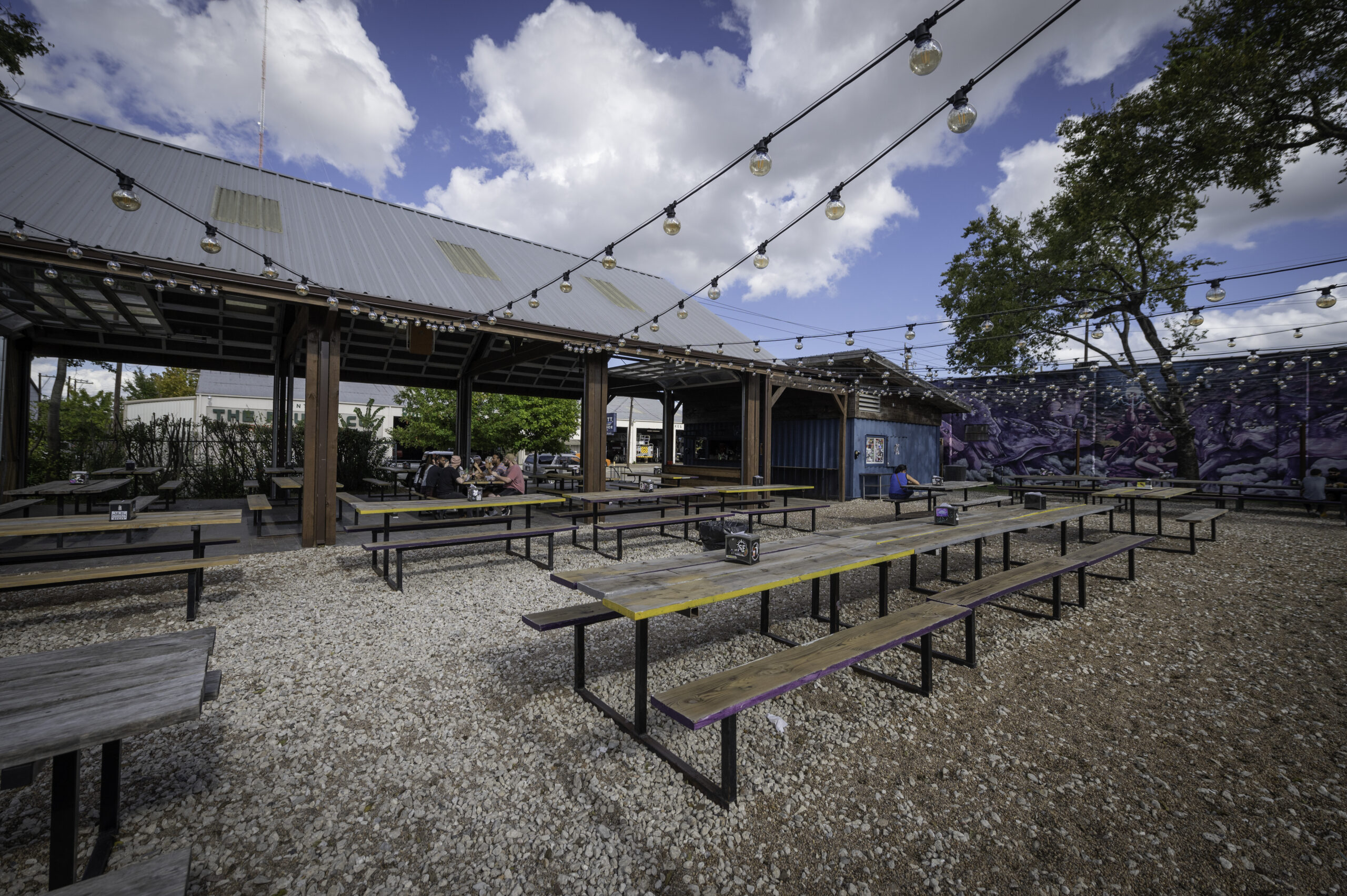
Caption: Moon Tower Inn is an American restaurant specializing in game-meat and hotdogs along with a variety of beer for an outdoor pub feel. The bar area is housed in a container.
The post The After Life of a Container appeared first on Port Houston.
]]>The post Uncharted Waters: The Houston Ship Channel’s Beginning appeared first on Port Houston.
]]>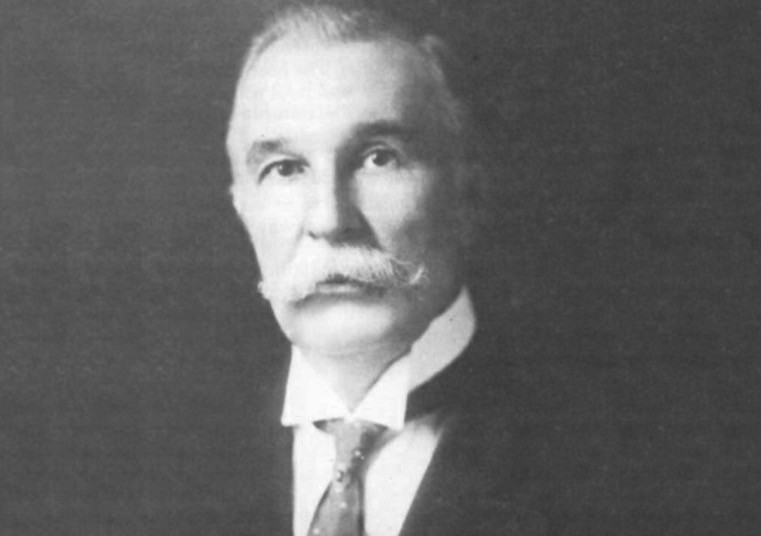
Caption: U.S. Congressman Tom Ball
During the 1800s, U.S. Representative Tom Ball spent countless hours trying to convince his colleagues to support a deep-water port for Houston. In July of 1870, Congress designated Houston as a potential port – passing a bill chartering the Houston Ship Channel, and essentially marking the beginning of the Port of Houston.
In September 1900, a devastating hurricane slammed into Galveston, Texas, leaving behind one of the worst natural disasters in American history. More than 8,000 people lost their lives.
Tom Ball proposed a revolutionary concept. He suggested that Houston and the federal government share the cost of dredging a deep-water channel to Houston. The Congressional Rivers and Harbors Committee voted unanimously to accept the idea, which became known as the Houston Plan – and a nearby Texas city, Tomball, was later named after the congressman.
In 1911, a campaign was launched to persuade voters to approve $1.25 million in bonds to pay for the local share to dredge the waterway. Voters approved the measure by a margin of 16 to one, and with it the formation of the Harris County Houston Ship Channel Navigation District (today’s Port of Houston Authority) to issue those bonds.
The Houston Ship Channel has been an economic engine for over a century and remains the busiest and most productive waterway in the nation. Each year, the channel hosts more than 8,000 vessel calls and 200,000 barge movements. It supports the largest petrochemical complex in the nation and is critical to our country’s energy and economic security. Port Houston is the non-federal sponsor of the Houston Ship Channel.
Learn more about Port Houston's history here.
The post Uncharted Waters: The Houston Ship Channel’s Beginning appeared first on Port Houston.
]]>