The post Port Houston Focused on Renewable Electricity and Environmental Sustainability appeared first on Port Houston.
]]>
First Port with Renewable Electricity
For nearly 25 years, Port Houston has been the nation’s top port for energy and petrochemical cargo. Starting in 2002, we were the first port authority in the U.S. to achieve an ISO 14001 certification for our environmental management system. Nearly two decades ago, we were already a leader, putting sustainability framework into place, demonstrating that our team was looking not only at our obligations as a port operator, but at what our opportunities were to go beyond the requirements.
This year, Port Houston was the first port authority in the world to choose 100% renewable electricity for the public facilities that we operate. We entered into a 10-year renewable electricity contract where all the terminals that we operate receive electricity from a brand-new solar farm in West Texas. This will lower Port Houston’s carbon footprint by about 25,000 tons each year and save around $250,000 each year.
In relation to renewable electricity, the port has also implemented a CO2 Reduction Program. The greatest part of the CO2 reduction comes from the renewable electricity contract, and the other CO2 reductions comes from efforts such as replacing all high-mast lighting with LEDs, purchasing new hybrid RTG cranes, and, potentially, from installing high-tech building energy management systems.

Not only is Port Houston going all-in on renewable electricity, but it also plays a vital role in wind energy. Texas ranks number one in the nation for wind projects and much of the wind energy components are imported through Port Houston. In fact, this year alone more than 19,000 short tons of wind power equipment have arrived through our docks.
Sustainability for the Future
In between the two milestones Port Houston hit in 2002 and 2020, we have also made several other moves toward sustainability. In fact, the port has reduced its carbon footprint by 55% since 2016 and is on target to reach 70% by 2040. Our environmental leadership strategy has short-term goals like tracking port-generated emissions and long-term aspirational goals like zero-emission ship docking and a 90% reduction of greenhouse gas pollution. Moreover, we are updating the Clean Air Strategy Plan that will formally identify specific actions to reduce emissions from maritime and associated transportation sources at our facilities.
In terms of equipment, Port Houston has continued to stay ahead of the curve by employing new environmental innovations. We’ve committed to purchasing diesel-electric hybrid RTG cranes emitting over 80% less emissions as compared to diesel-only counterparts. In addition, there are a total of nearly 30 electric ship-to-shore cranes across the various Port Houston terminals to reduce our emissions.
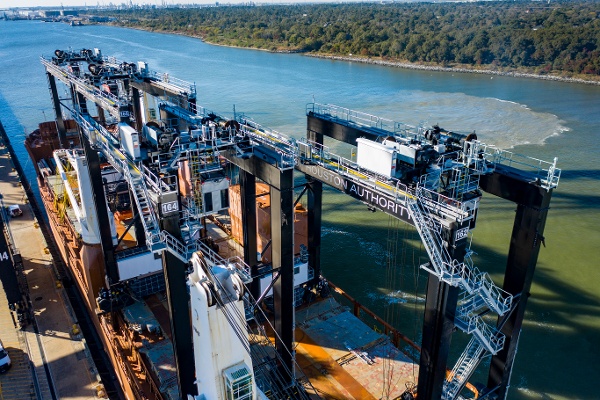
But the innovations don’t stop there. Soon Port Houston will be the first port in Texas to use an electric terminal tractor to move containers around Bayport and Barbours Cut terminals. We also recently purchased five new electric vehicles aimed at potentially overhauling our light-duty fleet over the next 10 or so years. Furthermore, we’ve purchased the first “waste shark” drone to help clean up to 350 pounds of litter daily in the Houston Ship Channel and gather data on the water quality.
For the continued concentration on environmental strategies, Port Houston was even a finalist in three categories at the 2020 G&P Global Platts Global Energy Awards. This is a true accomplishment and reflects the progress of Port Houston in its environmental leadership . Everyone at Port Houston is committed to acting now and moving the organization toward a future with increased sustainability and renewable electricity.
The post Port Houston Focused on Renewable Electricity and Environmental Sustainability appeared first on Port Houston.
]]>The post Greening the Fleet: New Electric Vehicles Arrive at Port Houston appeared first on Port Houston.
]]>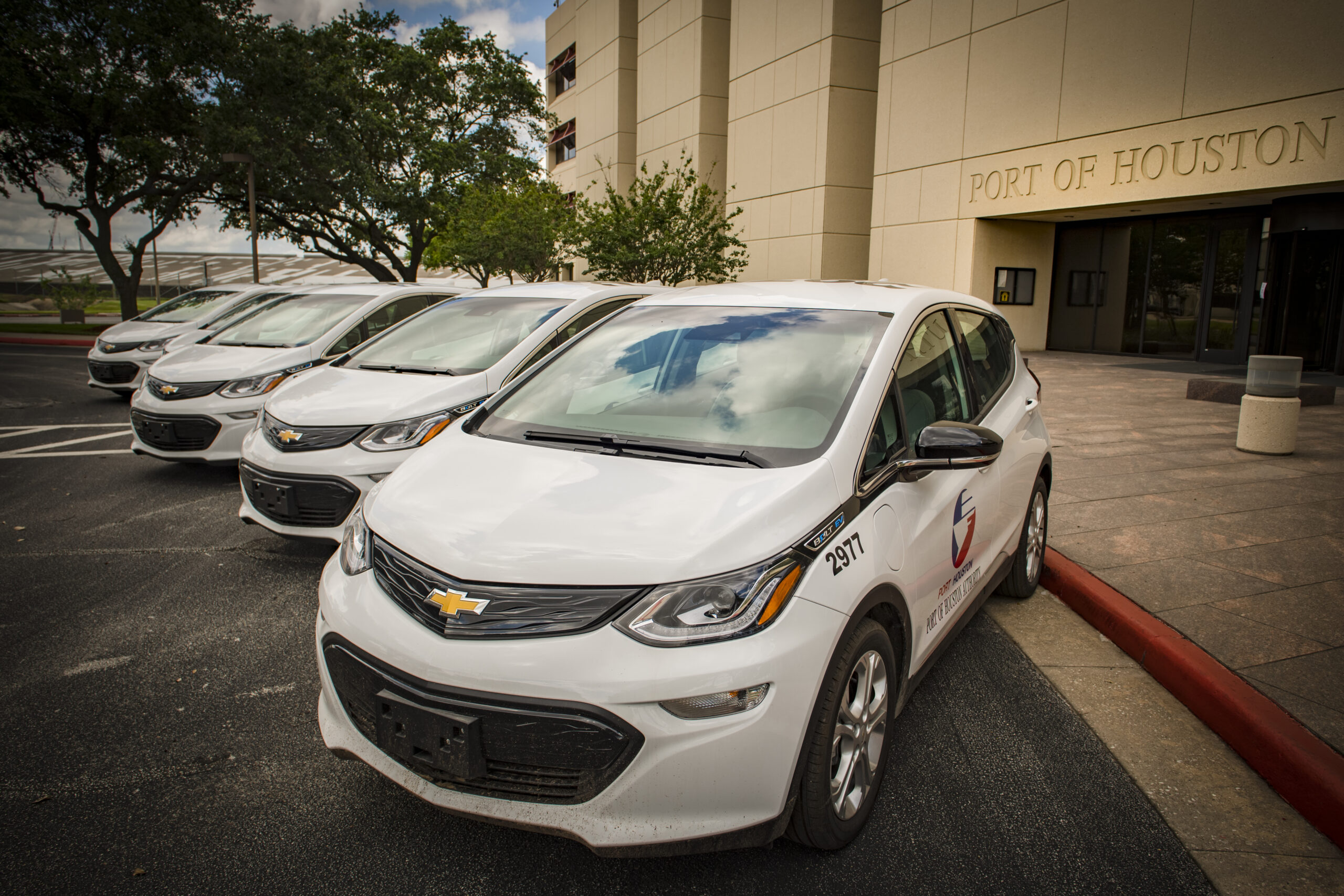
Caption: Port Houston's new electric vehicles.
This fleet will be used by several Port departments, and three cars will be pool vehicles for employees. Electric vehicles are powered by electricity and have large batteries instead of combustion engines, meaning there are no tailpipes for exhaust. They plug in to charge. Port Houston’s maintenance department installed the charging stations and ran the electrical lines underground at the Port’s facilities.
“Port Houston’s 100 percent asset-based renewable electricity contract makes these electric vehicles truly zero emissions,” said Kelli Gallagher, environmental compliance coordinator for Port Houston. The Port is expected to reduce carbon dioxide emissions by 18 metric tons per year by using the vehicles.
The Port is also expected to save more than $400 a year per car as electricity is much cheaper than fuel. Life cycle savings are estimated at seven cents per mile. The vehicles each have a 259-mile battery.
“Port Houston staffers are excited and proud to be using electric vehicles. These vehicles are clean, meaning they pollute less, but they are also more efficient than gasoline-fueled vehicles,” said Mike Gignac, manager of central maintenance for Port Houston.
This effort is one of many measures Port Houston is taking to proactively build on its stewardship and environmental leadership strategy. “Port Houston continues to make greener, environmentally-friendly approaches to our operations as we are committed to being an environmental leader,” said Trae Camble, director of environmental affairs for Port Houston.
Learn more about Port Houston’s environmental initiatives here: https://porthouston.com/environment/.
The post Greening the Fleet: New Electric Vehicles Arrive at Port Houston appeared first on Port Houston.
]]>